 In 3D öffnen
Art
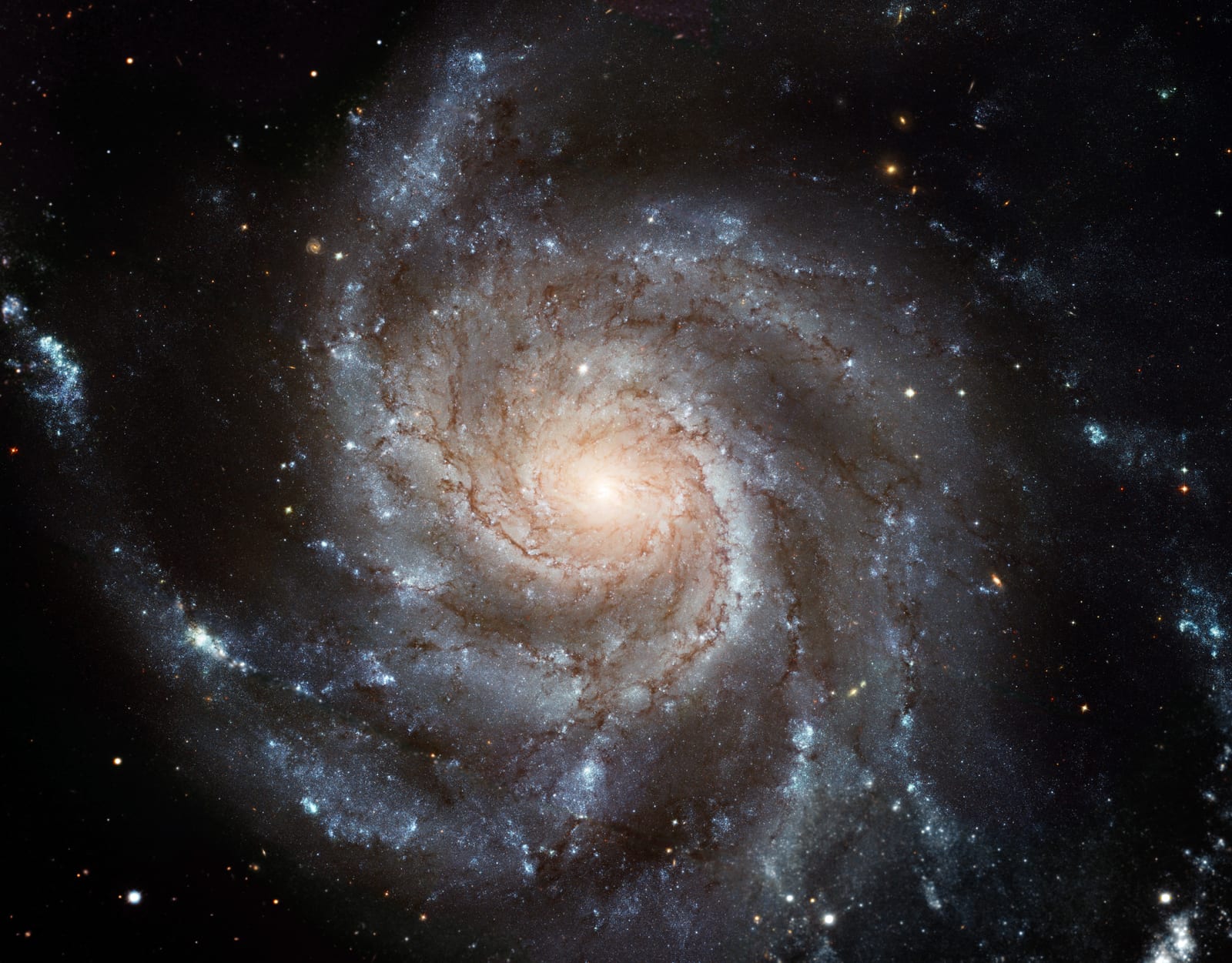
Eine frontal gesehene Spirale mit etwa 170.000 Lichtjahren Durchmesser, viel größer als die Milchstraße. Dieses Hubble-Mosaik war das größte und detailreichste Galaxienbild, das Hubble bis dahin gemacht hatte.
Das Bild hängt in dieser Entfernung, der Erde zugewandt, so groß, wie es am Himmel erscheint; wie tief das Objekt ist, lässt sich nicht sehen, daher ist es flach.
Das Bild
- Aufgenommen von
- Hubble Space Telescope
- Bildbreite
- etwa 81.000 ly
- Von der Sonne
- 21 Millionen Lichtjahre
- RA / Dek.
- 210.89° / 54.30°
Pinwheel Galaxy
The Pinwheel Galaxy is a face-on, counterclockwise intermediate spiral galaxy located 21 million light-years from Earth in the constellation Ursa Major. It was discovered by Pierre Méchain in 1781 and was communicated that year to Charles Messier, who verified its position for inclusion in the Messier Catalogue as one of its final entries.
Aus Wikipedia, CC BY-SA · Artikel lesen
Weit darüber hinaus
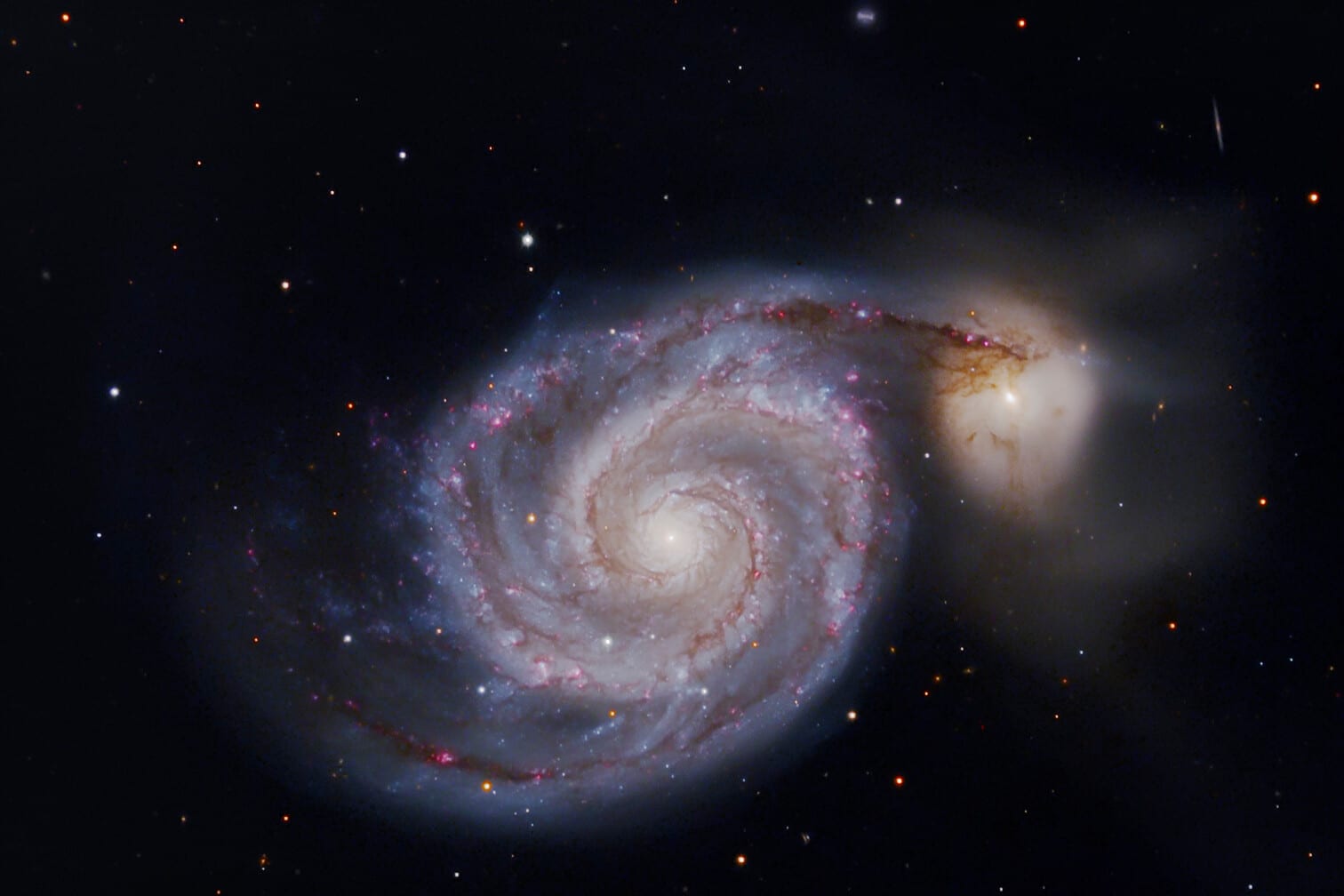
- Whirlpool-GalaxieSpiralgalaxie, M51 · 28 Millionen Lichtjahre3D
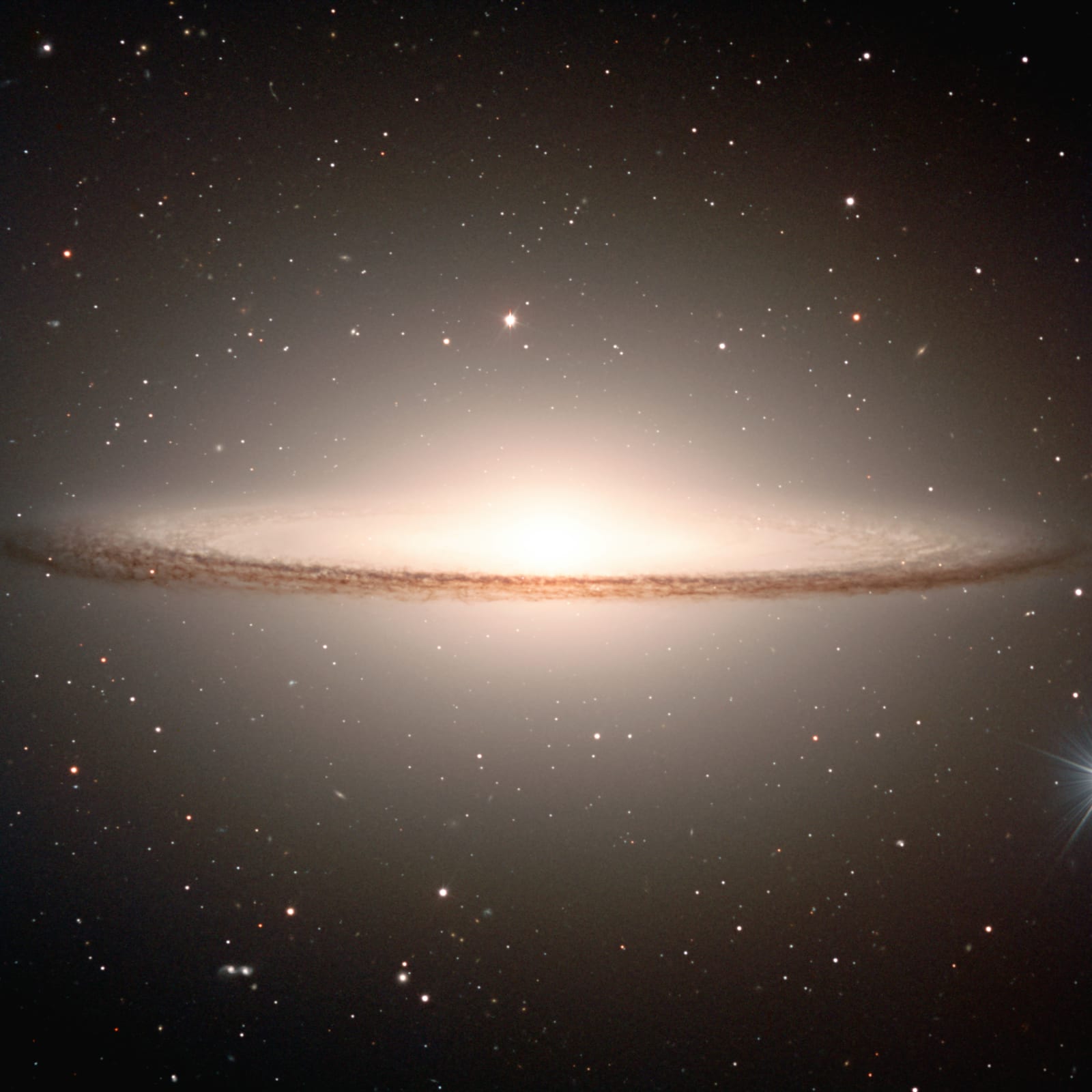
- SombrerogalaxieSpiralgalaxie, M104 · 31,1 Millionen Lichtjahre3D
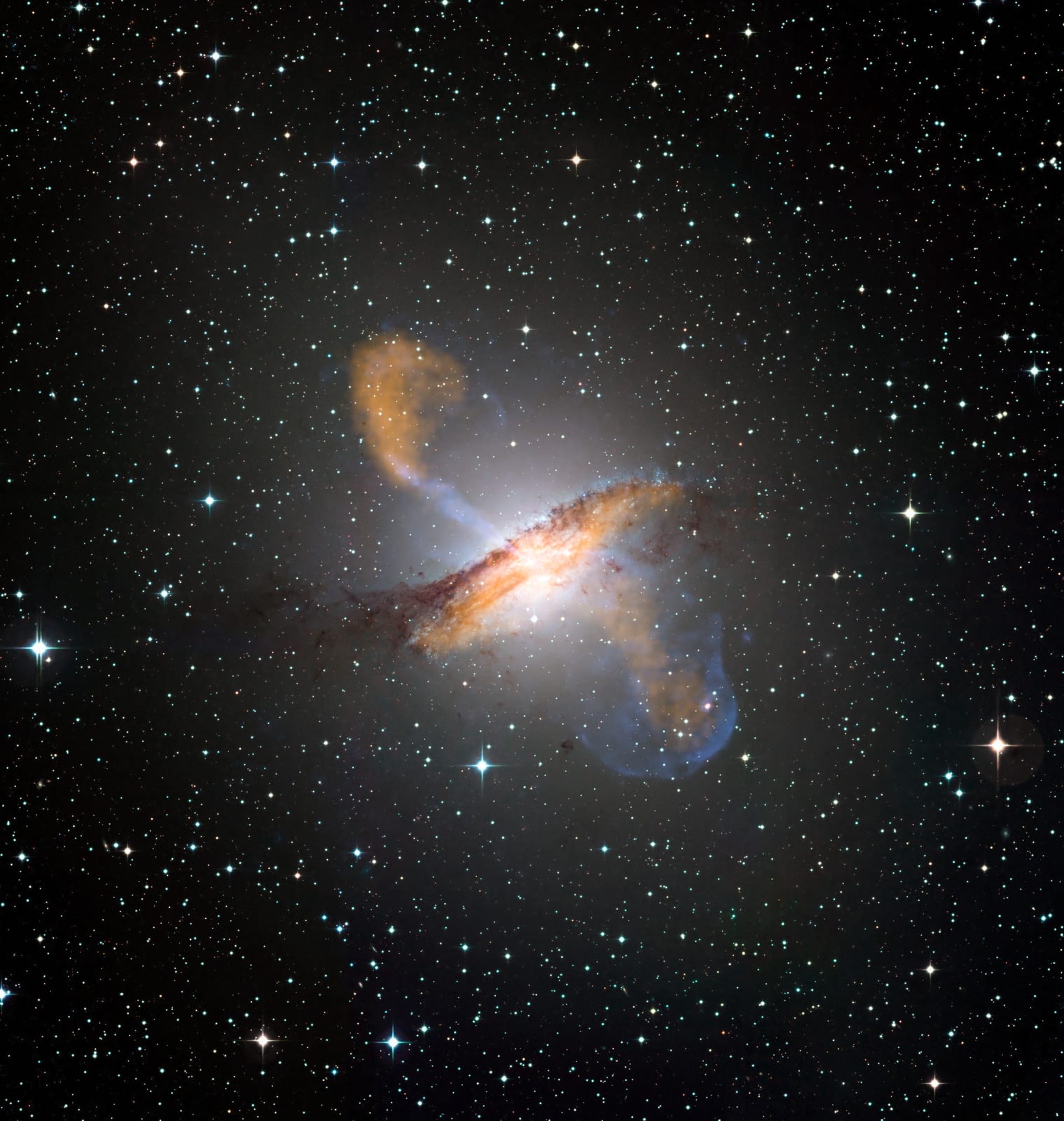
- Centaurus AElliptische Galaxie mit Staubband, NGC 5128 · 12,4 Millionen Lichtjahre3D
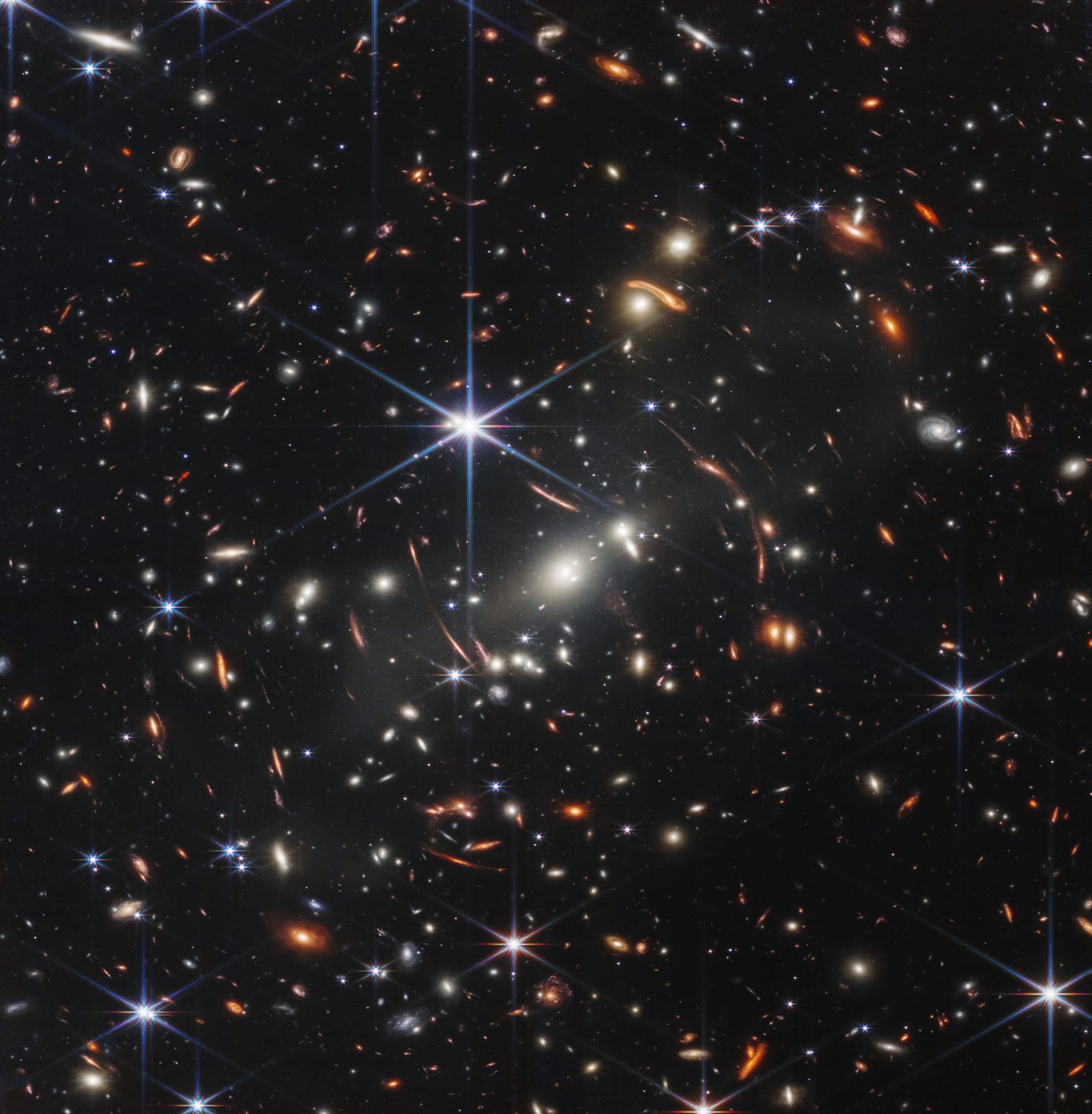
- Webbs erstes Deep FieldGalaxienhaufen SMACS 0723 · 5,1 Milliarden Lichtjahre3D
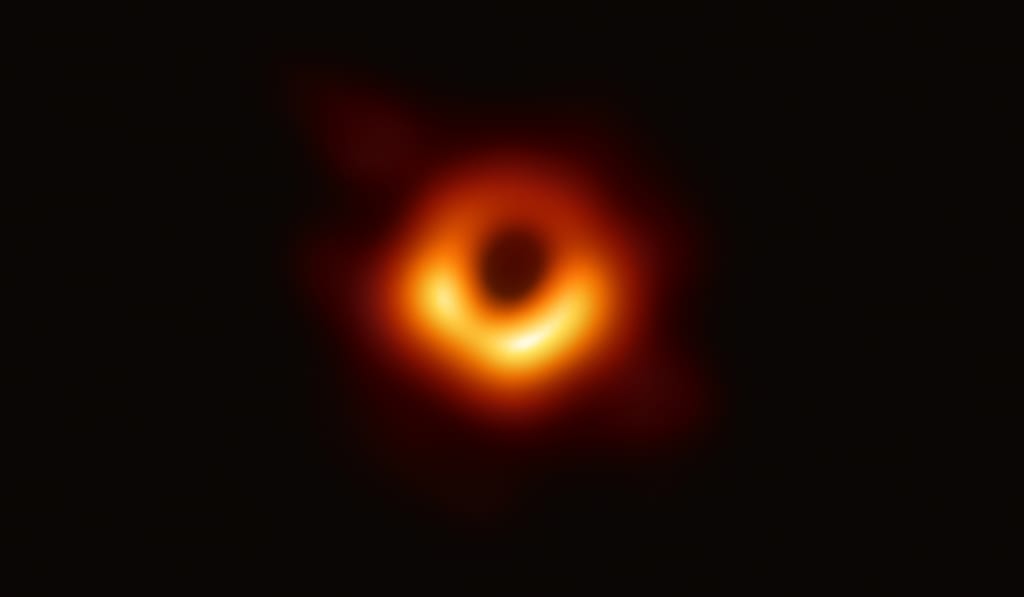
- M87*, abgebildetEvent Horizon Telescope, 2019 · 53,5 Millionen Lichtjahre3D
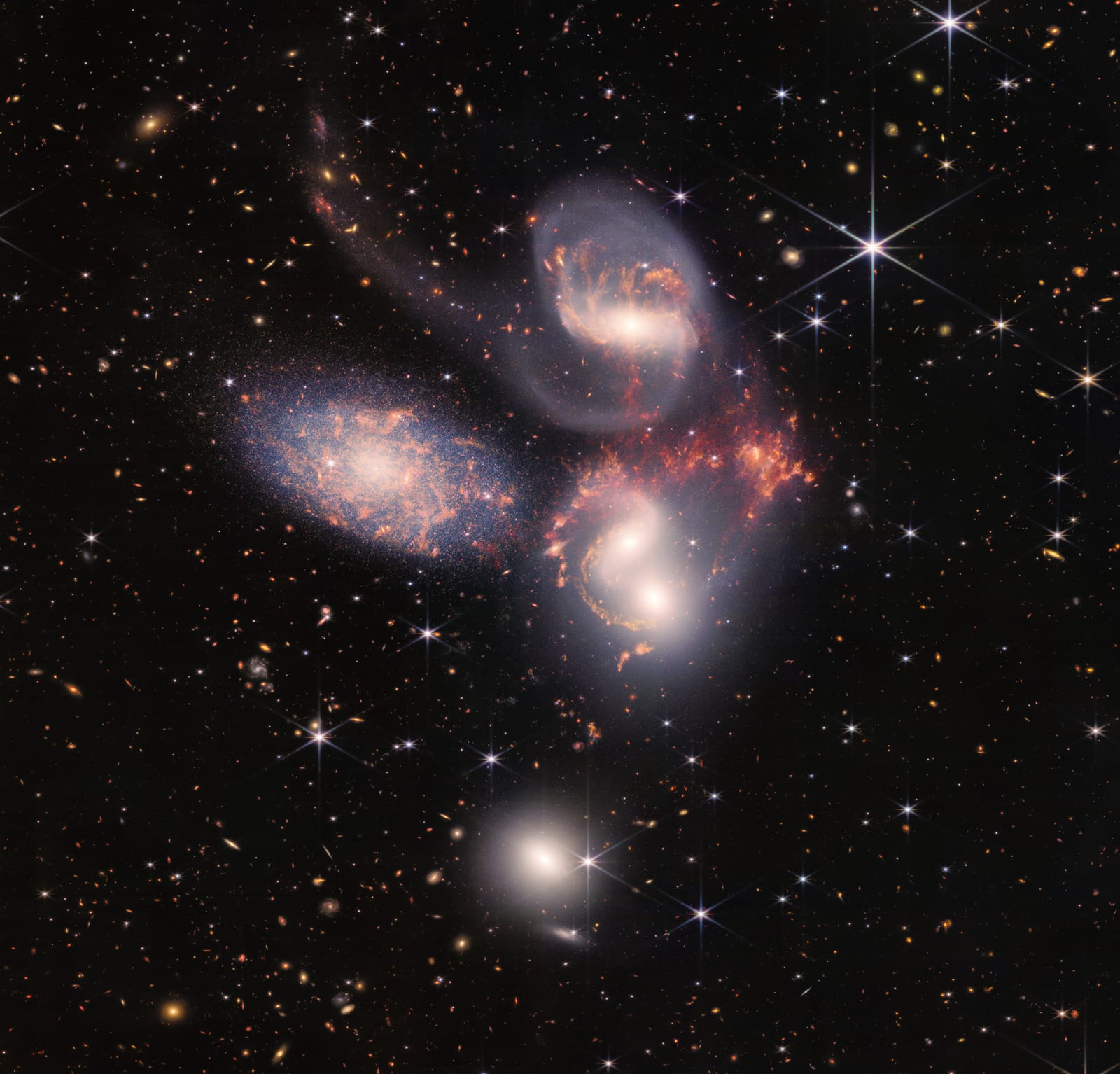
- Stephans QuintettGalaxiengruppe · 290 Millionen Lichtjahre3D
- Messier 87Elliptische Riesengalaxie · 53,5 Millionen Lichtjahre3D
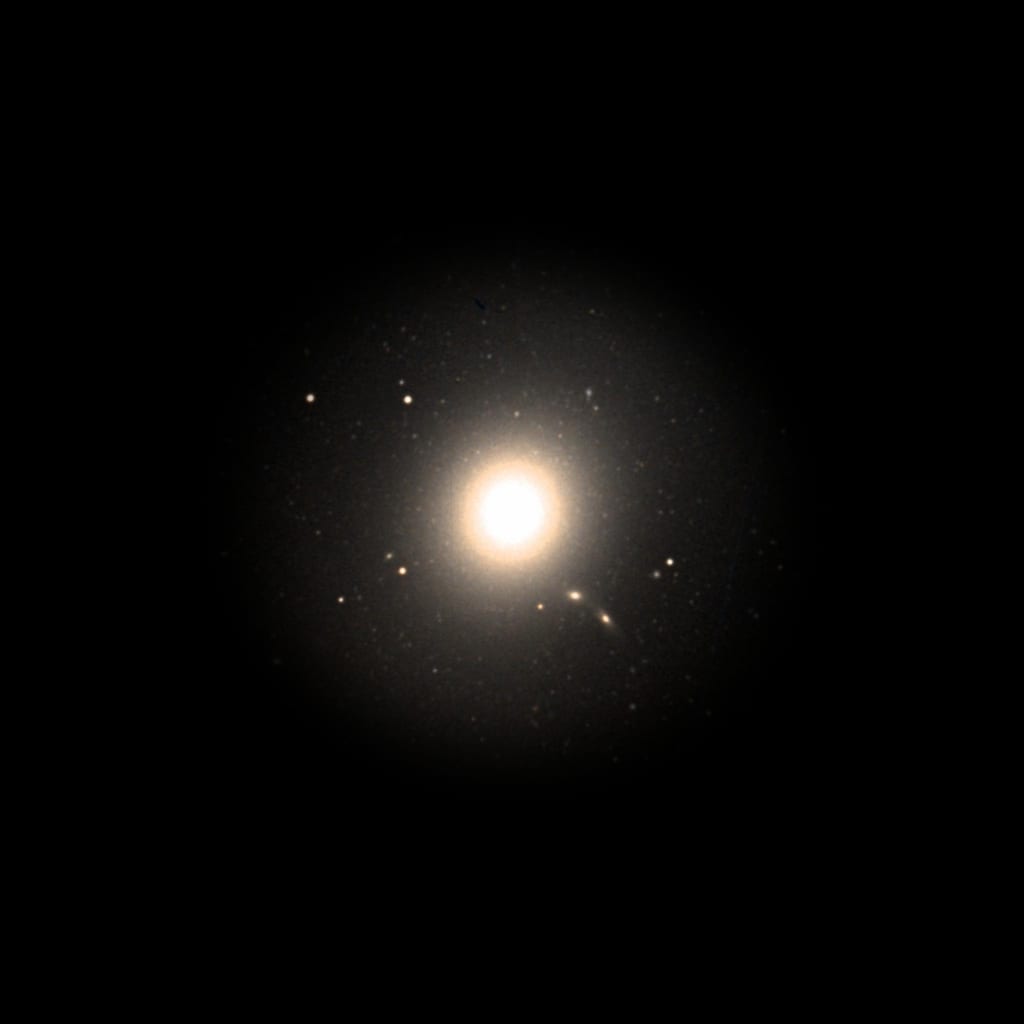
Bild: Digitized Sky Survey 2 (STScI/AURA, Palomar/Caltech, UKSTU/AAO), via CDS hips2fits
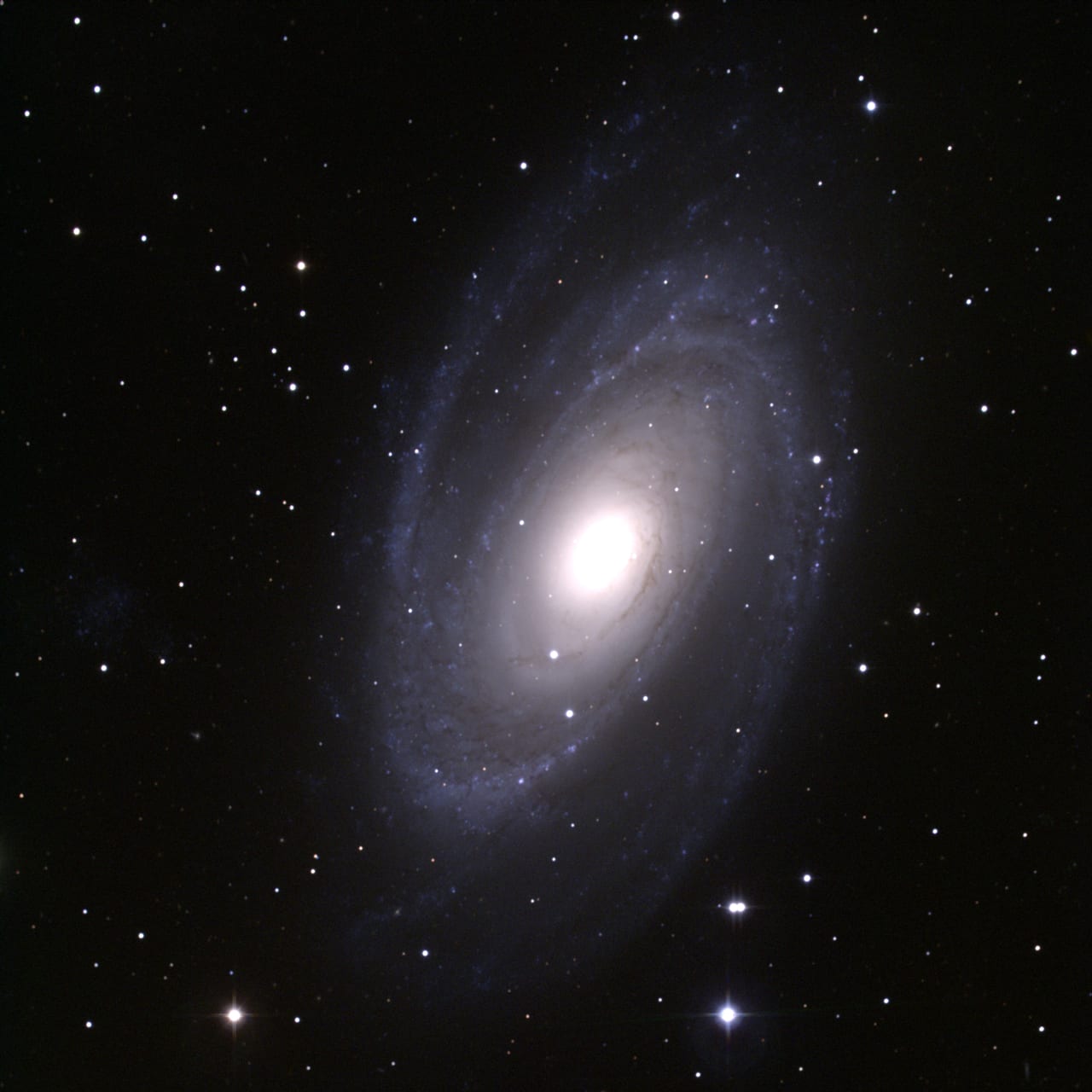
- Bodes GalaxieSpiralgalaxie, M81 · 11,8 Millionen Lichtjahre3D