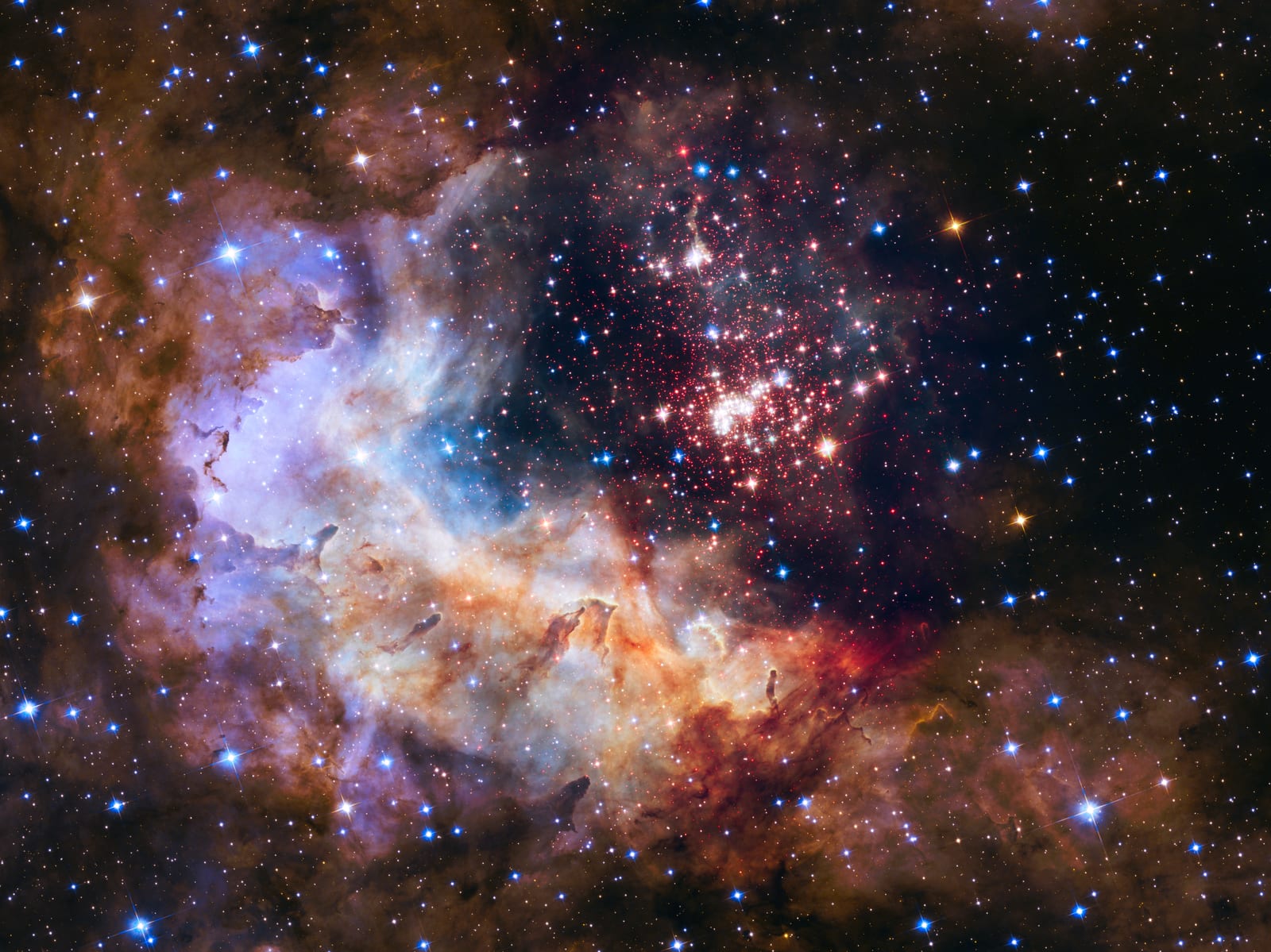
Westerlund 2
Junger Sternhaufen im Kiel des Schiffs
Von der Sonne
20.000 Lichtjahre
 In 3D öffnen
Art
Etwa 3.000 junge Sterne, darunter einige der heißesten und hellsten der Milchstraße, die einen Hohlraum in die Wolke graben, aus der sie entstanden. Das Bild zum 25. Jahrestag von Hubble.
Das Bild hängt in dieser Entfernung, der Erde zugewandt, so groß, wie es am Himmel erscheint; wie tief das Objekt ist, lässt sich nicht sehen, daher ist es flach.
Das Bild
- Aufgenommen von
- Hubble Space Telescope
- Bildbreite
- etwa 43 ly
- Von der Sonne
- 20.000 Lichtjahre
- RA / Dek.
- 156.03° / -57.76°
Westerlund 2
Westerlund 2 is an obscured compact young star cluster in the Milky Way, with an estimated age of about one or two million years. It contains some of the hottest, brightest, and most massive stars known. The cluster resides inside H II region RCW 49, located 20,000 light-years away in the constellation Carina. It is half a degree from the naked eye Cepheid variable V399 Carinae.
Aus Wikipedia, CC BY-SA · Artikel lesen
In der Milchstraße
- Säulen der SchöpfungSternentstehungssäulen im Adlernebel · 5.700 Lichtjahre3D
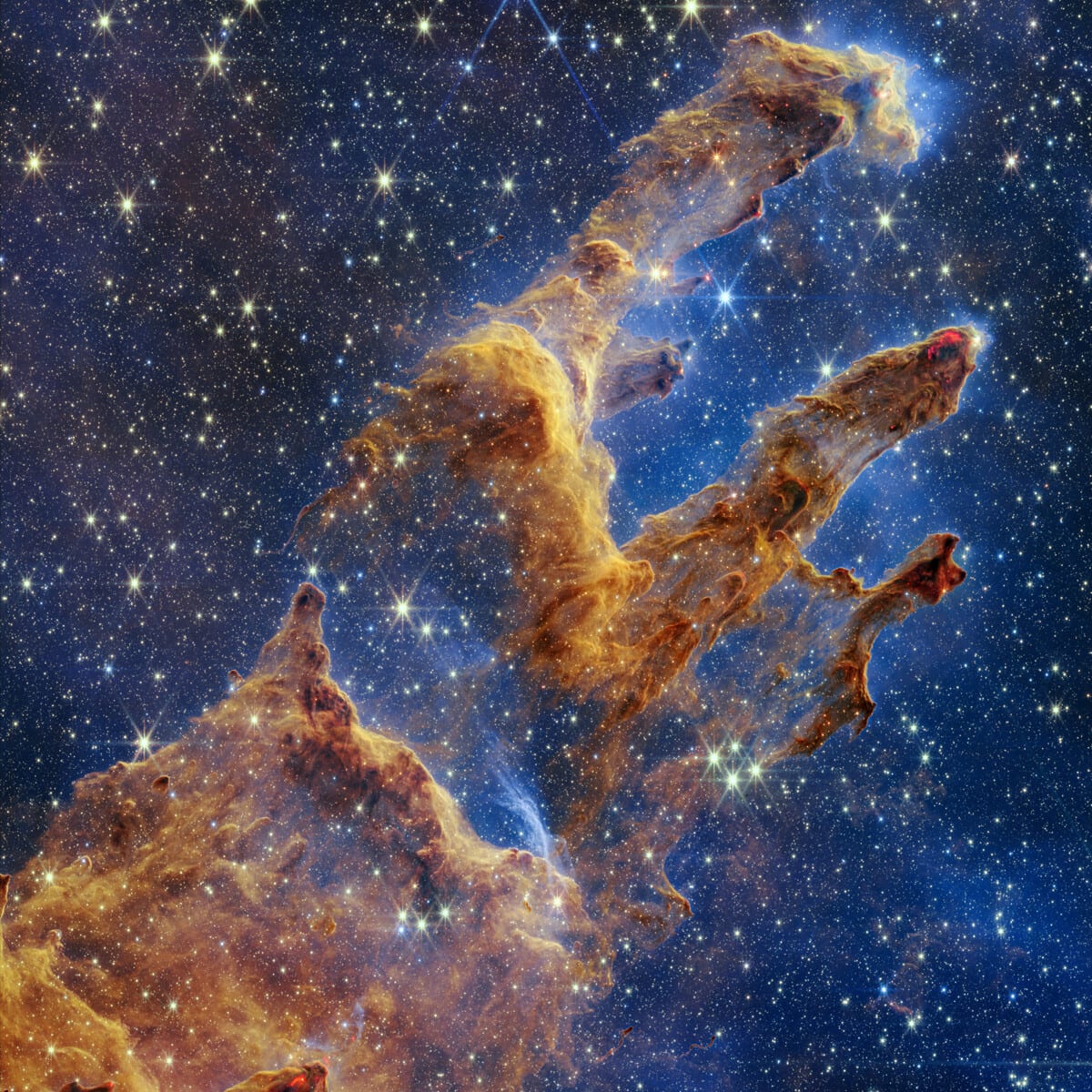
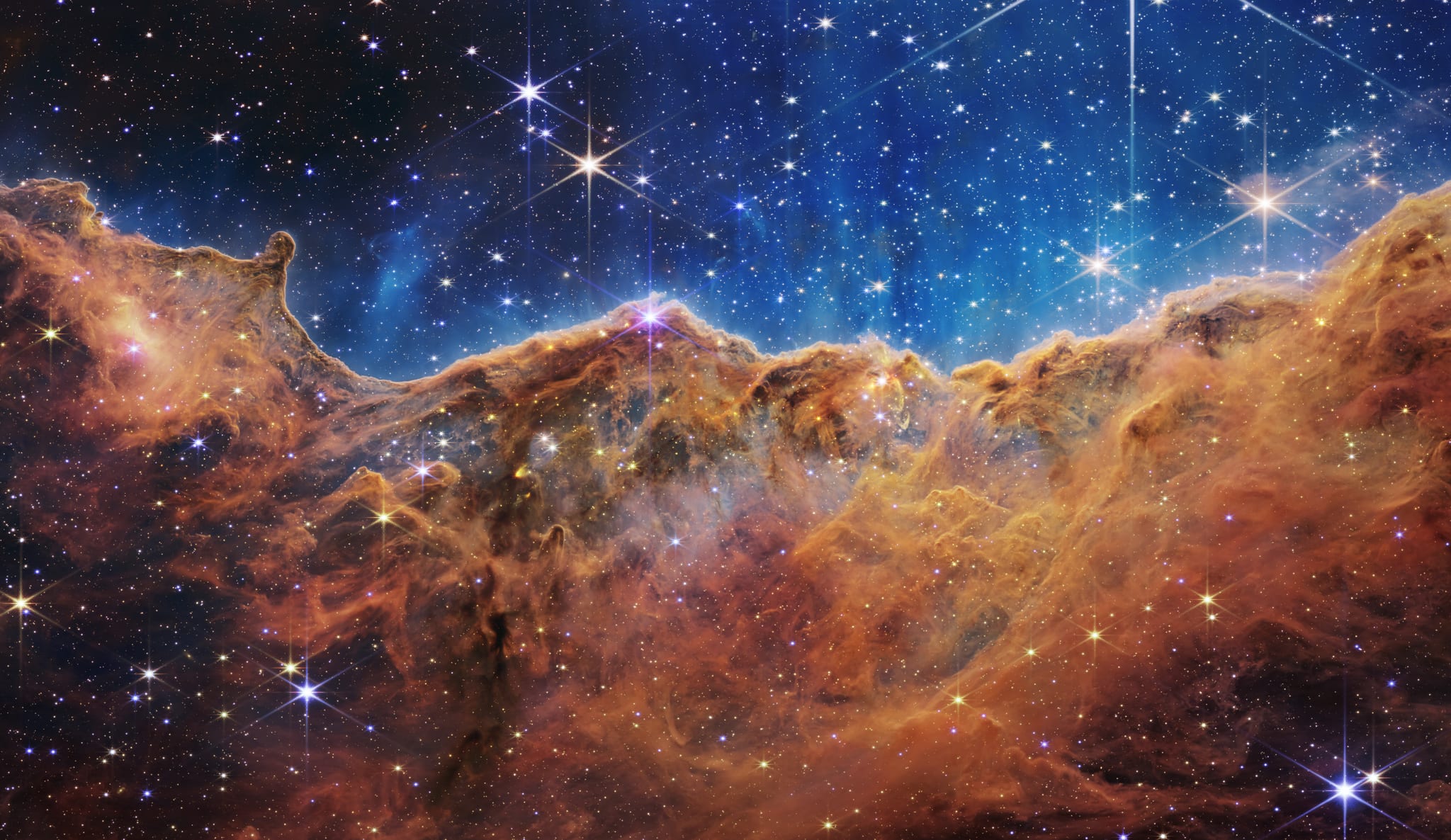
Bild: NASA, ESA, CSA, STScI; J. DePasquale, A. Koekemoer, A. Pagan (STScI).
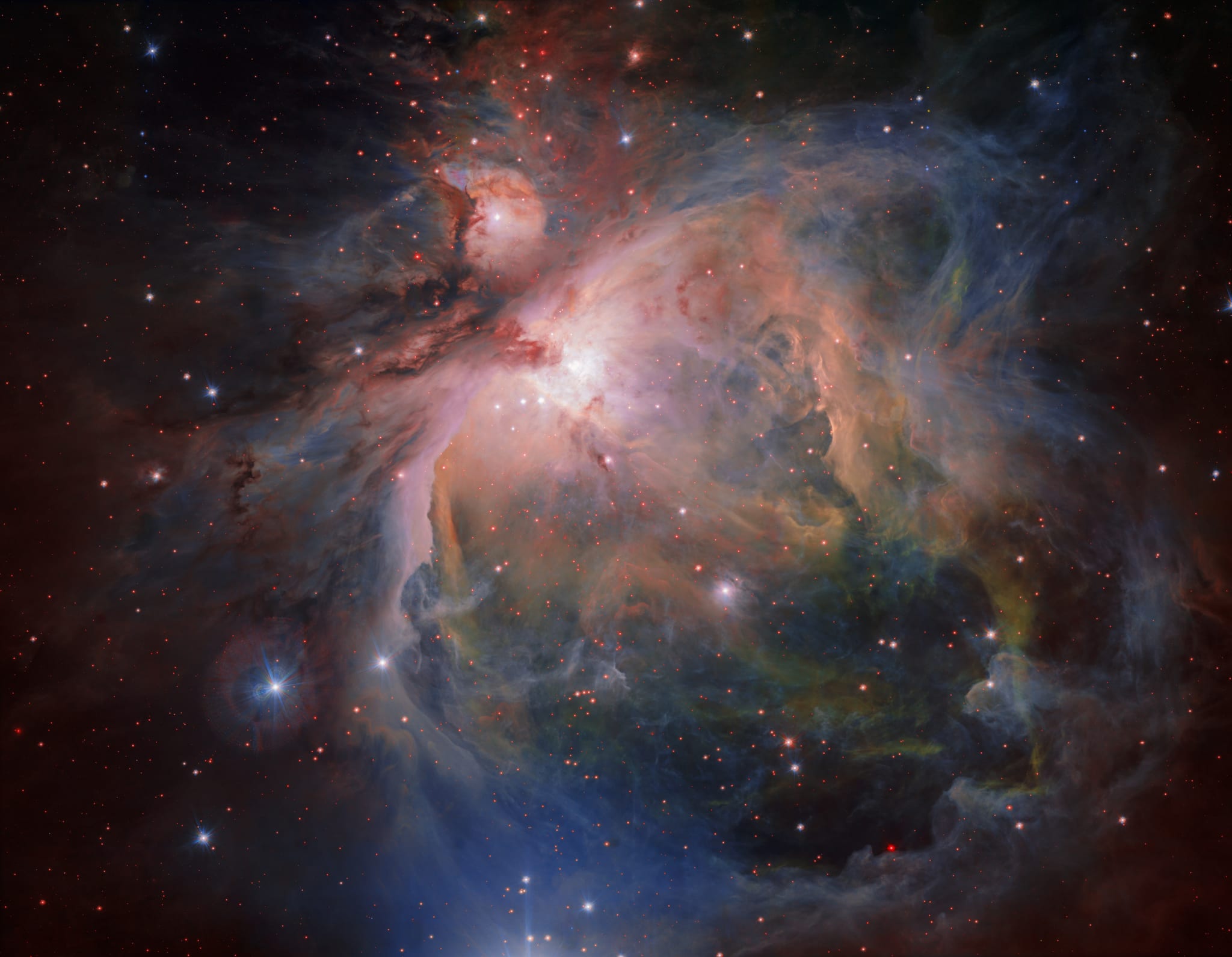
- OrionnebelNächstes großes Sternentstehungsgebiet, M42 · 1.344 Lichtjahre3D
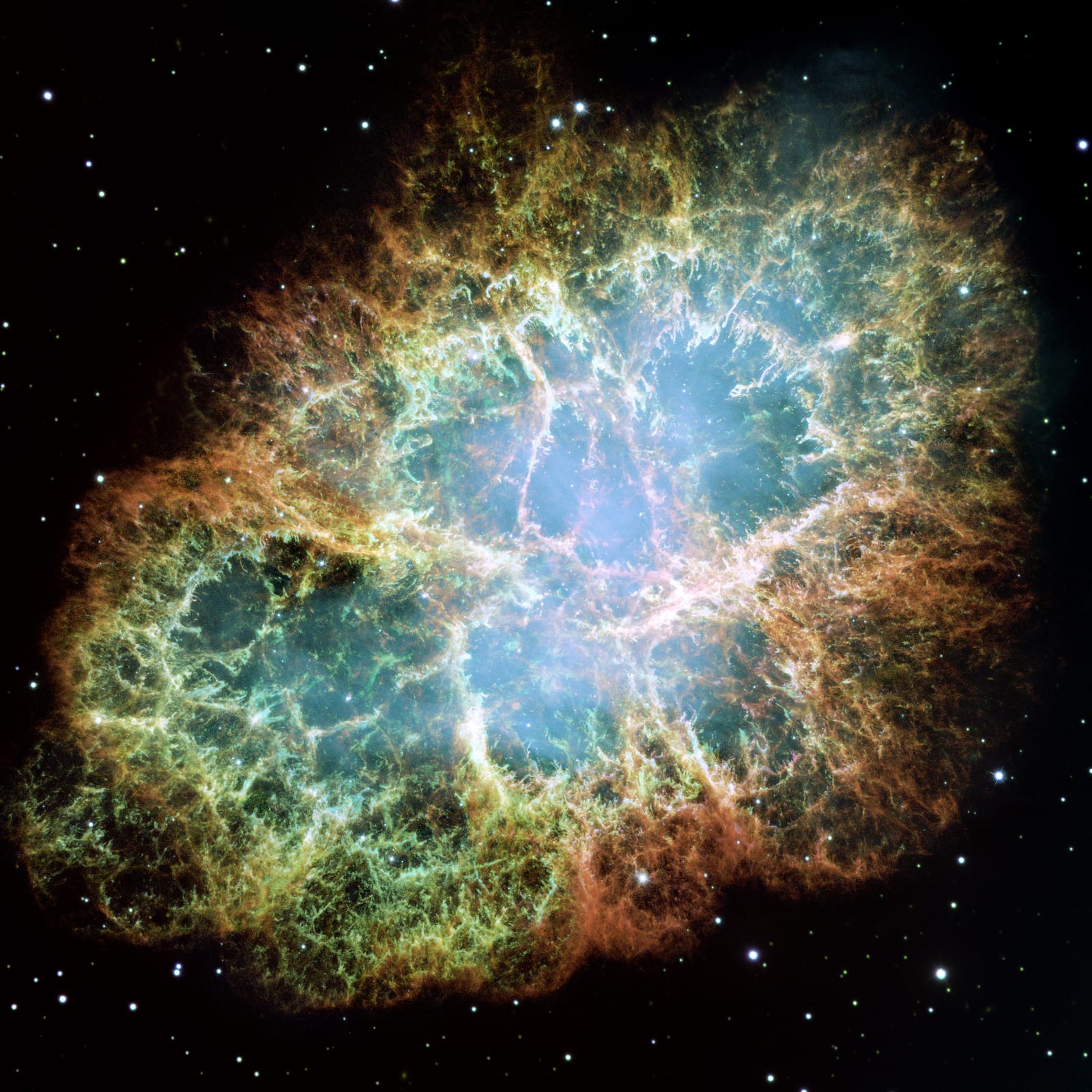
- KrebsnebelSupernovaüberrest, M1 · 6.500 Lichtjahre3D
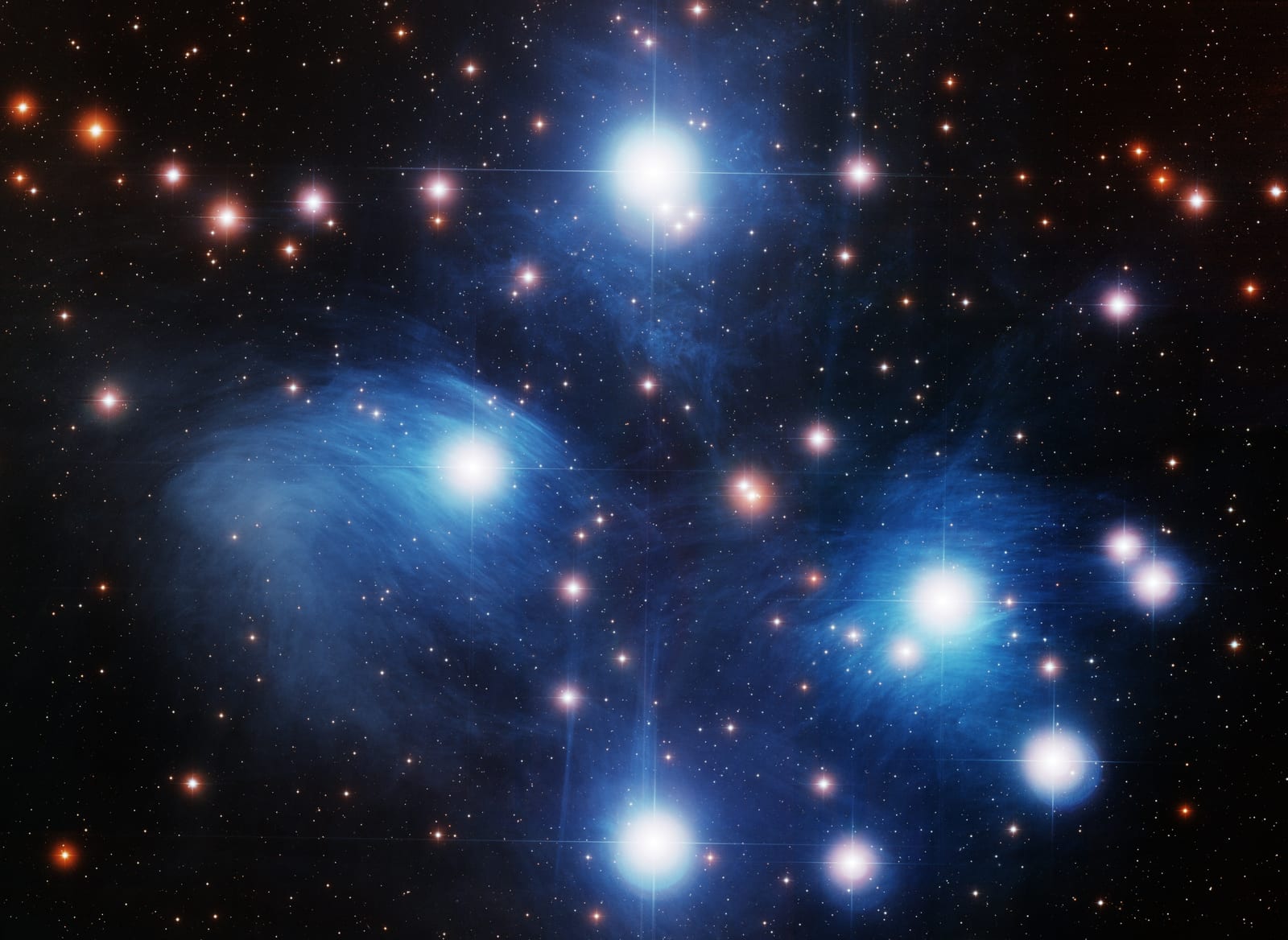
- PlejadenOffener Sternhaufen, M45 · 444 Lichtjahre3D
- Kosmische KlippenRand von NGC 3324 im Kiel des Schiffs · 7.600 Lichtjahre3D
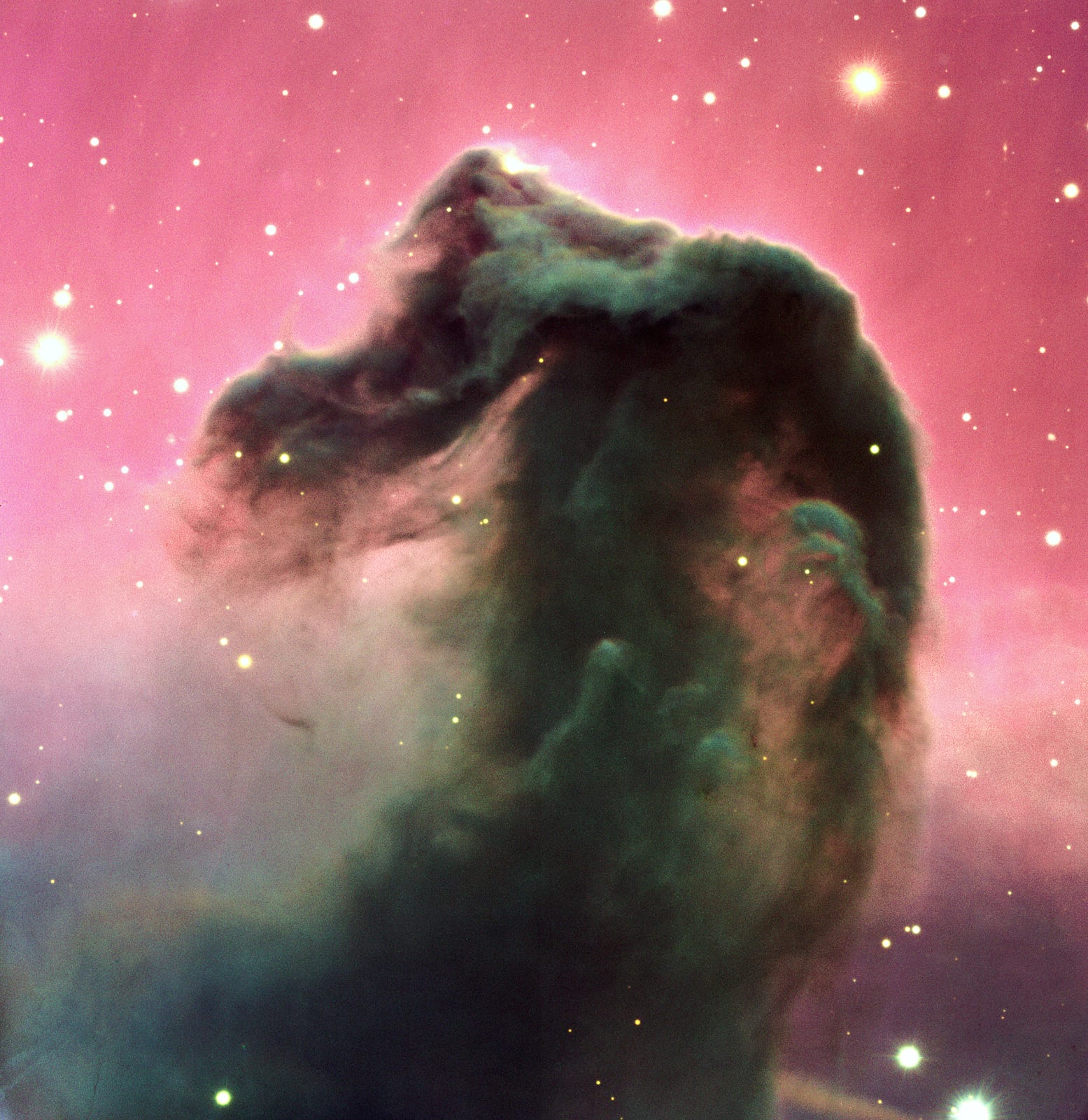
- PferdekopfnebelDunkelnebel, Barnard 33 · 1.375 Lichtjahre3D
- CarinanebelSternentstehungsgebiet, NGC 3372 · 7.500 Lichtjahre3D
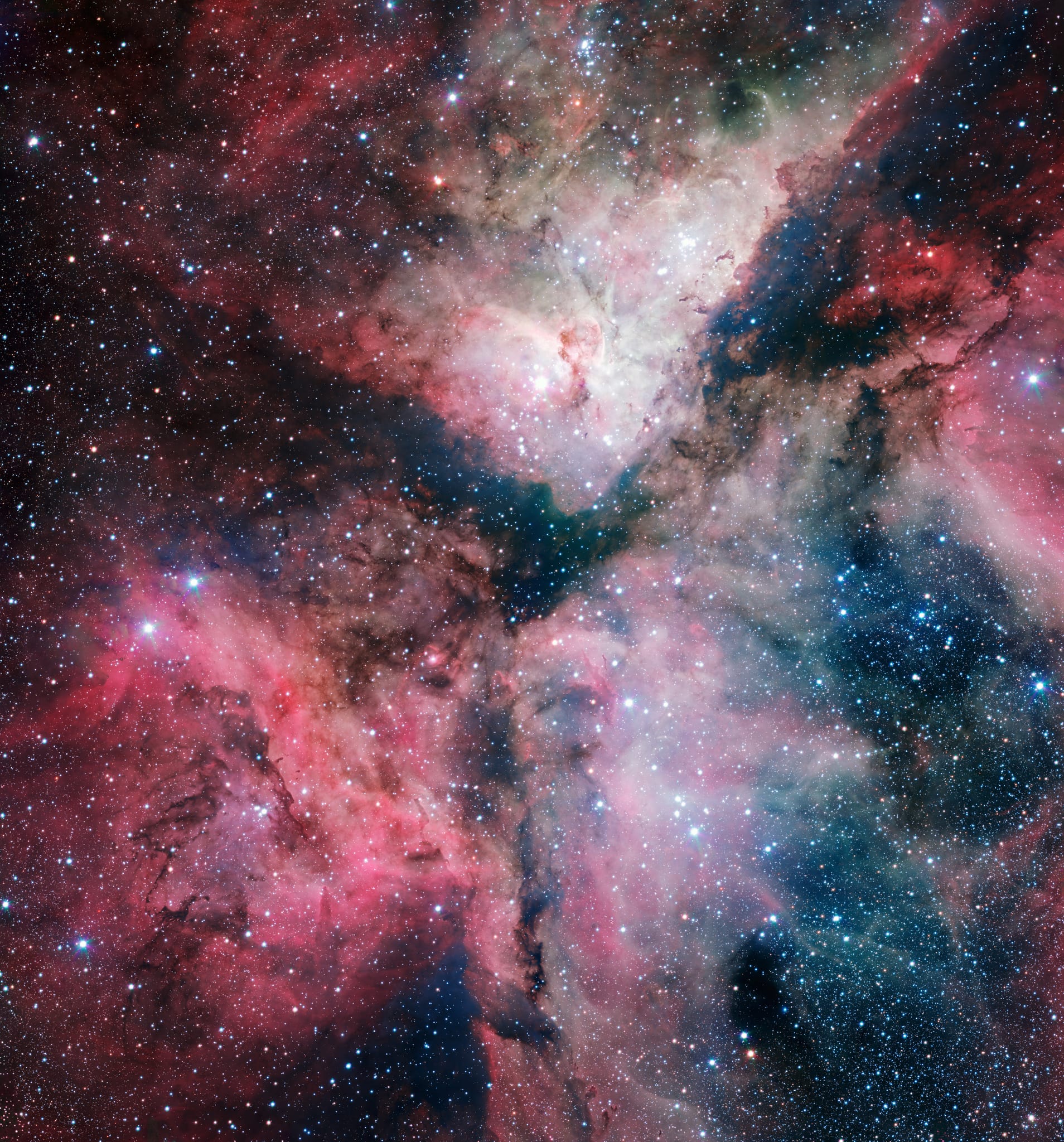
Bild: ESO. Acknowledgement: VPHAS+ Consortium/Cambridge Astronomical Survey Unit
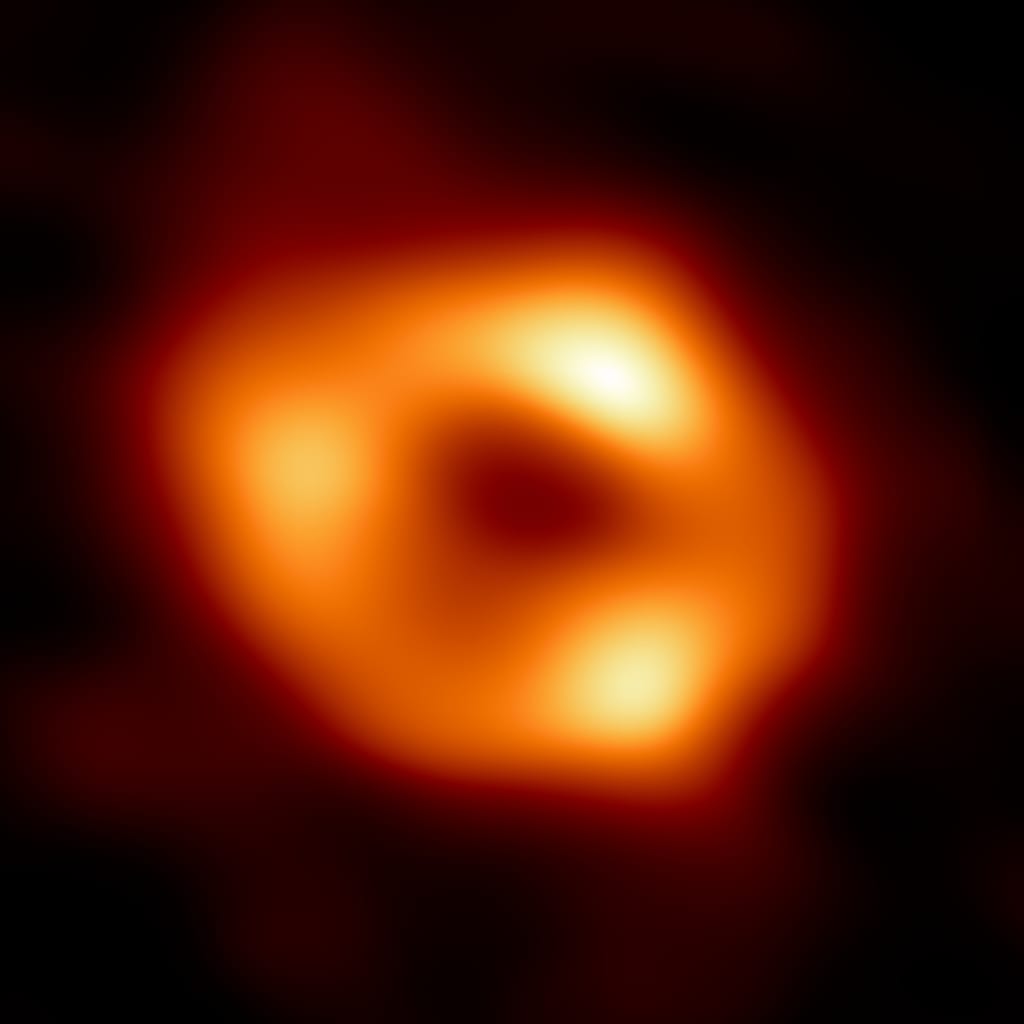
- Sagittarius A*, abgebildetEvent Horizon Telescope, 2022 · 26.670 Lichtjahre3D