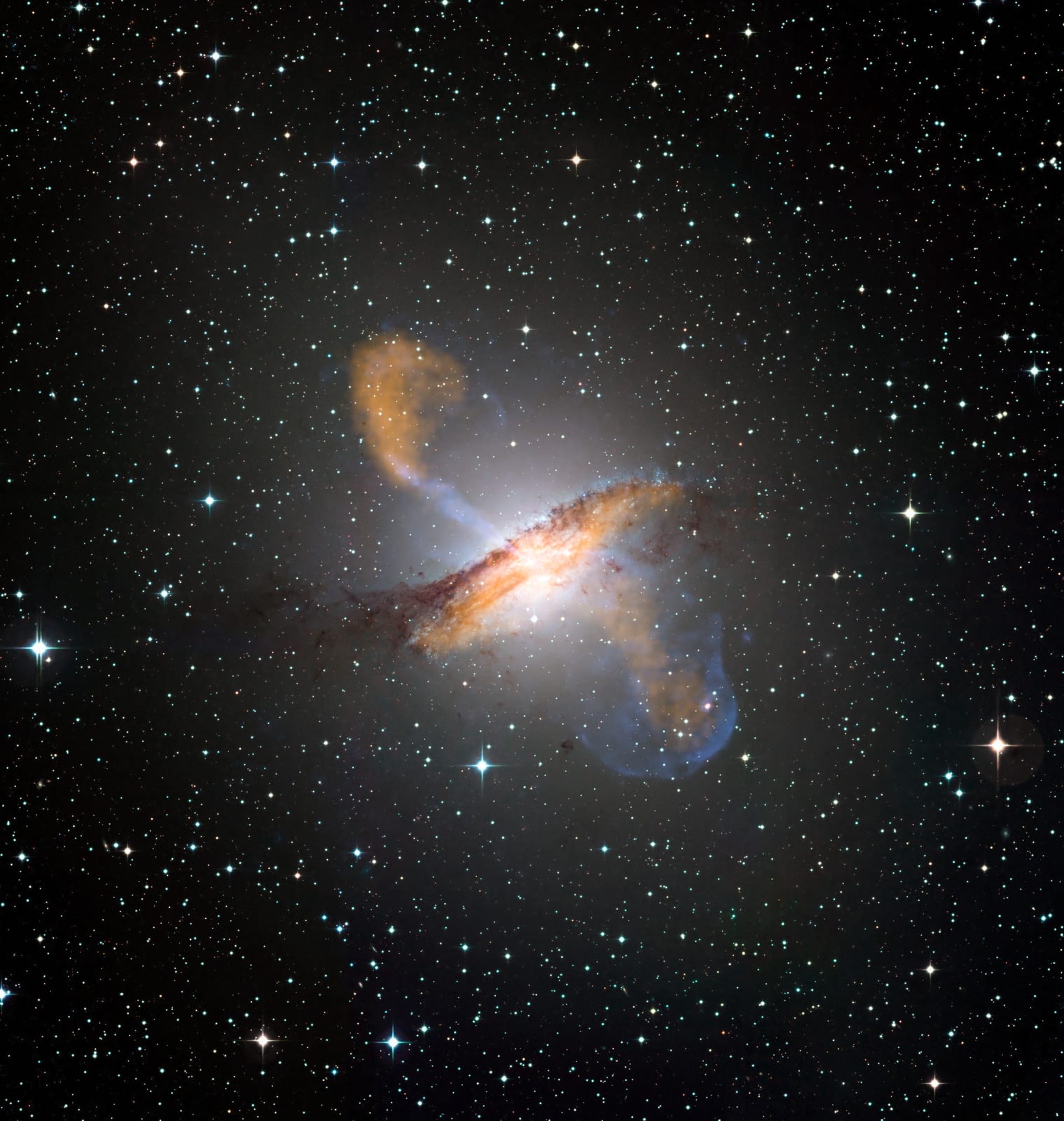
Centaurus A
Elliptical galaxy with a dust lane, NGC 5128
From the Sun
12.4 million light-years
 Open in 3D
What it is
A giant elliptical galaxy that swallowed a spiral; the dark band is the spiral’s dust. Its central black hole drives jets a million light-years long.
The picture hangs at that distance facing Earth, as large as it is on the sky; how deep the object is cannot be seen, so it is flat.
The picture
- Taken by
- European Southern Observatory
- Picture spans
- about 82,000 ly
- From the Sun
- 12.4 million light-years
- RA / Dec
- 201.37° / -43.02°
Centaurus A
Centaurus A is a galaxy in the constellation of Centaurus. It was discovered in 1826 by Scottish astronomer James Dunlop from his home in Parramatta, in New South Wales, Australia. There is considerable debate in the literature regarding the galaxy's fundamental properties such as its Hubble type and distance.
From Wikipedia, CC BY-SA · Read the article
Far beyond
- Whirlpool GalaxySpiral galaxy, M51 · 28 million light-years3D
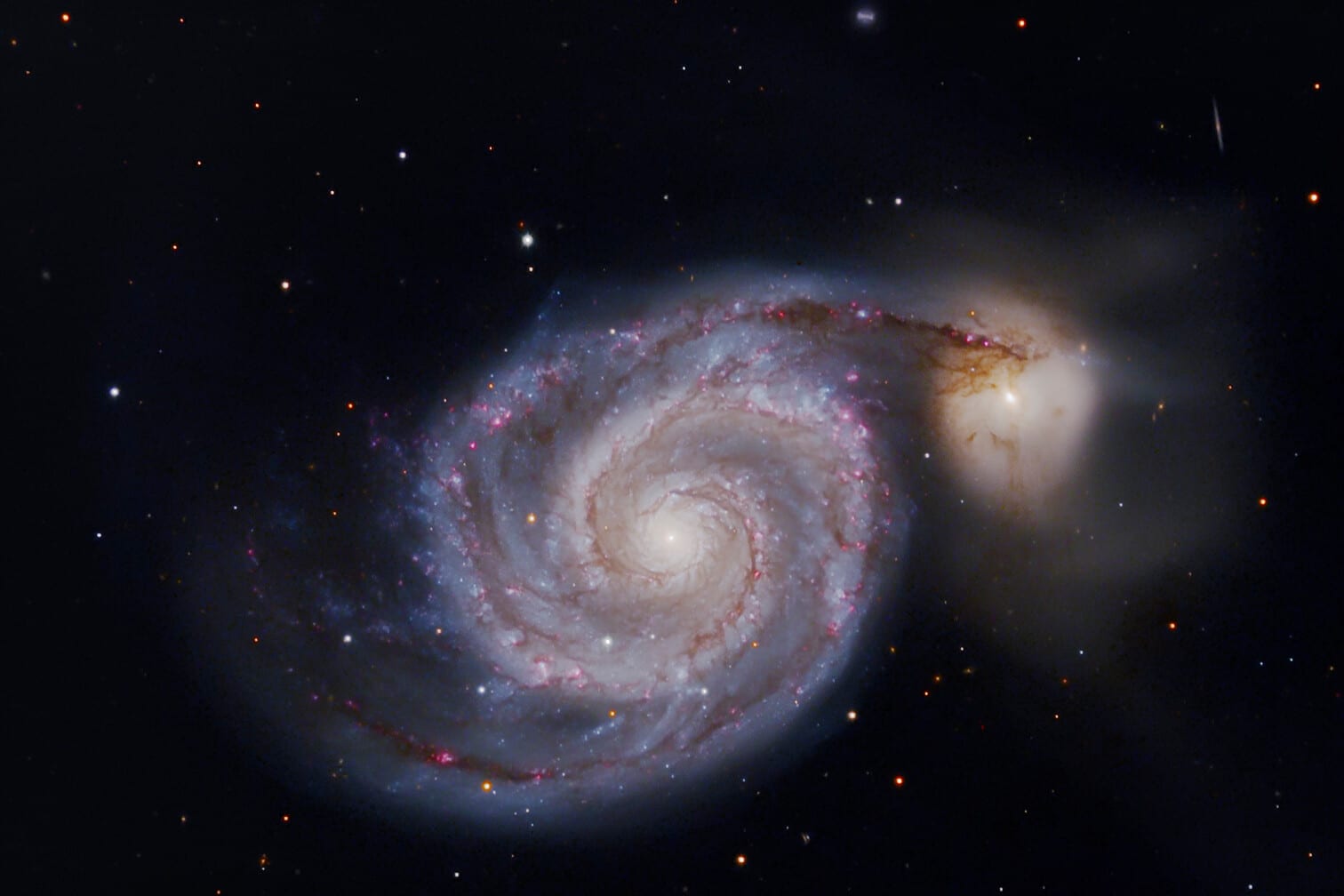
Picture: KPNO/NOIRLab/NSF/AURA/George Hatfield and Flynn Haase
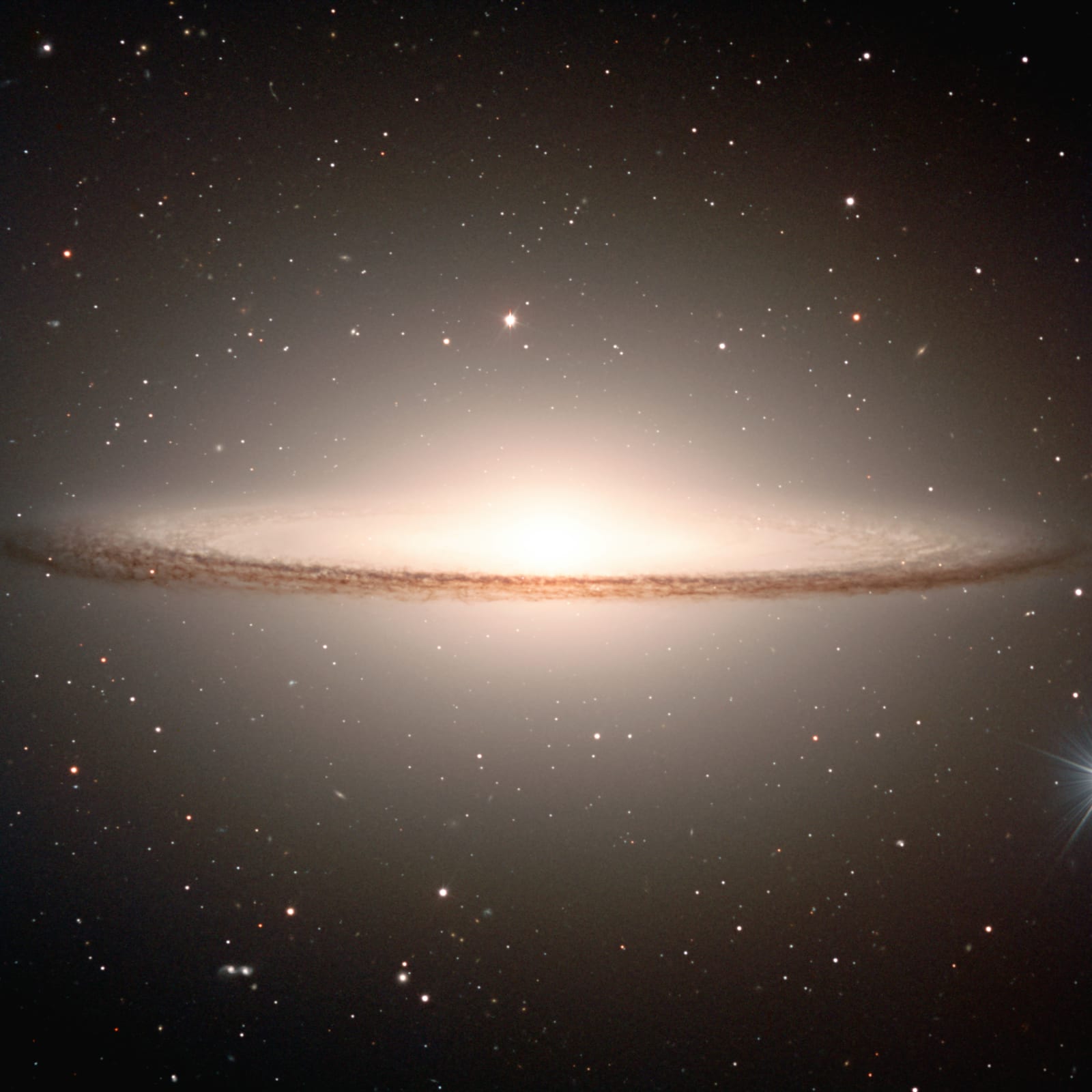
- Sombrero GalaxySpiral galaxy, M104 · 31.1 million light-years3D
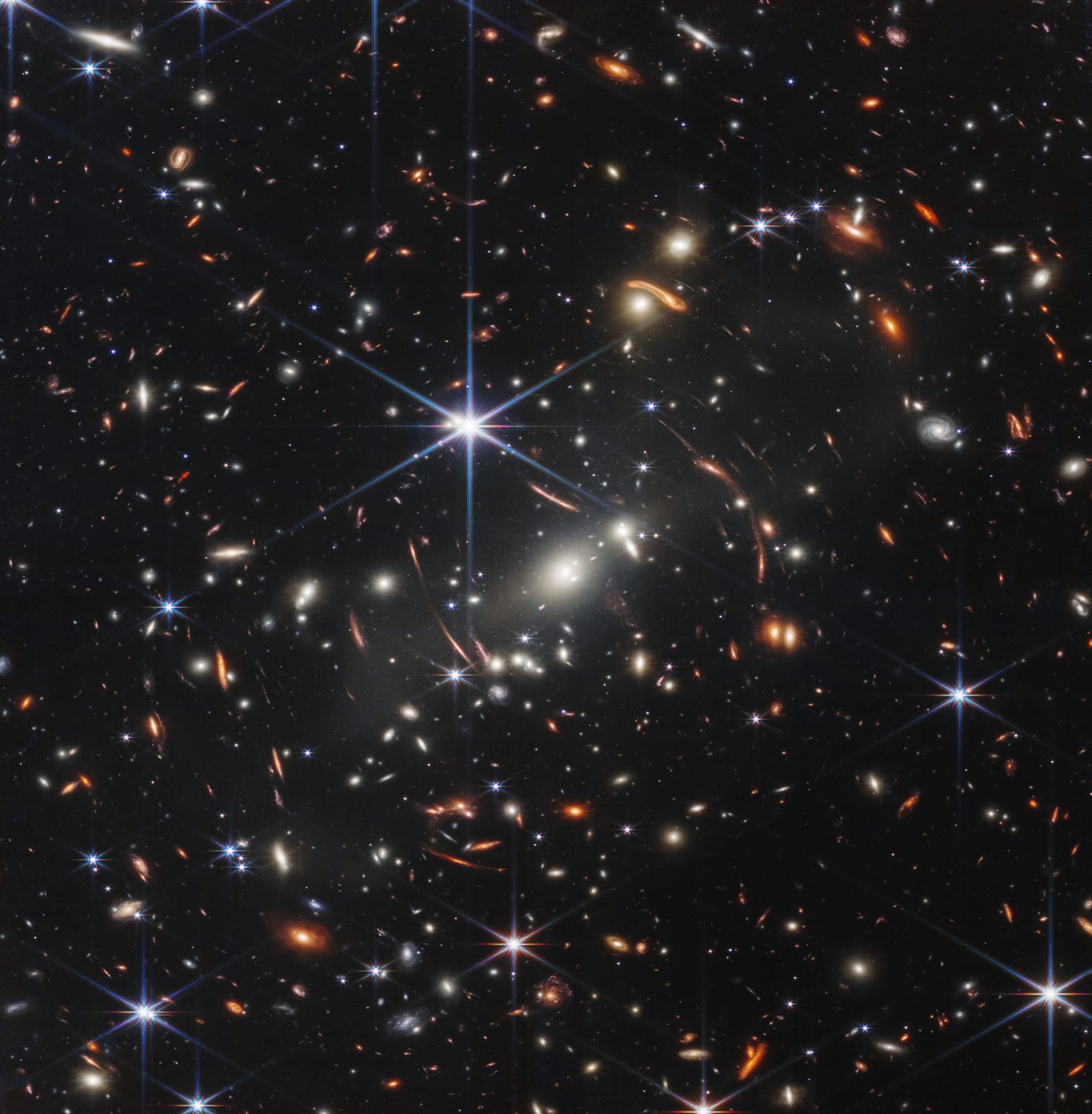
- Webb's First Deep FieldGalaxy cluster SMACS 0723 · 5.1 billion light-years3D
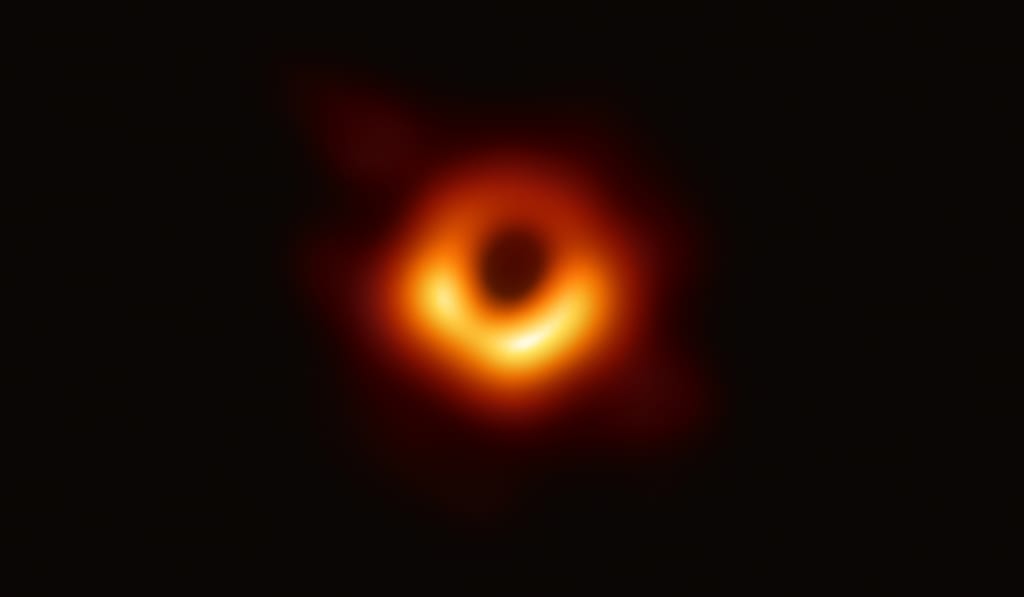
- M87*, imagedEvent Horizon Telescope, 2019 · 53.5 million light-years3D
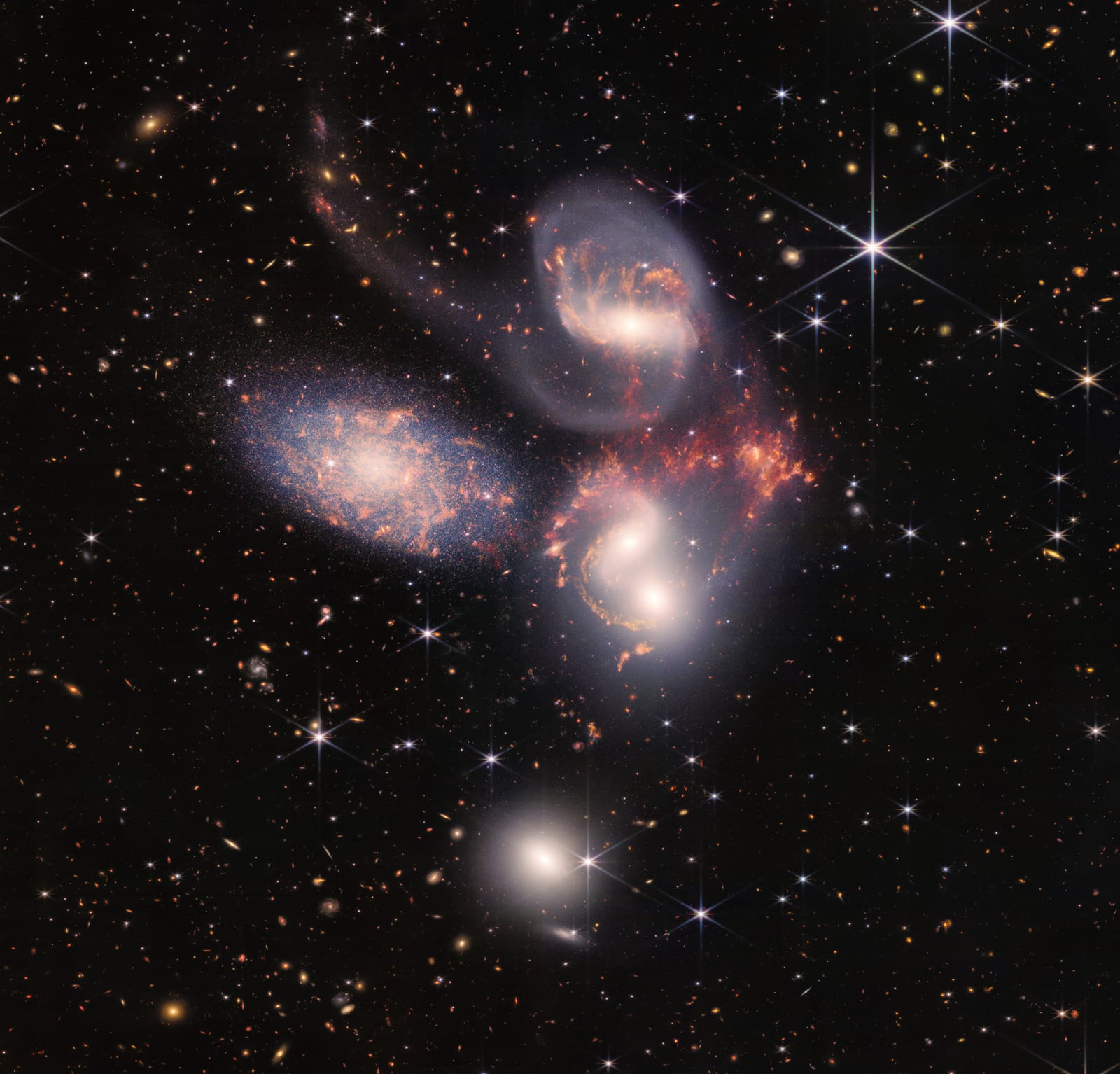
- Stephan's QuintetGroup of galaxies · 290 million light-years3D
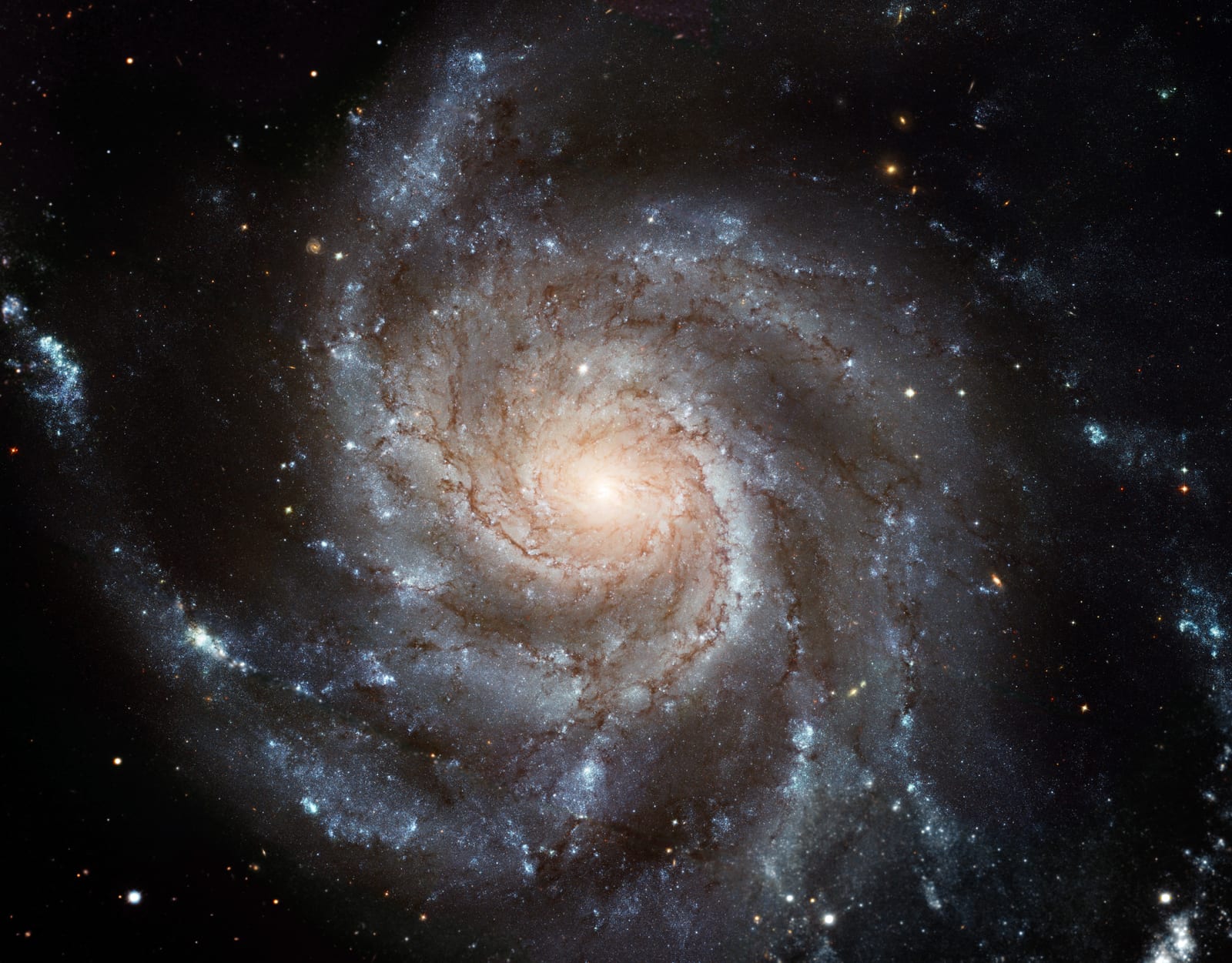
- Pinwheel GalaxySpiral galaxy, M101 · 21 million light-years3D
- Messier 87Giant elliptical galaxy · 53.5 million light-years3D
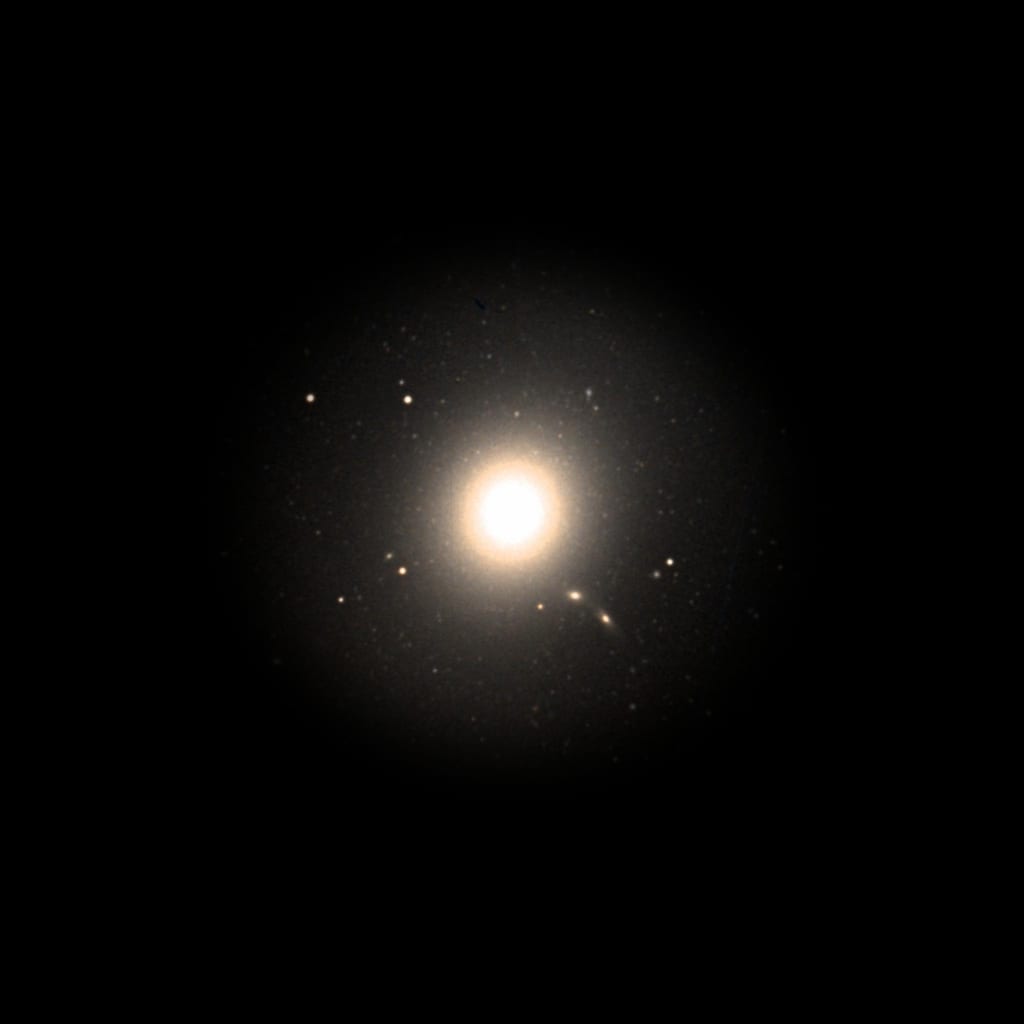
Picture: Digitized Sky Survey 2 (STScI/AURA, Palomar/Caltech, UKSTU/AAO), via CDS hips2fits
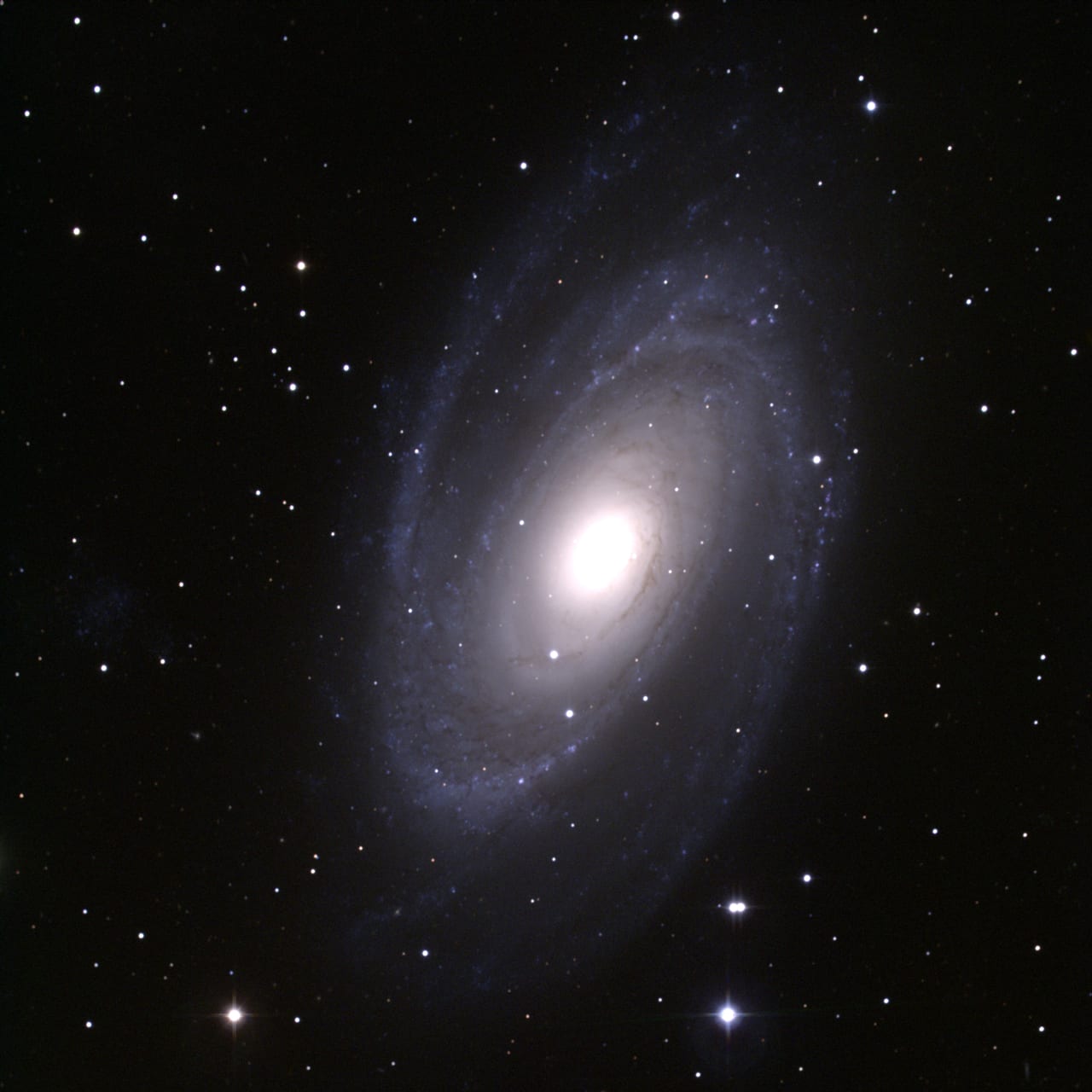
- Bode's GalaxySpiral galaxy, M81 · 11.8 million light-years3D