Tarantula Nebula
Star-forming region in the Large Magellanic Cloud
From the Sun
163,000 light-years
 Open in 3D
What it is
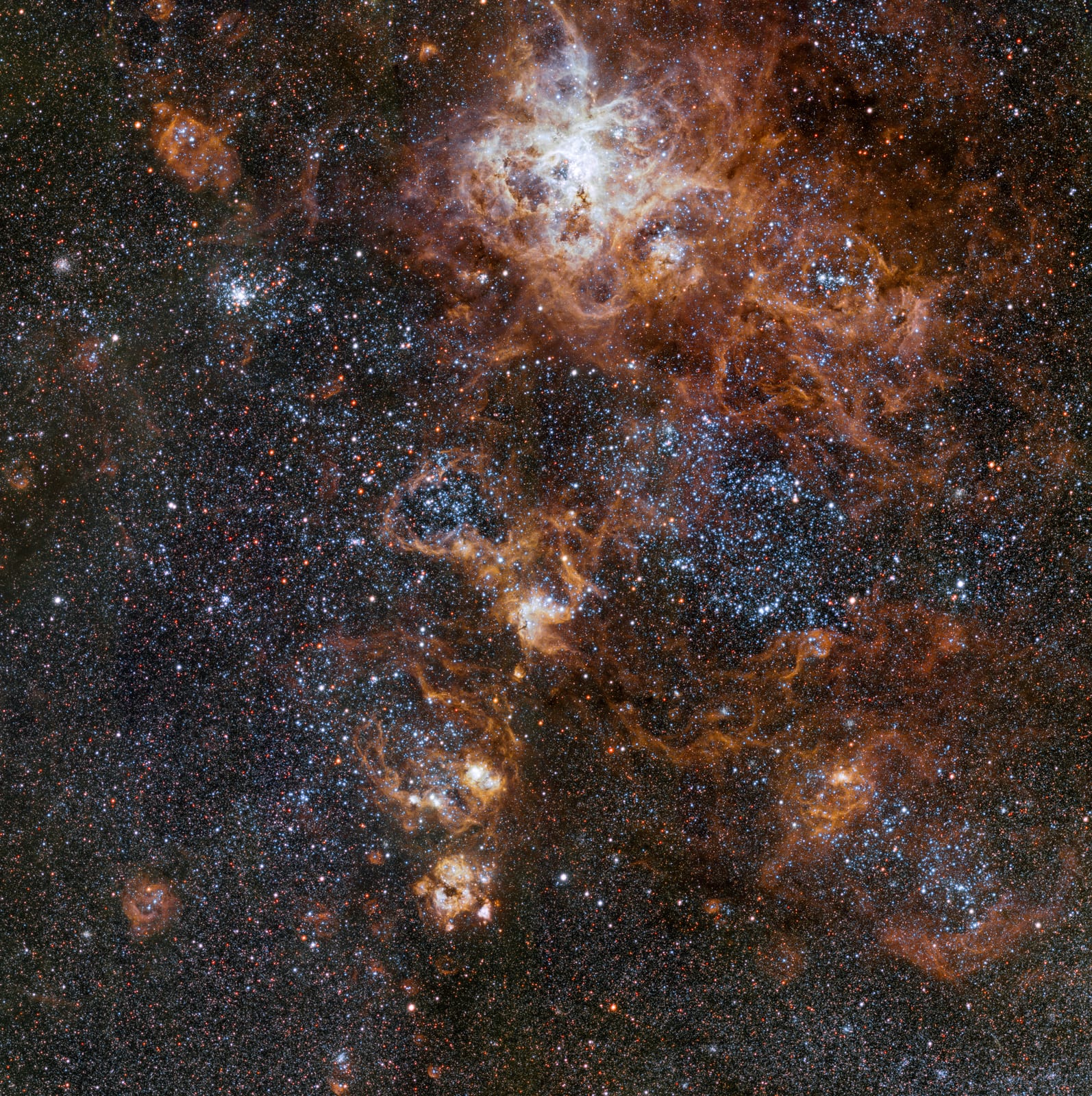
The brightest star-forming region in the Local Group. If it were as close as the Orion Nebula it would cast shadows on Earth.
The picture hangs at that distance facing Earth, as large as it is on the sky; how deep the object is cannot be seen, so it is flat.
The picture
- Taken by
- European Southern Observatory
- Picture spans
- about 2,800 ly
- From the Sun
- 163,000 light-years
- RA / Dec
- 84.75° / -69.44°
- Credit
- ESO
Tarantula Nebula
The Tarantula Nebula is a large H II region in the Large Magellanic Cloud (LMC), forming its south-east corner. The nebula is named for the arrangement of its bright, glowing gas filaments and dusty tendrils which stretch outward and look like the legs of a tarantula.
From Wikipedia, CC BY-SA · Read the article
Our neighbour galaxies
- Andromeda GalaxySpiral galaxy, M31 · 2.54 million light-years3D
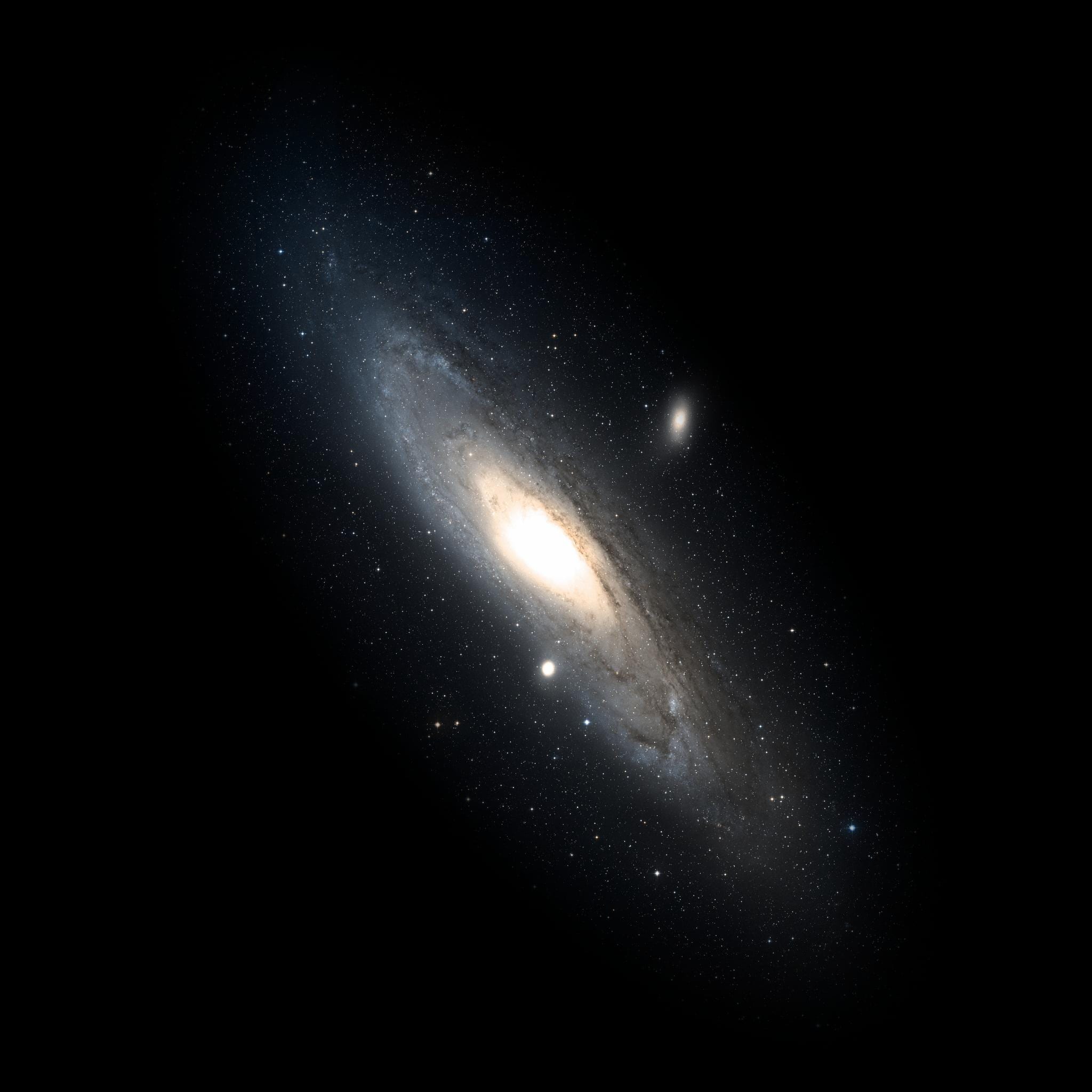
Picture: Digitized Sky Survey 2 (STScI/AURA, Palomar/Caltech, UKSTU/AAO), via CDS hips2fits
- Large Magellanic CloudSatellite of the Milky Way · 163,000 light-years3D
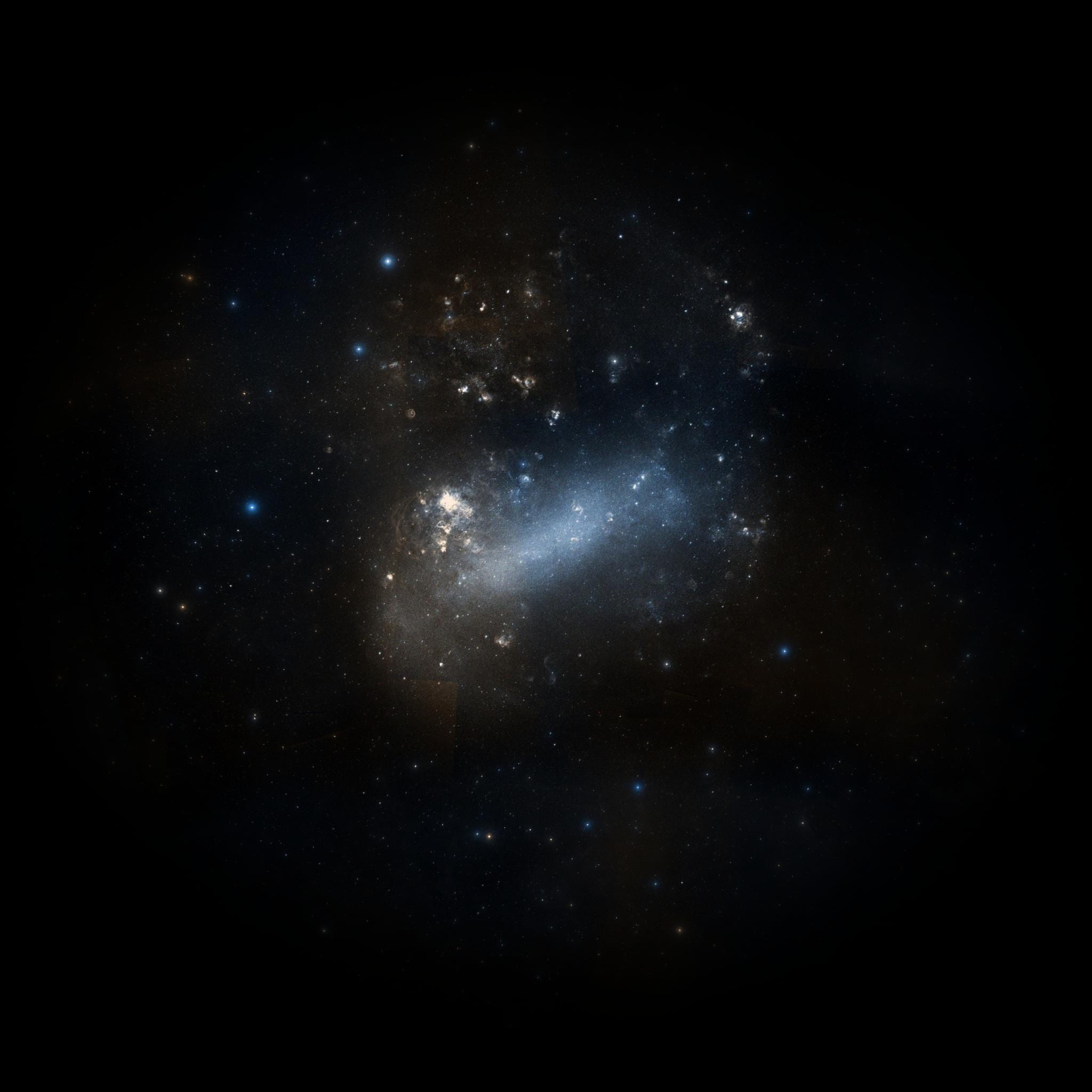
Picture: Digitized Sky Survey 2 (STScI/AURA, Palomar/Caltech, UKSTU/AAO), via CDS hips2fits
- Triangulum GalaxySpiral galaxy, M33 · 2.73 million light-years3D
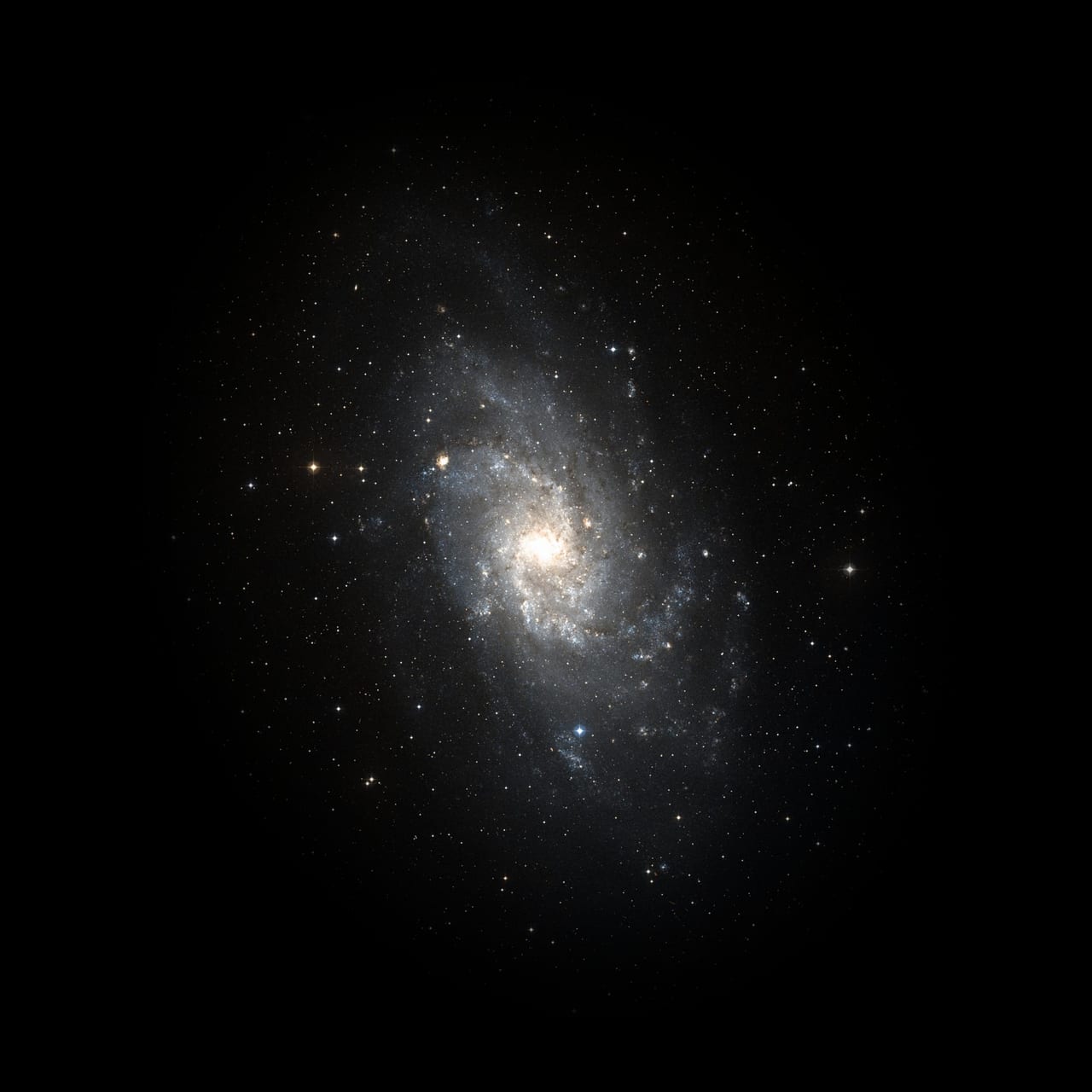
Picture: Digitized Sky Survey 2 (STScI/AURA, Palomar/Caltech, UKSTU/AAO), via CDS hips2fits
- Small Magellanic CloudSatellite of the Milky Way · 203,000 light-years3D
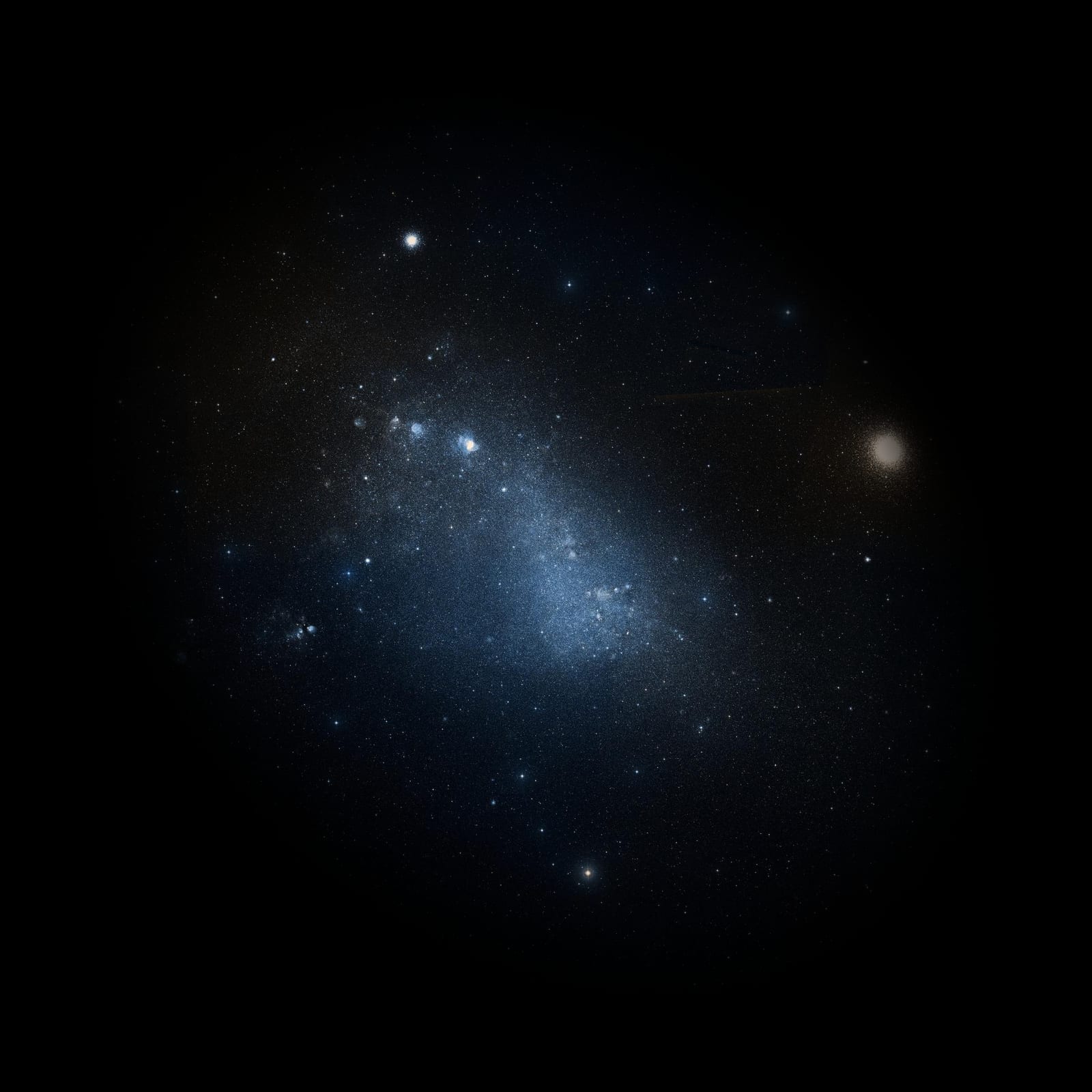
Picture: Digitized Sky Survey 2 (STScI/AURA, Palomar/Caltech, UKSTU/AAO), via CDS hips2fits