 Open in 3D
What it is
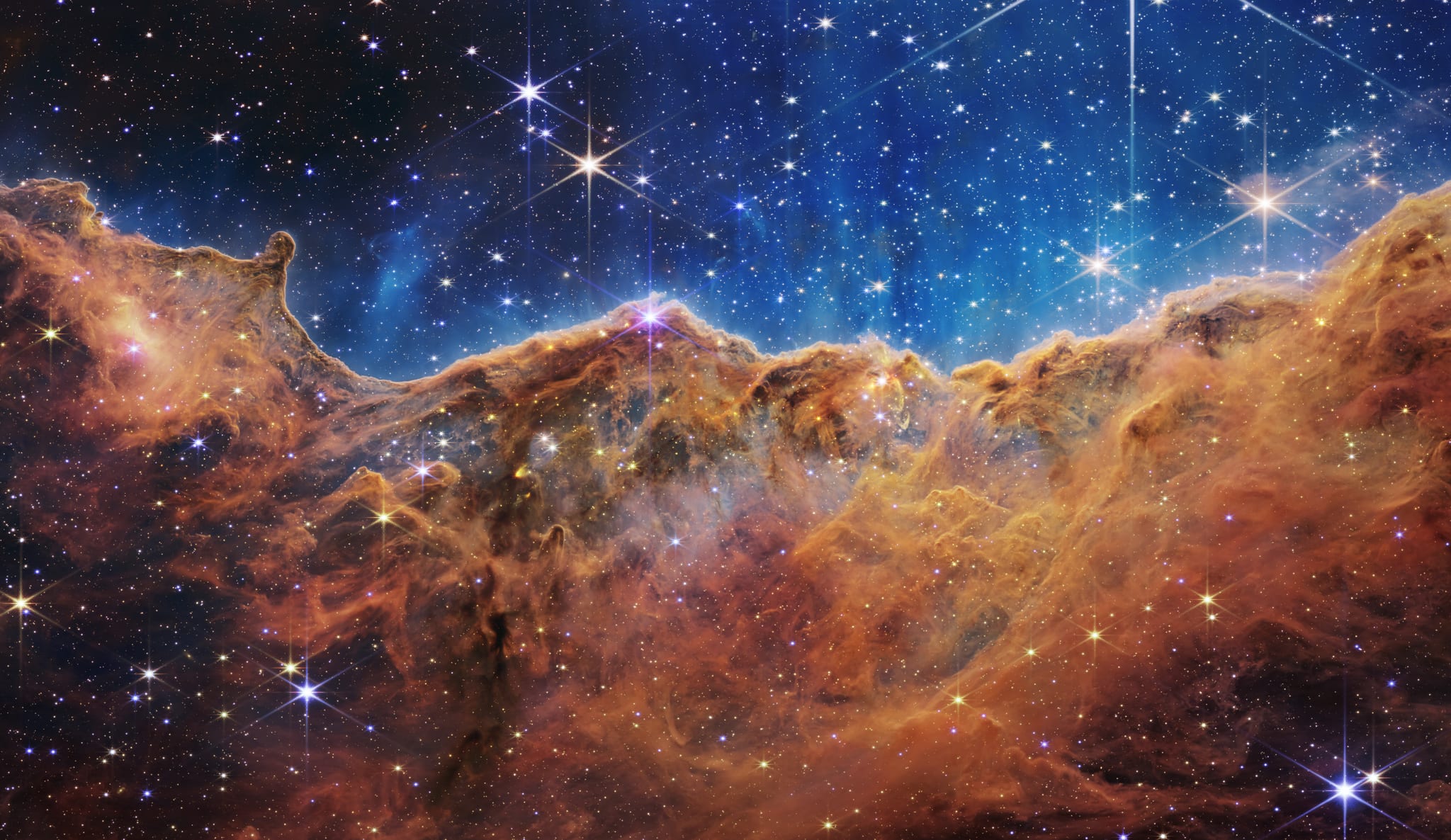
The edge of a cavity blown in the cloud by hot young stars above it, in one of Webb's first images (July 2022). The tallest peaks are about seven light-years high.
The picture hangs at that distance facing Earth, as large as it is on the sky; how deep the object is cannot be seen, so it is flat.
The picture
- Taken by
- James Webb Space Telescope
- Picture spans
- about 16 ly
- From the Sun
- 7,600 light-years
- RA / Dec
- 159.21° / -58.62°
NGC 3324
NGC 3324 is an open cluster in the southern constellation of Carina, located northwest of the Carina Nebula (NGC 3372) at a distance of 9,100 ly (2,800 pc) from Earth. It is closely associated with the emission nebula IC 2599, also known as Gum 31. The two are often confused as a single object, and together have been nicknamed the "Gabriela Mistral Nebula" due to its resemblance to the Chilean poet.
From Wikipedia, CC BY-SA · Read the article
In the Milky Way
- Pillars of CreationStar-forming columns in the Eagle Nebula · 5,700 light-years3D
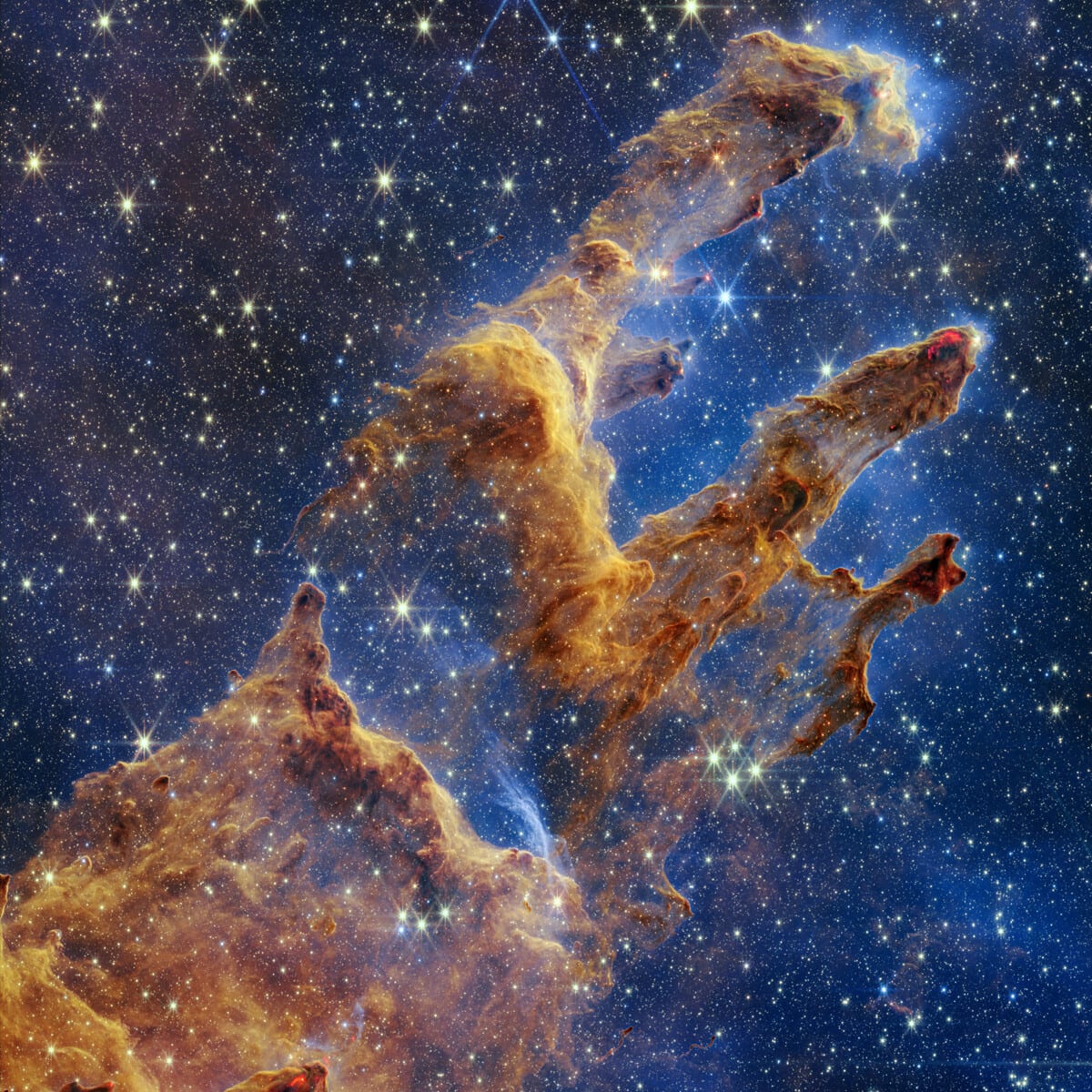
Picture: NASA, ESA, CSA, STScI; J. DePasquale, A. Koekemoer, A. Pagan (STScI).
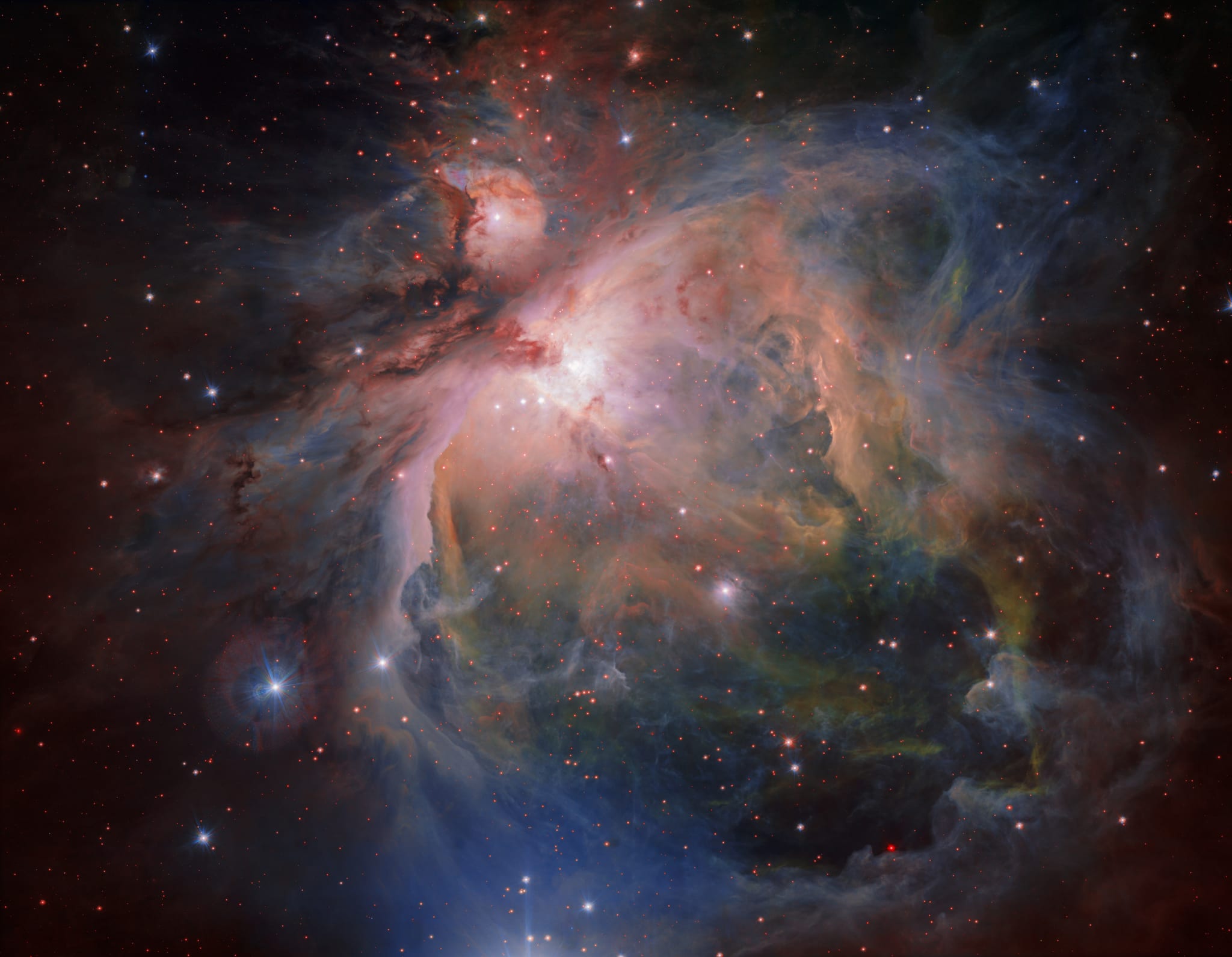
- Orion NebulaNearest large star-forming region, M42 · 1,344 light-years3D
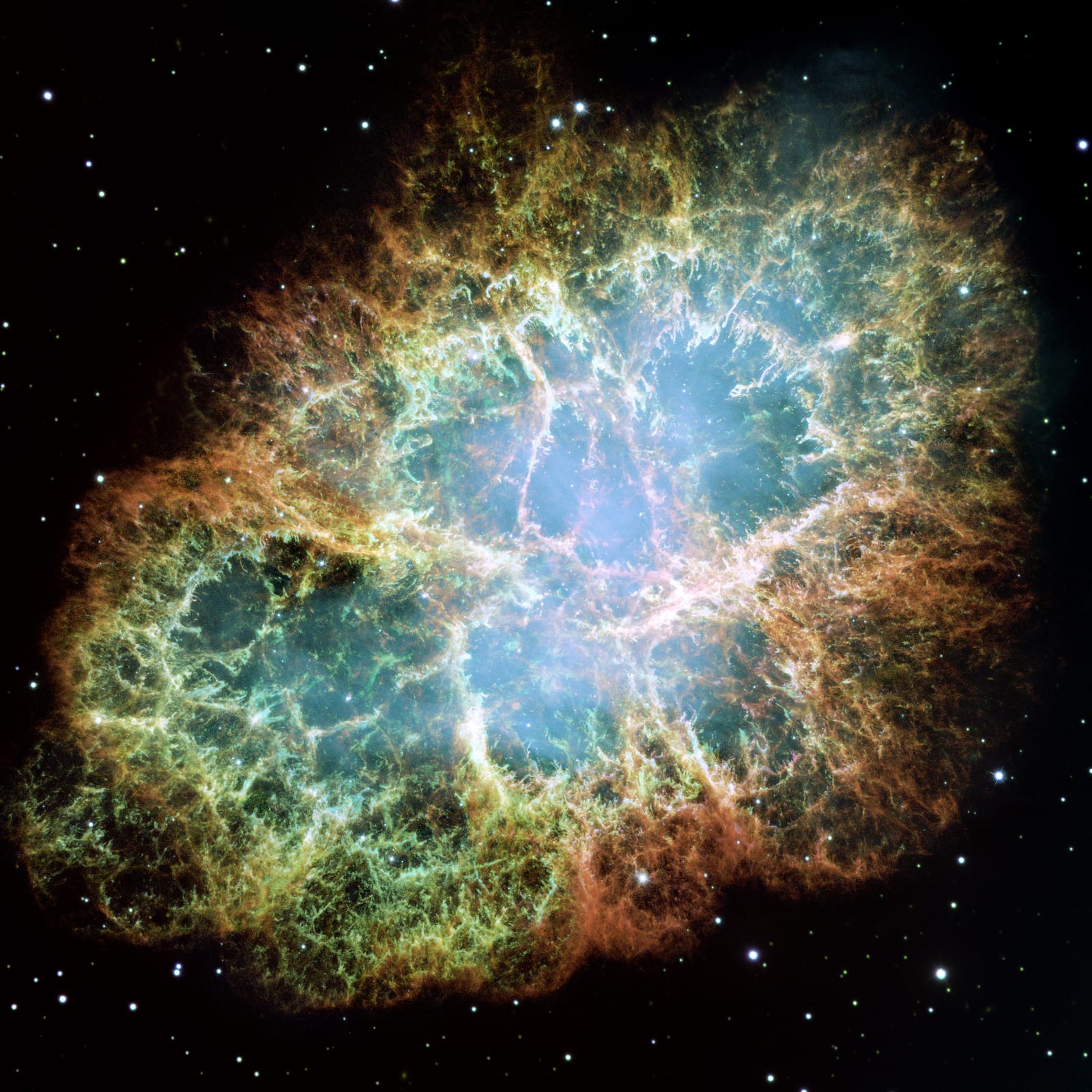
- Crab NebulaSupernova remnant, M1 · 6,500 light-years3D
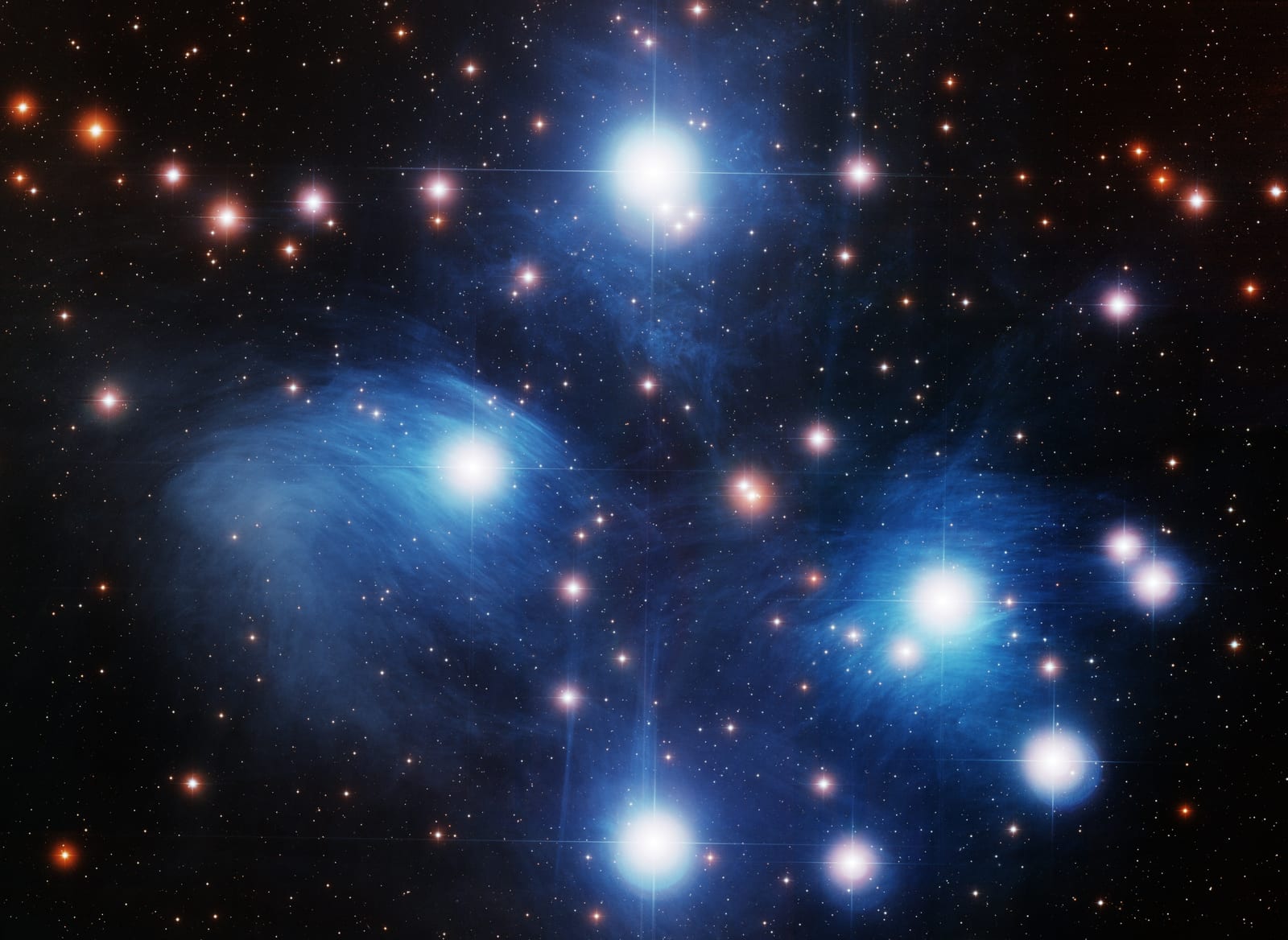
- PleiadesOpen star cluster, M45 · 444 light-years3D
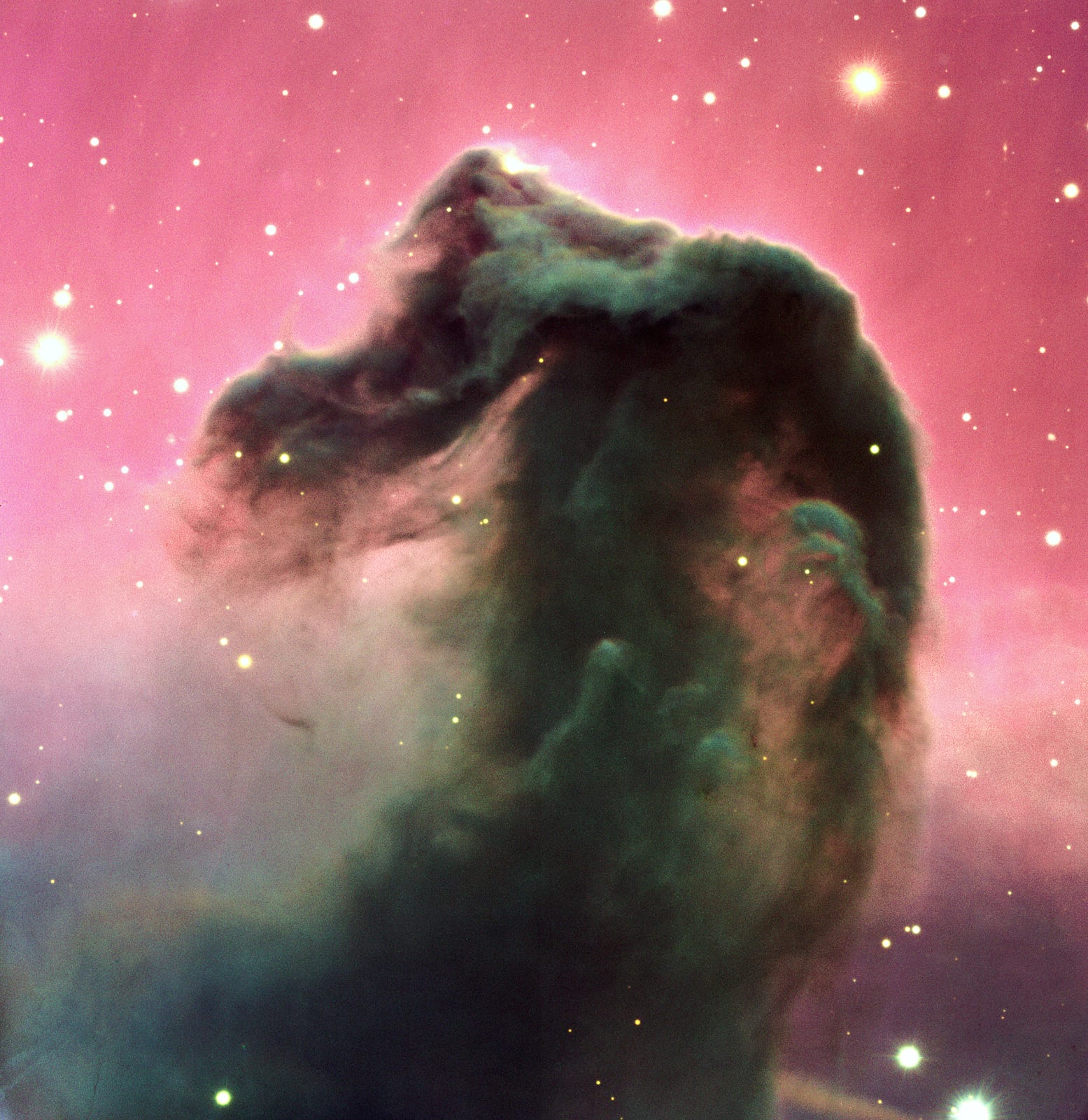
- Horsehead NebulaDark nebula, Barnard 33 · 1,375 light-years3D
- Carina NebulaStar-forming region, NGC 3372 · 7,500 light-years3D
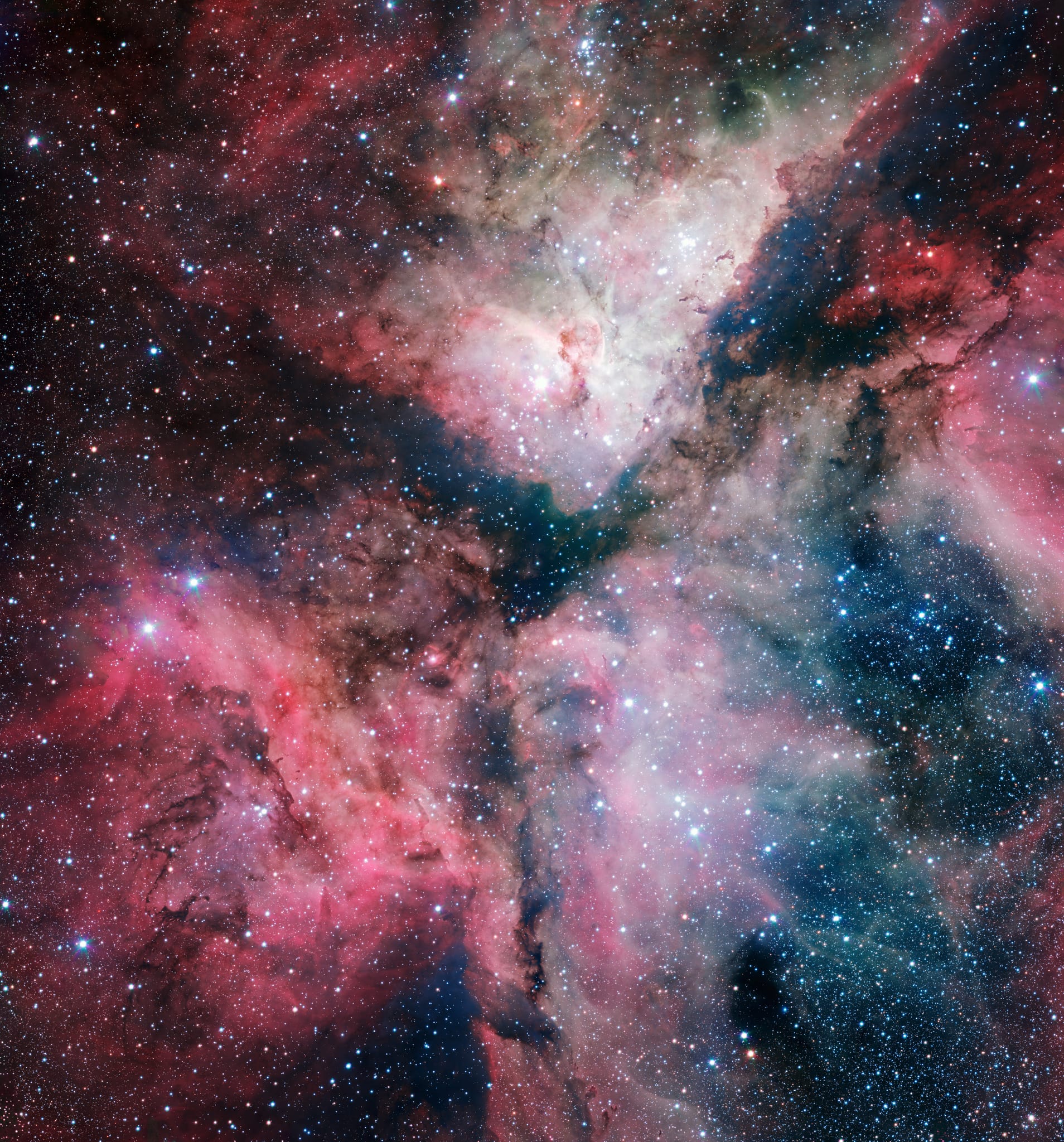
Picture: ESO. Acknowledgement: VPHAS+ Consortium/Cambridge Astronomical Survey Unit
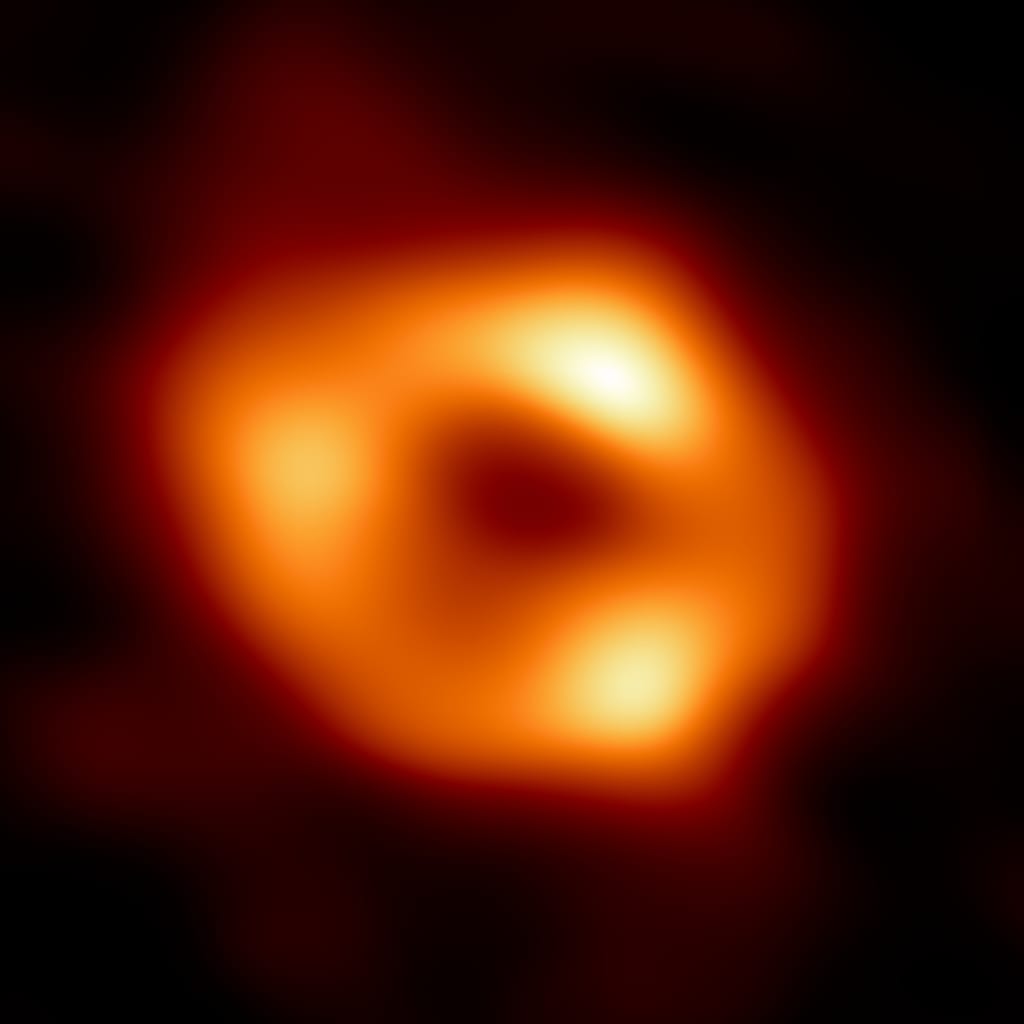
- Sagittarius A*, imagedEvent Horizon Telescope, 2022 · 26,670 light-years3D
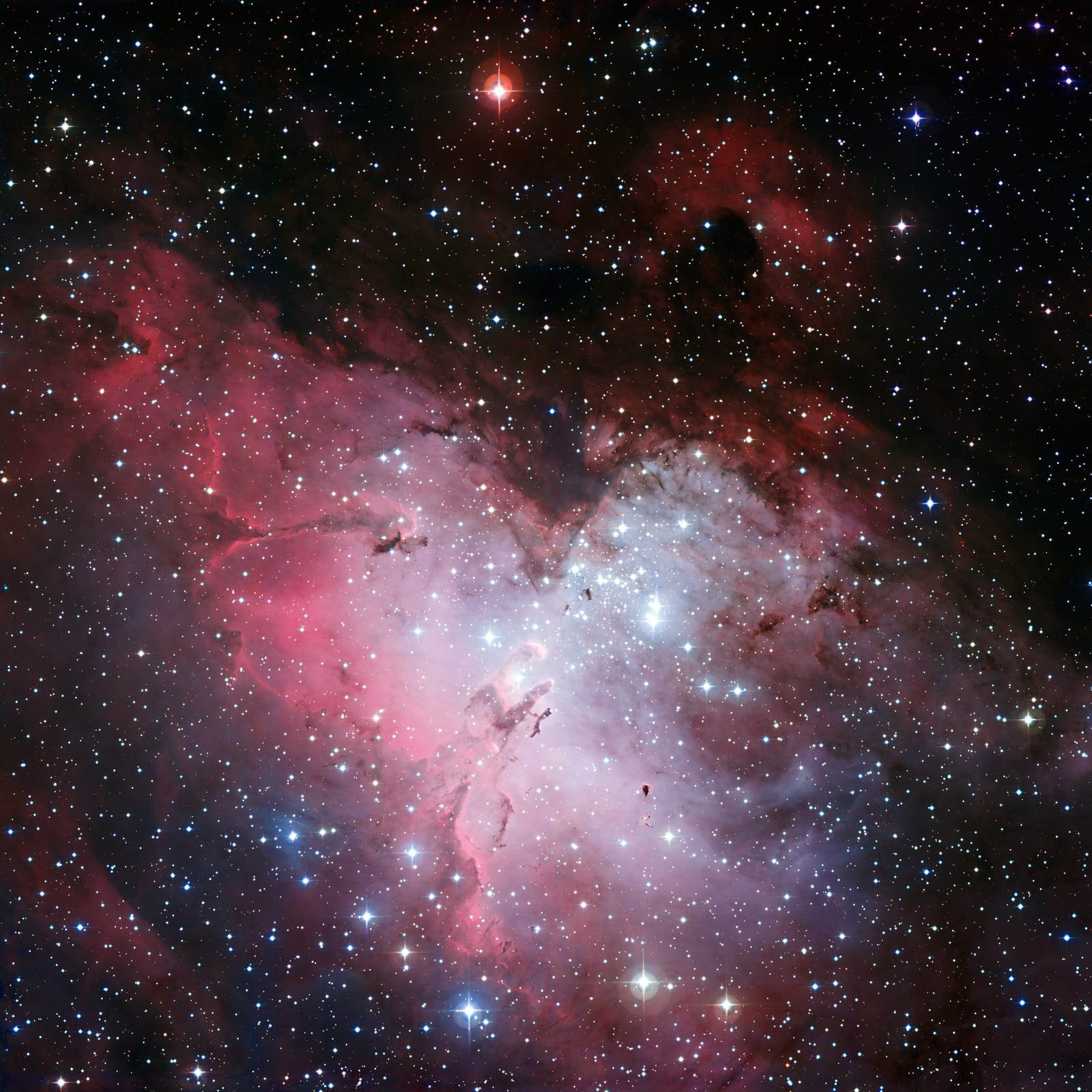
- Eagle NebulaStar cluster and nebula, M16 · 5,700 light-years3D