 Open in 3D
What it is
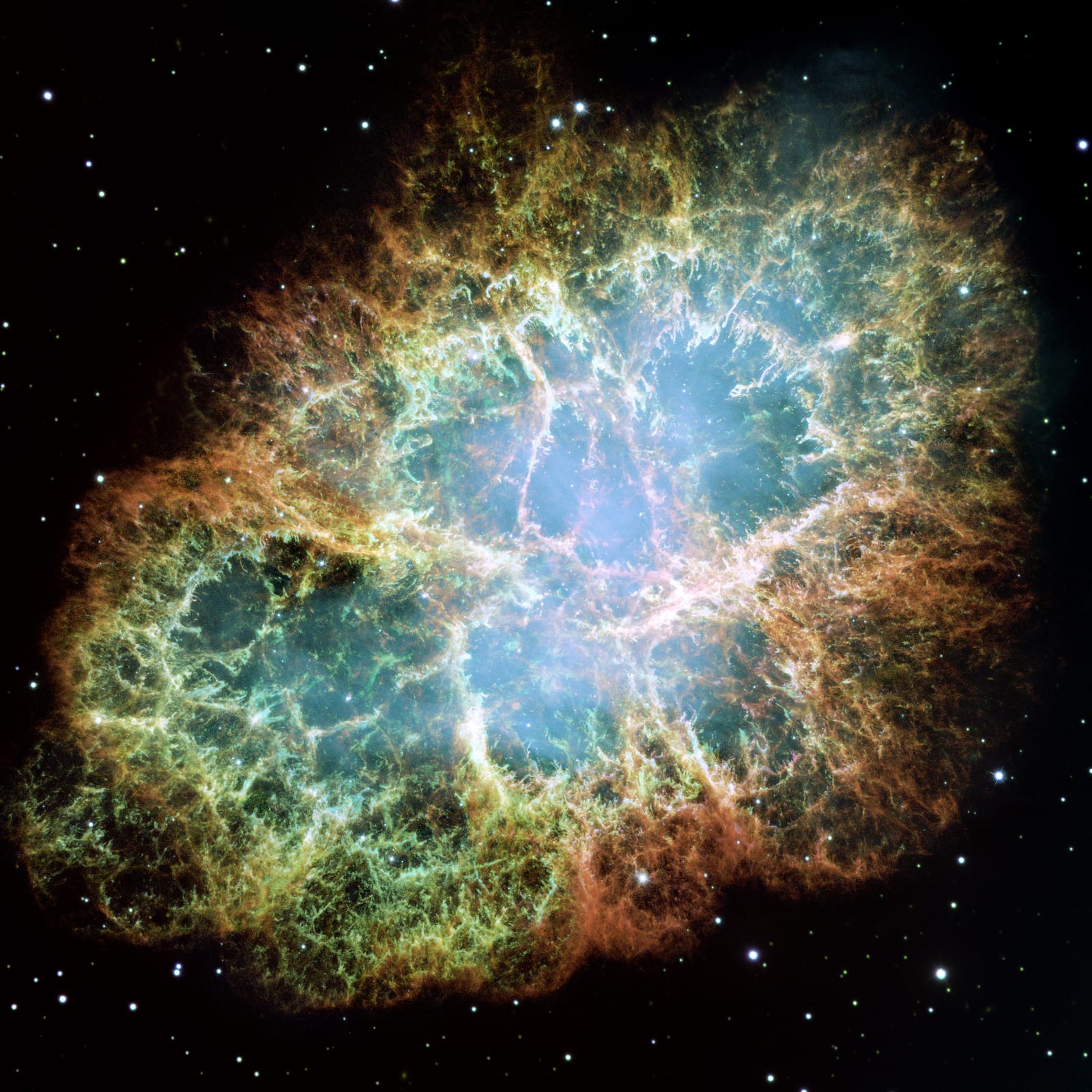
What is left of a star whose explosion was seen from Earth in 1054 and recorded by Chinese astronomers. A pulsar spinning 30 times a second sits at its centre.
The picture hangs at that distance facing Earth, as large as it is on the sky; how deep the object is cannot be seen, so it is flat.
The picture
- Taken by
- Hubble Space Telescope
- Picture spans
- about 12 ly
- From the Sun
- 6,500 light-years
- RA / Dec
- 83.64° / 22.02°
Crab Nebula
The Crab Nebula is a supernova remnant and pulsar wind nebula in the constellation of Taurus. The common name comes from a drawing that somewhat resembled a crab with arms produced by William Parsons, 3rd Earl of Rosse, in 1842 or 1843 using a 36-inch (91 cm) telescope. The nebula was discovered by English astronomer John Bevis in 1731.
From Wikipedia, CC BY-SA · Read the article
In the Milky Way
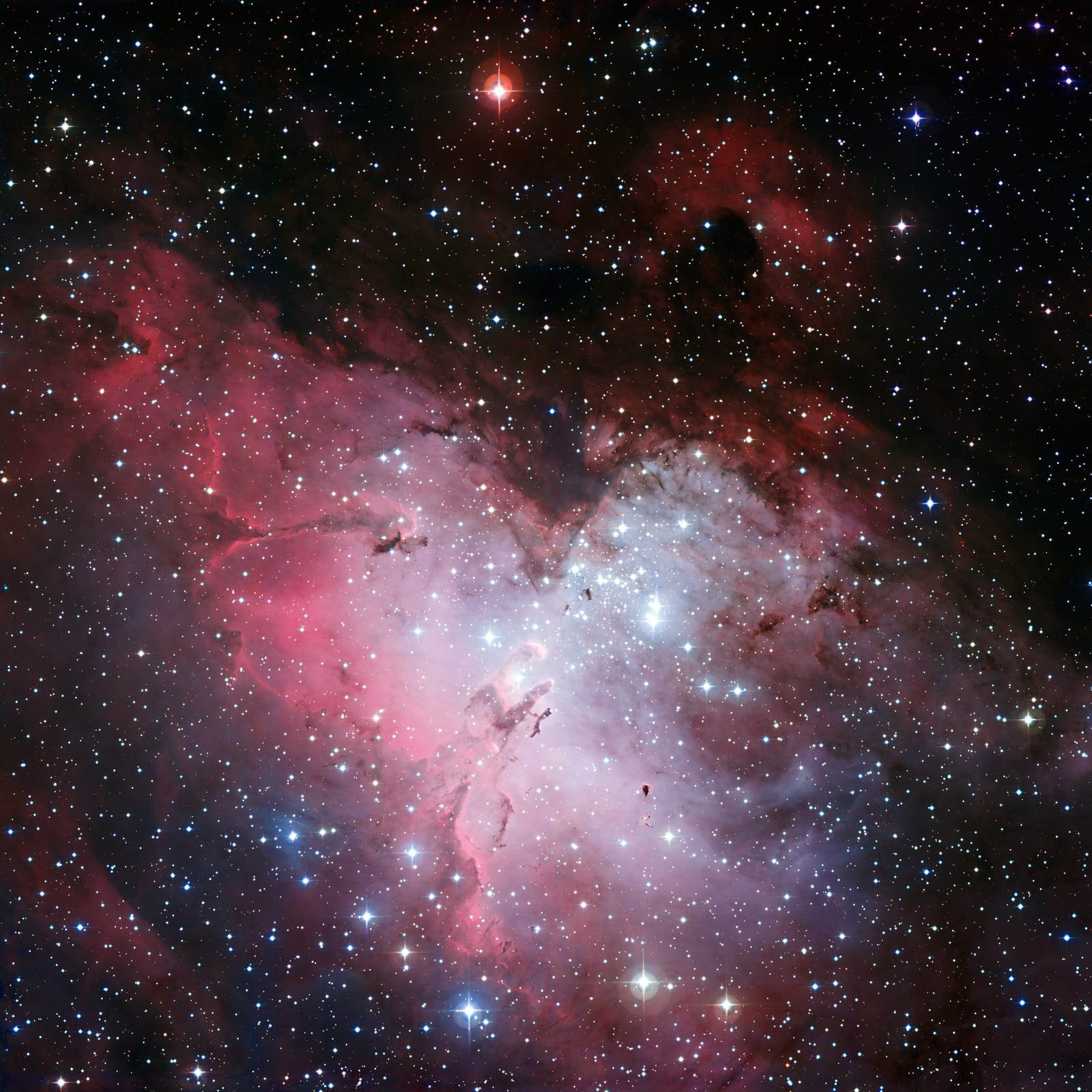
- Pillars of CreationStar-forming columns in the Eagle Nebula · 5,700 light-years3D
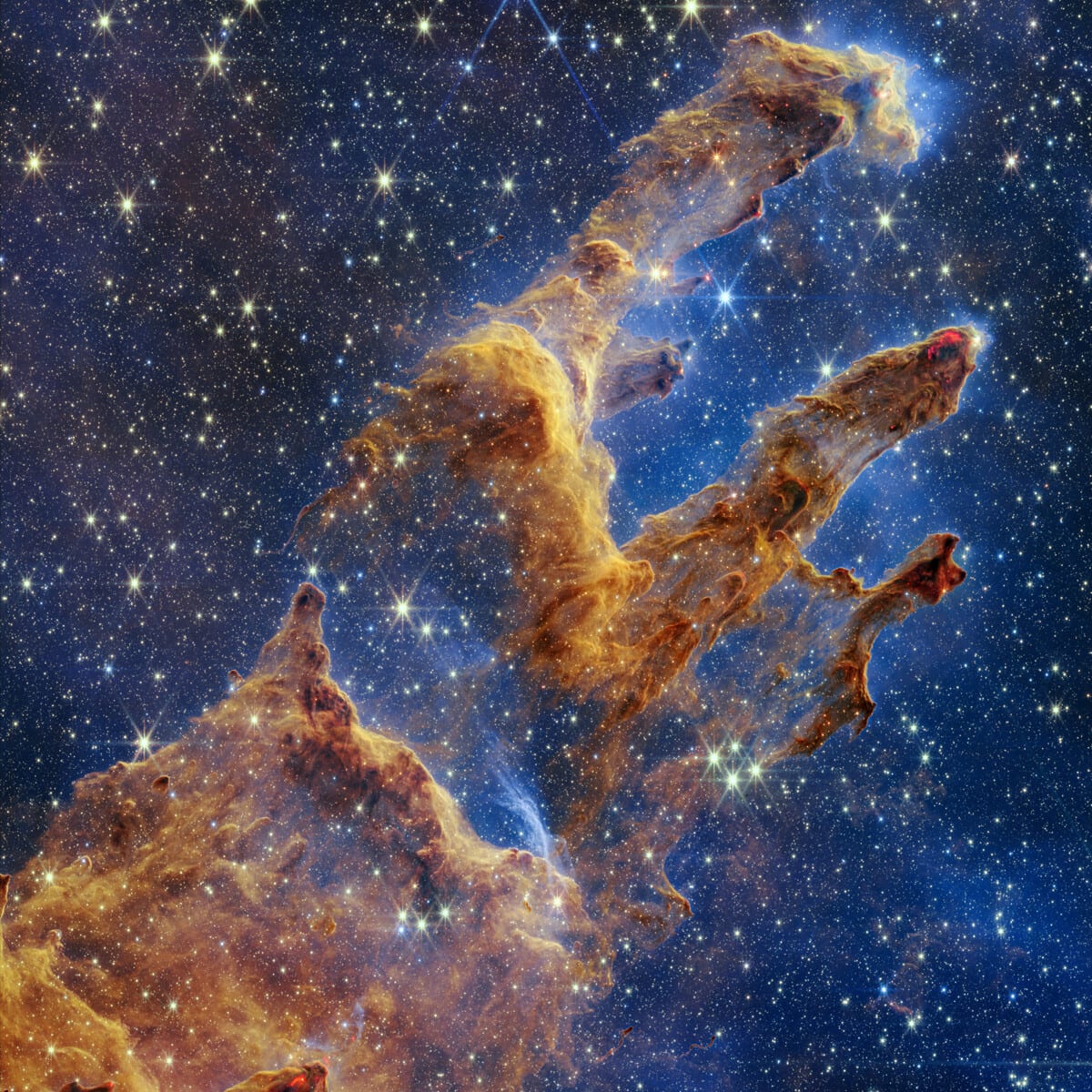
Picture: NASA, ESA, CSA, STScI; J. DePasquale, A. Koekemoer, A. Pagan (STScI).
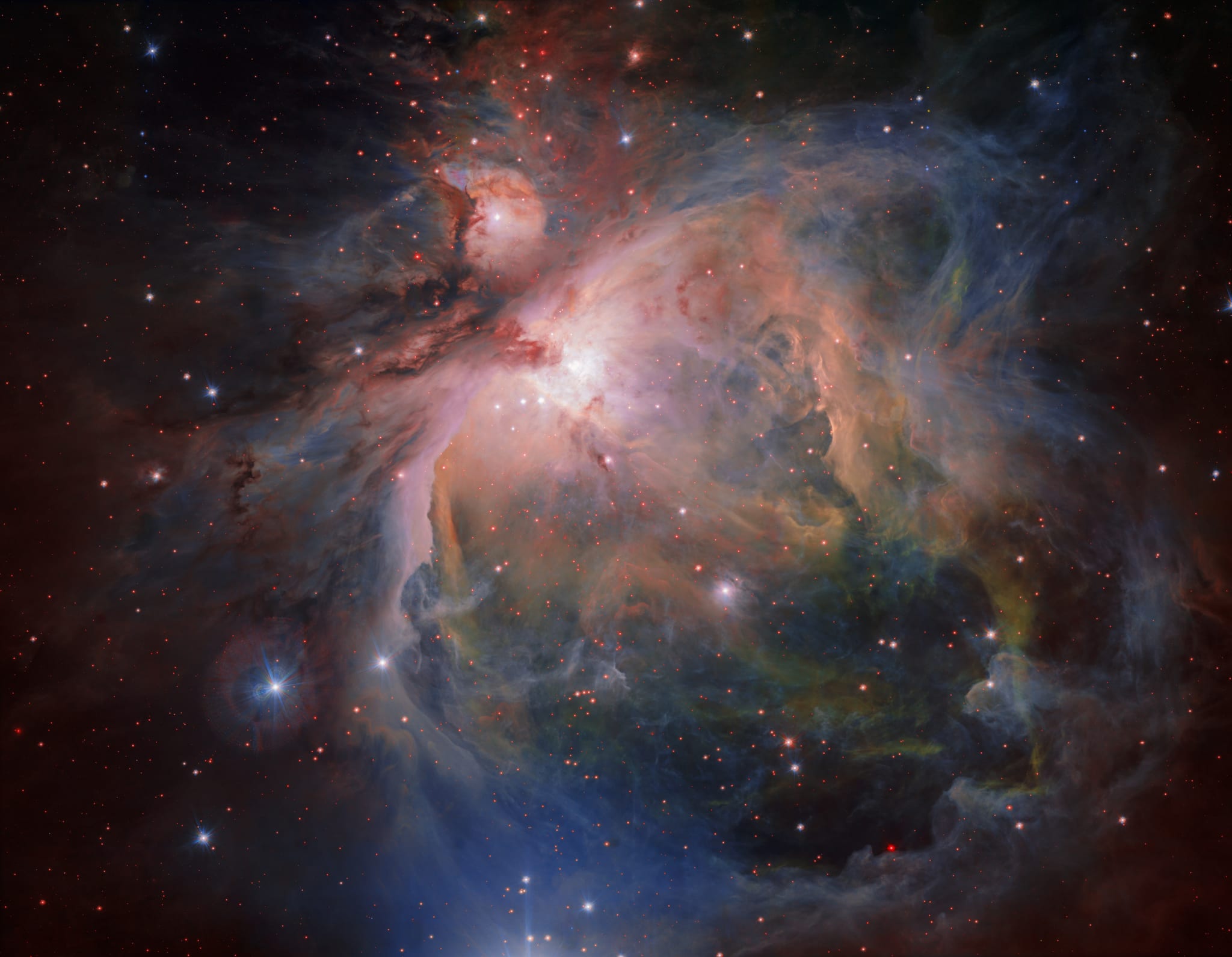
- Orion NebulaNearest large star-forming region, M42 · 1,344 light-years3D
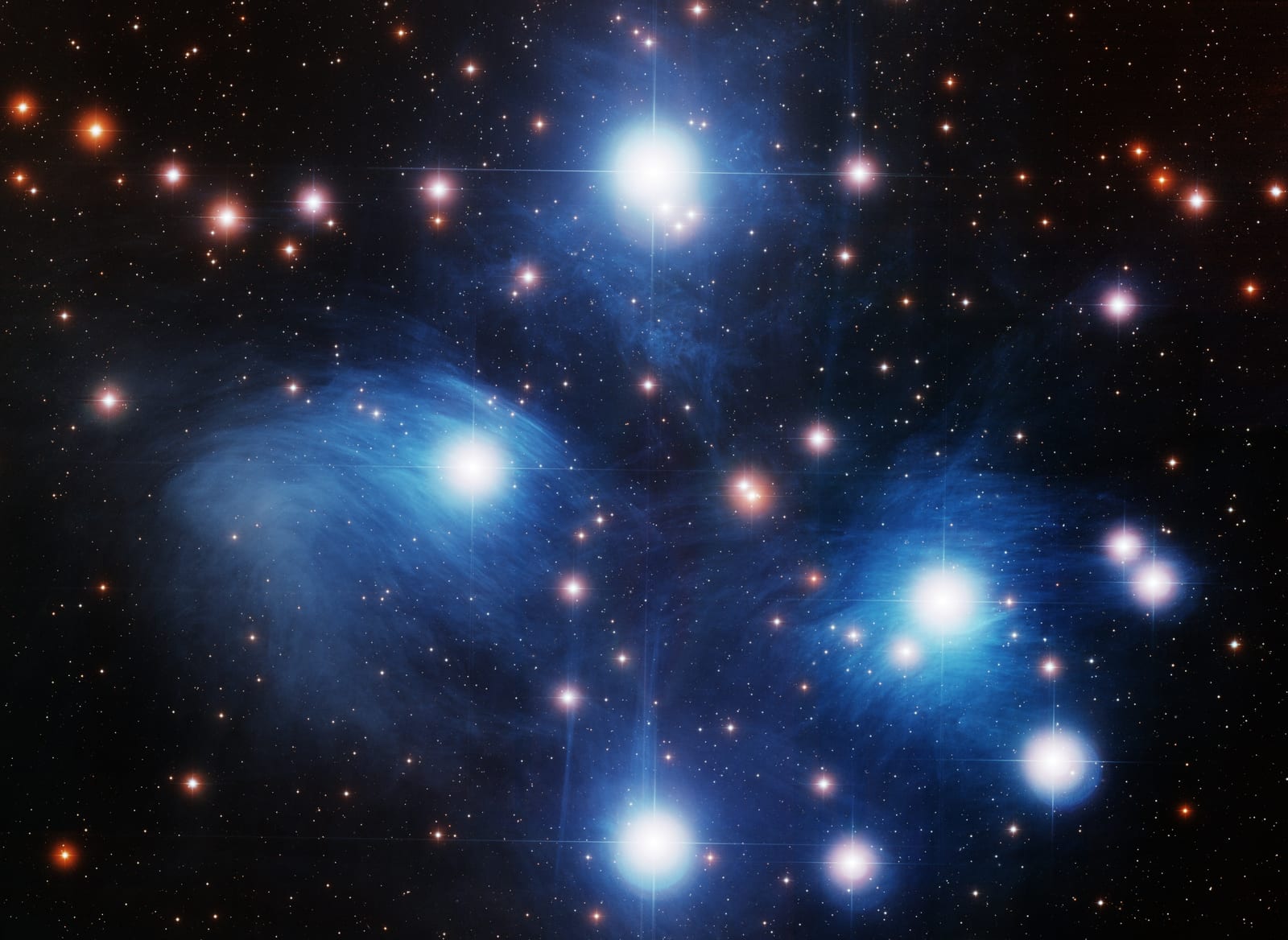
- PleiadesOpen star cluster, M45 · 444 light-years3D
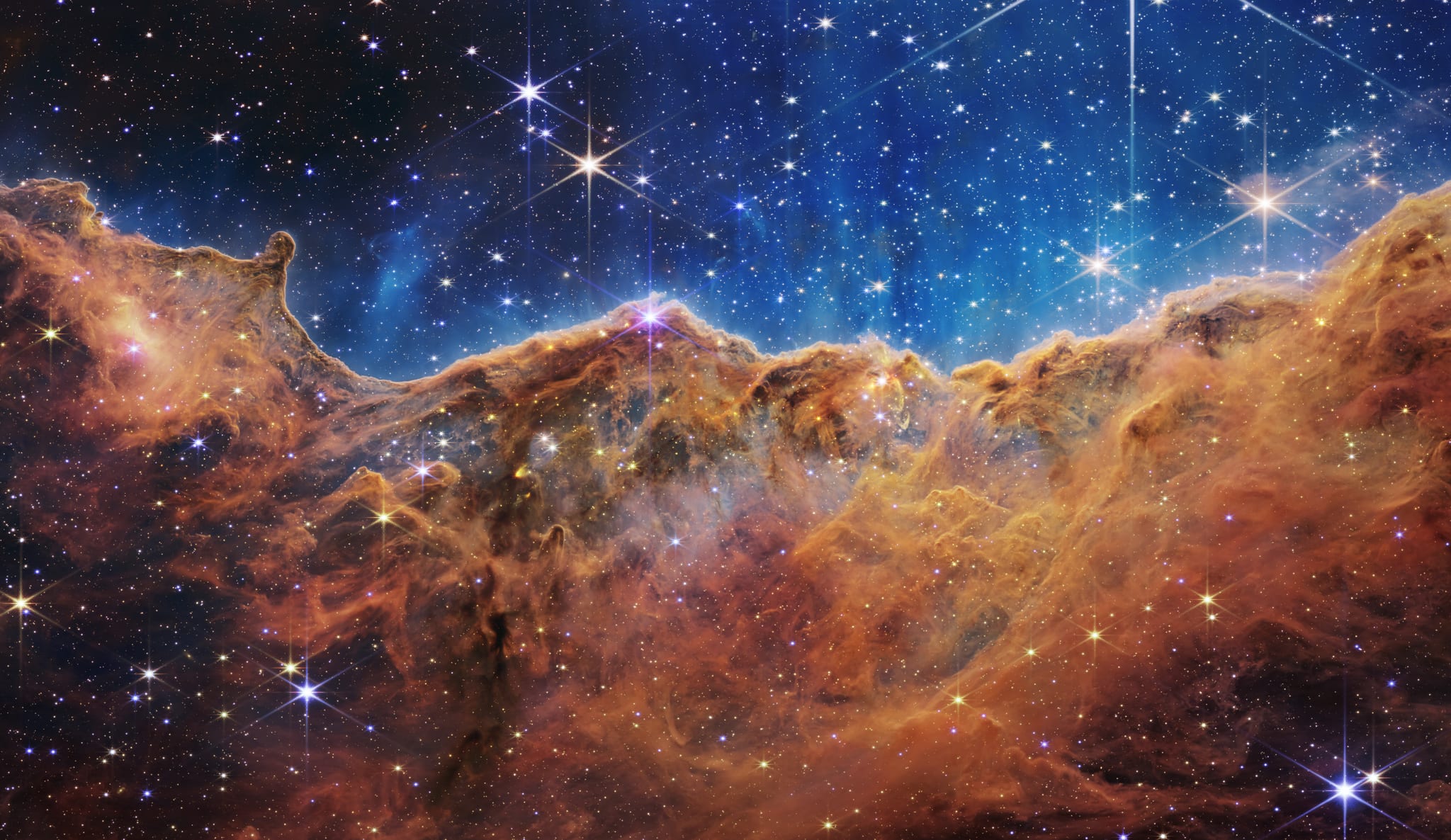
- Cosmic CliffsEdge of NGC 3324 in Carina · 7,600 light-years3D
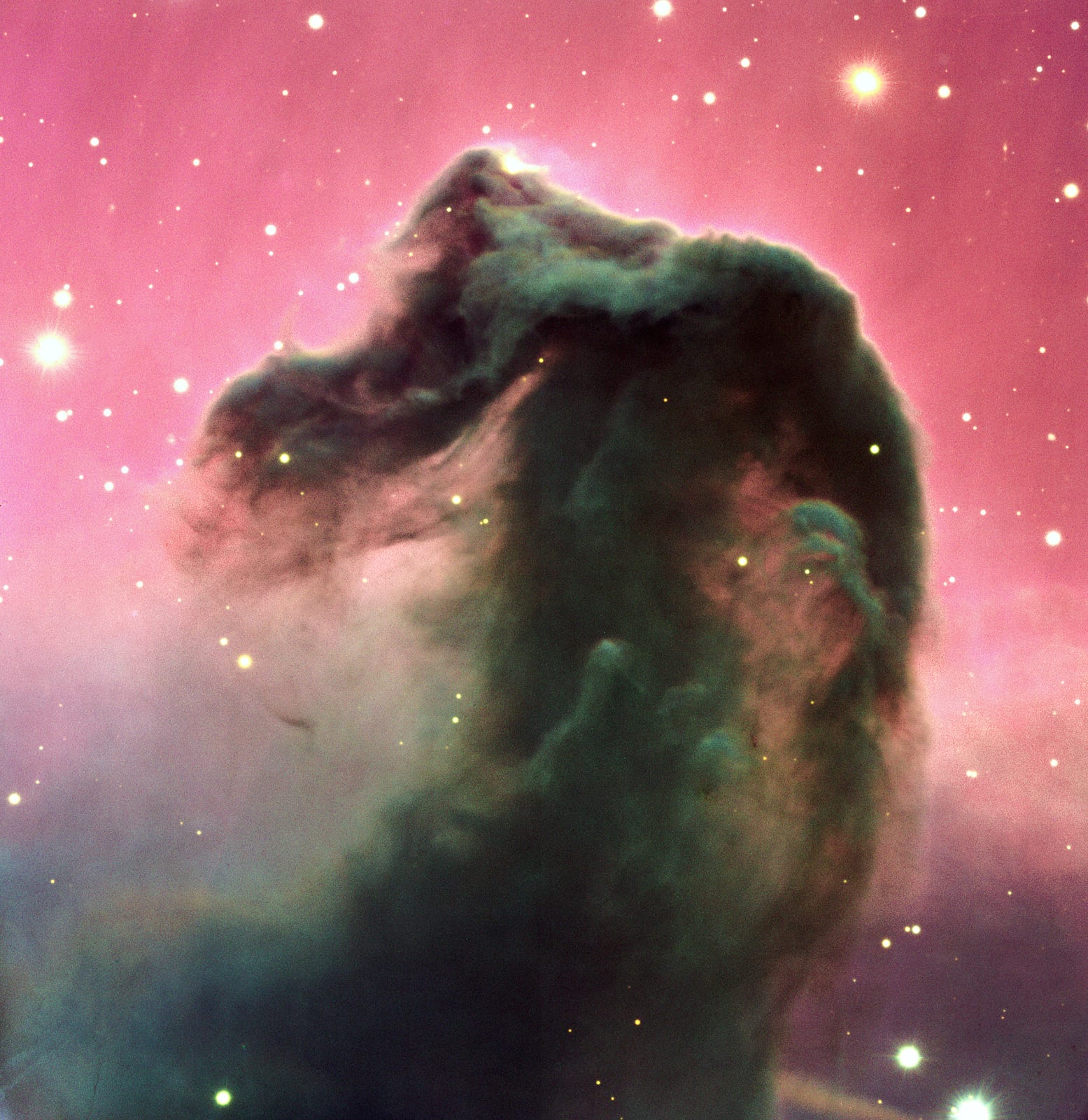
- Horsehead NebulaDark nebula, Barnard 33 · 1,375 light-years3D
- Carina NebulaStar-forming region, NGC 3372 · 7,500 light-years3D
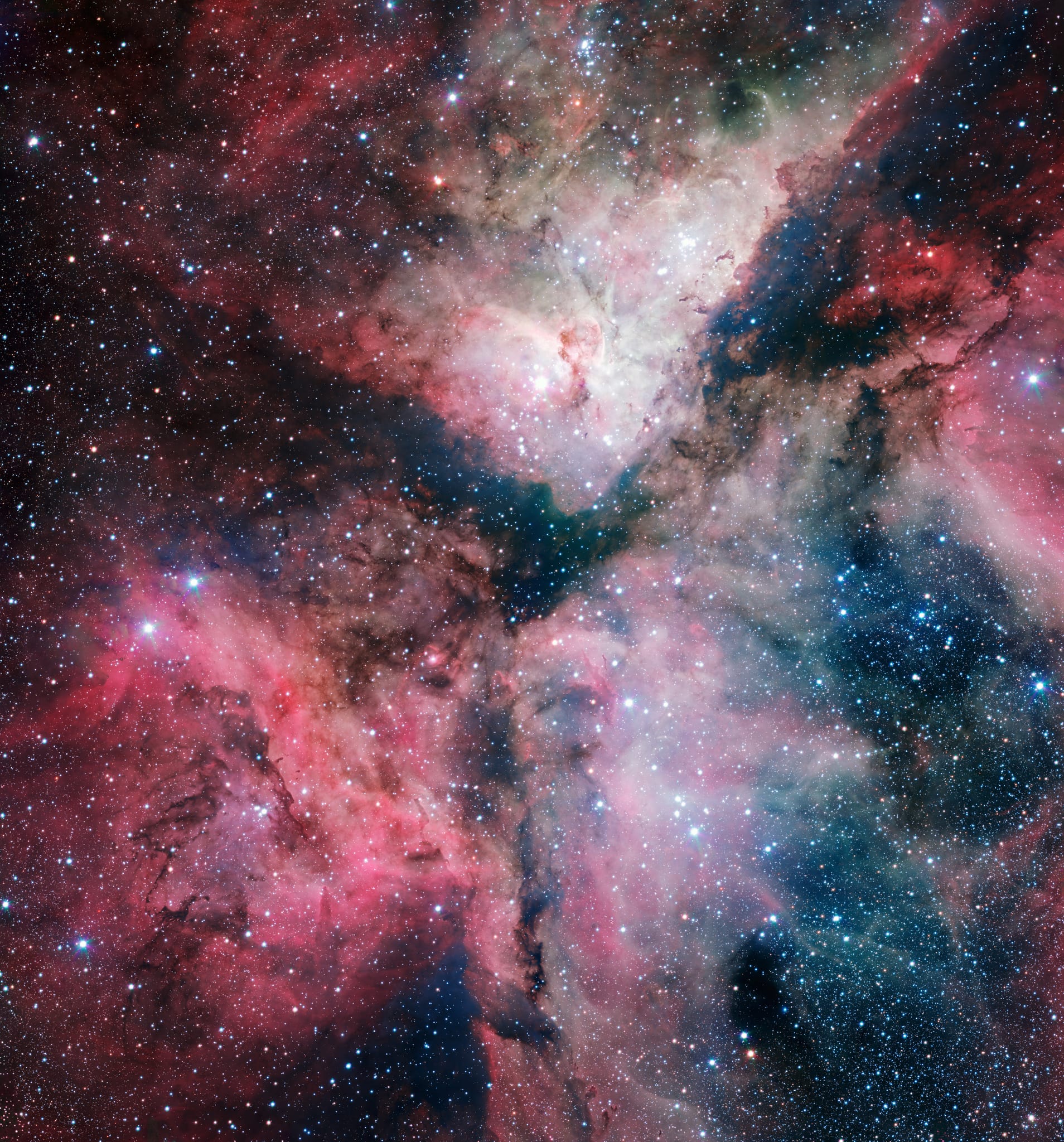
Picture: ESO. Acknowledgement: VPHAS+ Consortium/Cambridge Astronomical Survey Unit
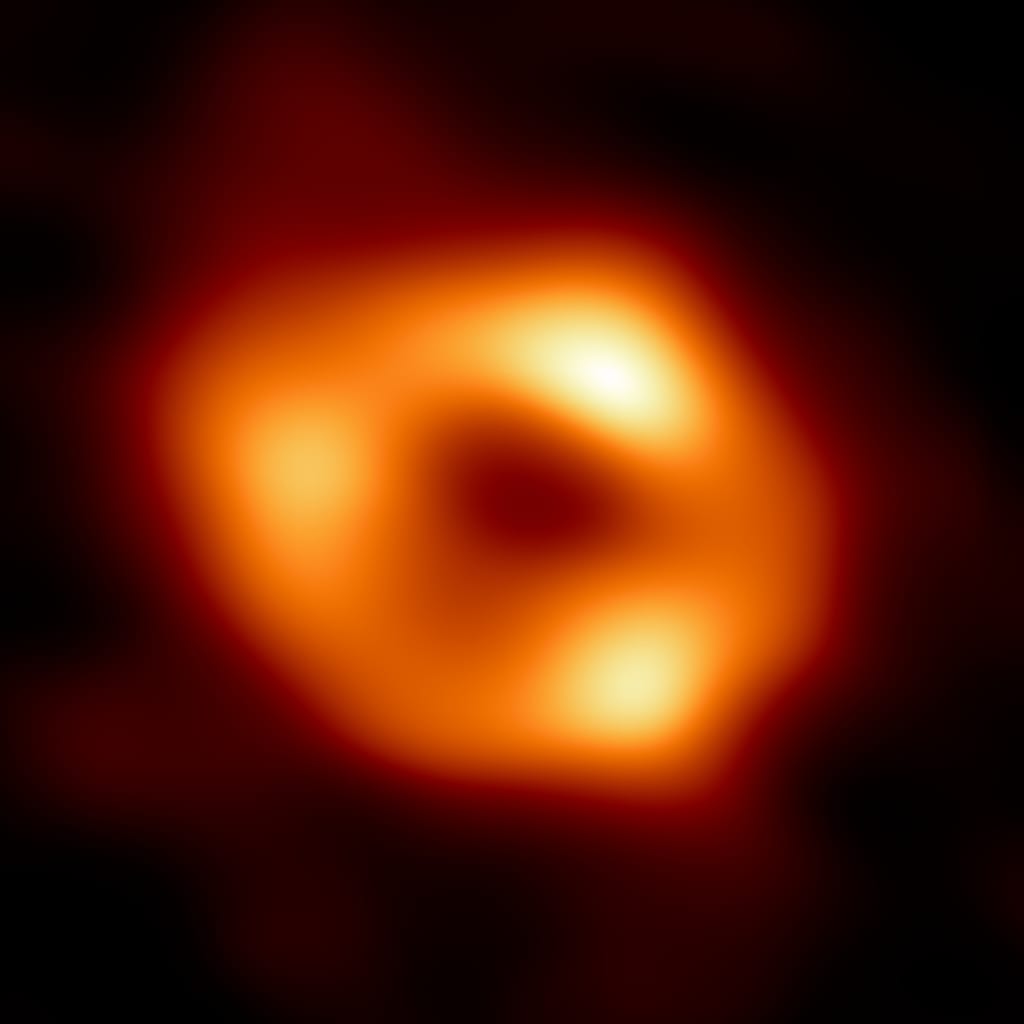
- Sagittarius A*, imagedEvent Horizon Telescope, 2022 · 26,670 light-years3D
- Eagle NebulaStar cluster and nebula, M16 · 5,700 light-years3D