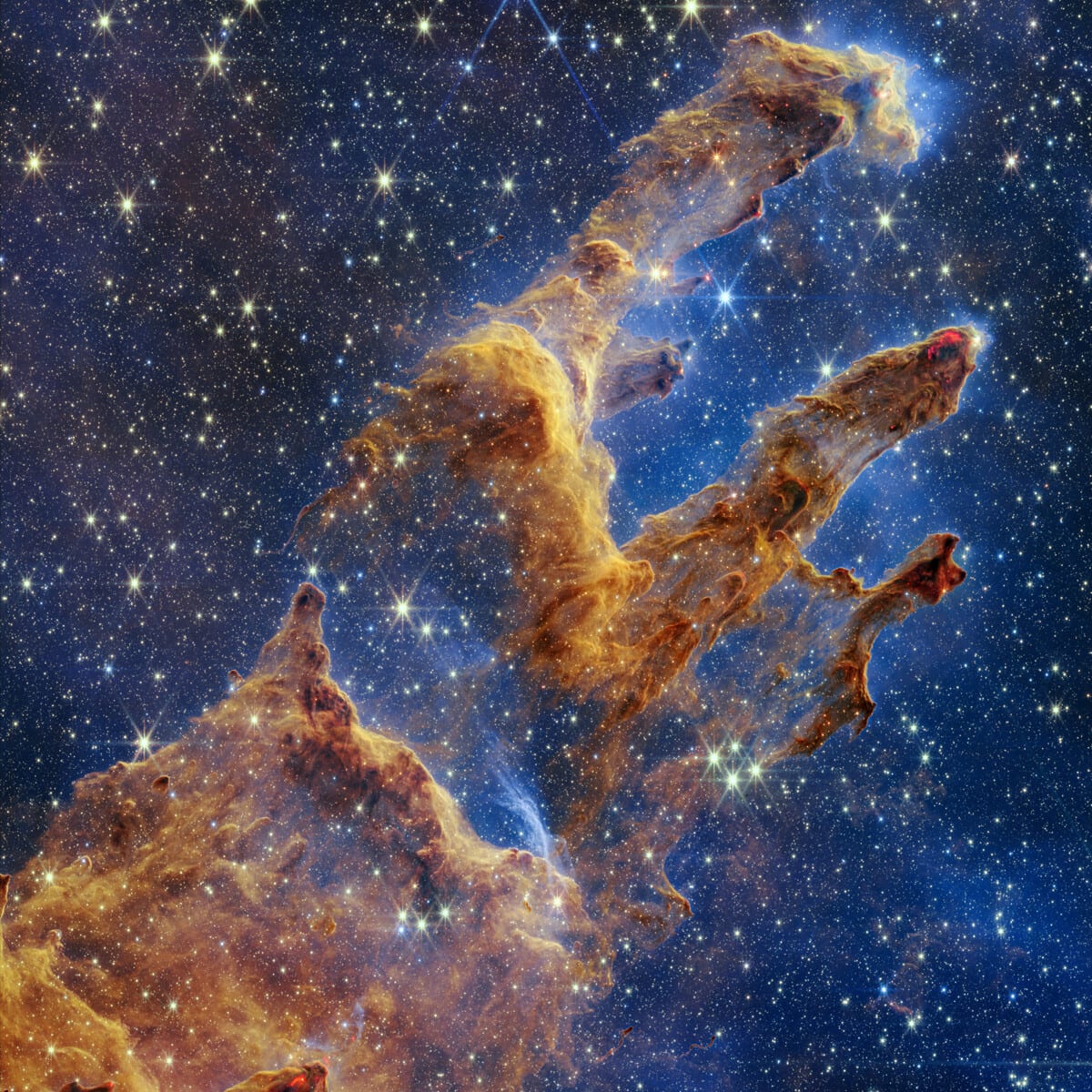
Pillars of Creation
Star-forming columns in the Eagle Nebula
From the Sun
5,700 light-years
 Open in 3D
What it is
Columns of cold gas and dust about four light-years tall, eaten away by the light of hot young stars beside them. New stars are forming inside their tips. Webb sees through much of the dust in infrared.
The picture hangs at that distance facing Earth, as large as it is on the sky; how deep the object is cannot be seen, so it is flat.
The picture
- Taken by
- James Webb Space Telescope
- Picture spans
- about 7 ly
- From the Sun
- 5,700 light-years
- RA / Dec
- 274.73° / -13.84°
Pillars of Creation
Pillars of Creation is a photograph taken by the Hubble Space Telescope that depicts elephant trunks of interstellar gas and dust in the Eagle Nebula of the constellation Serpens, some 6,500–7,000 light-years (2,000–2,100 pc) from Earth. These elephant trunks had been discovered by John Charles Duncan in 1920 on a plate made with the Mount Wilson Observatory 60-inch telescope.
From Wikipedia, CC BY-SA · Read the article
In the Milky Way
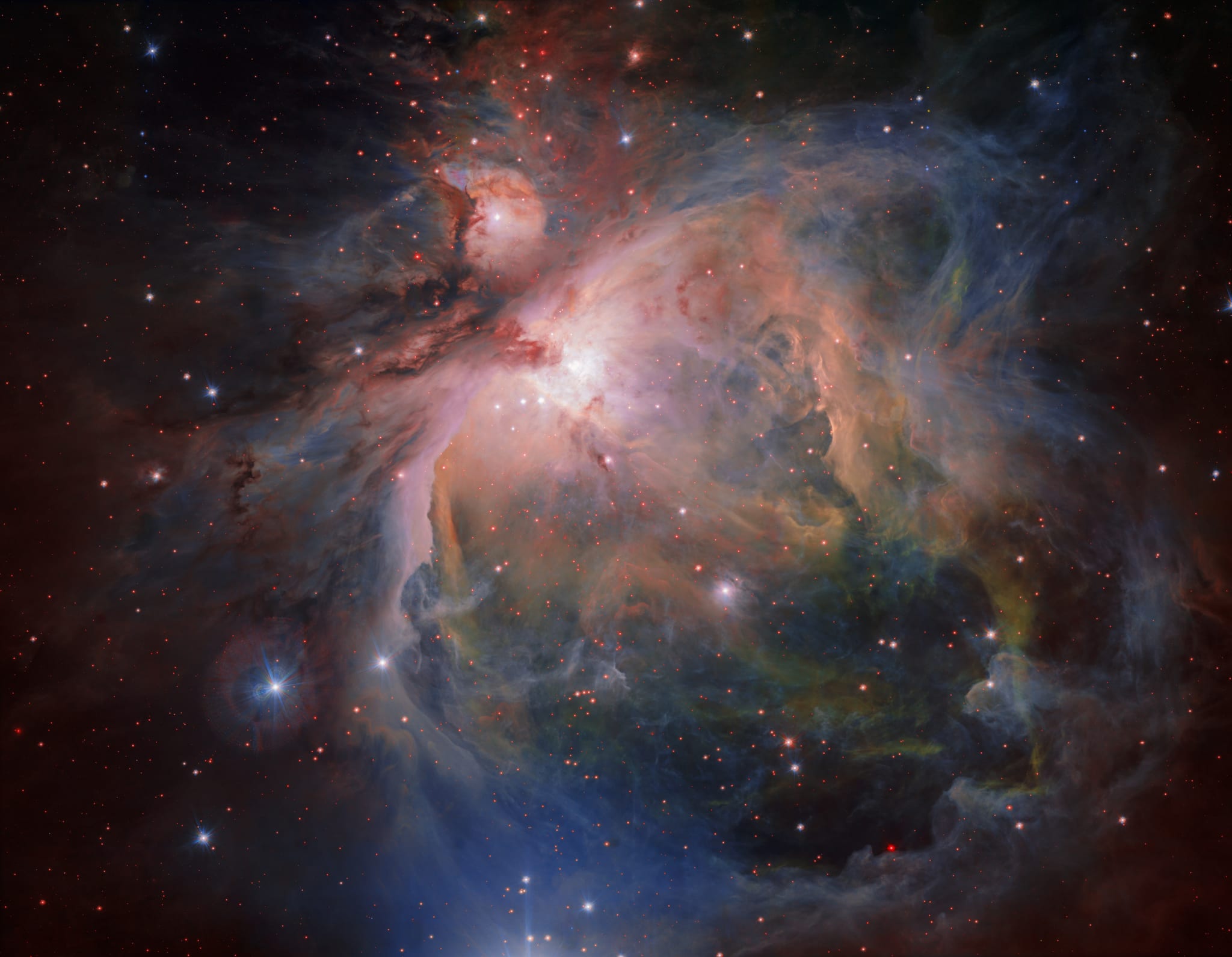
- Orion NebulaNearest large star-forming region, M42 · 1,344 light-years3D
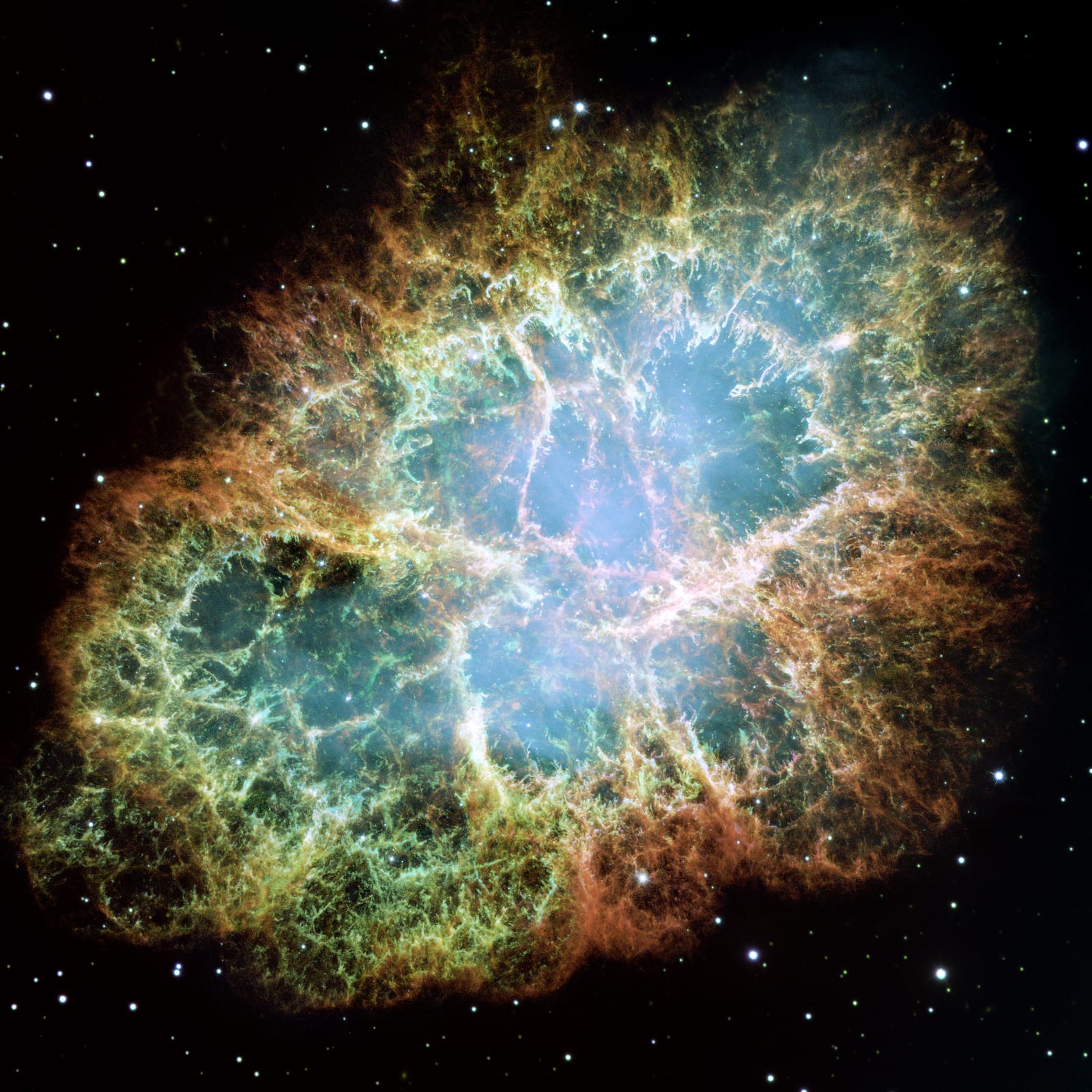
- Crab NebulaSupernova remnant, M1 · 6,500 light-years3D
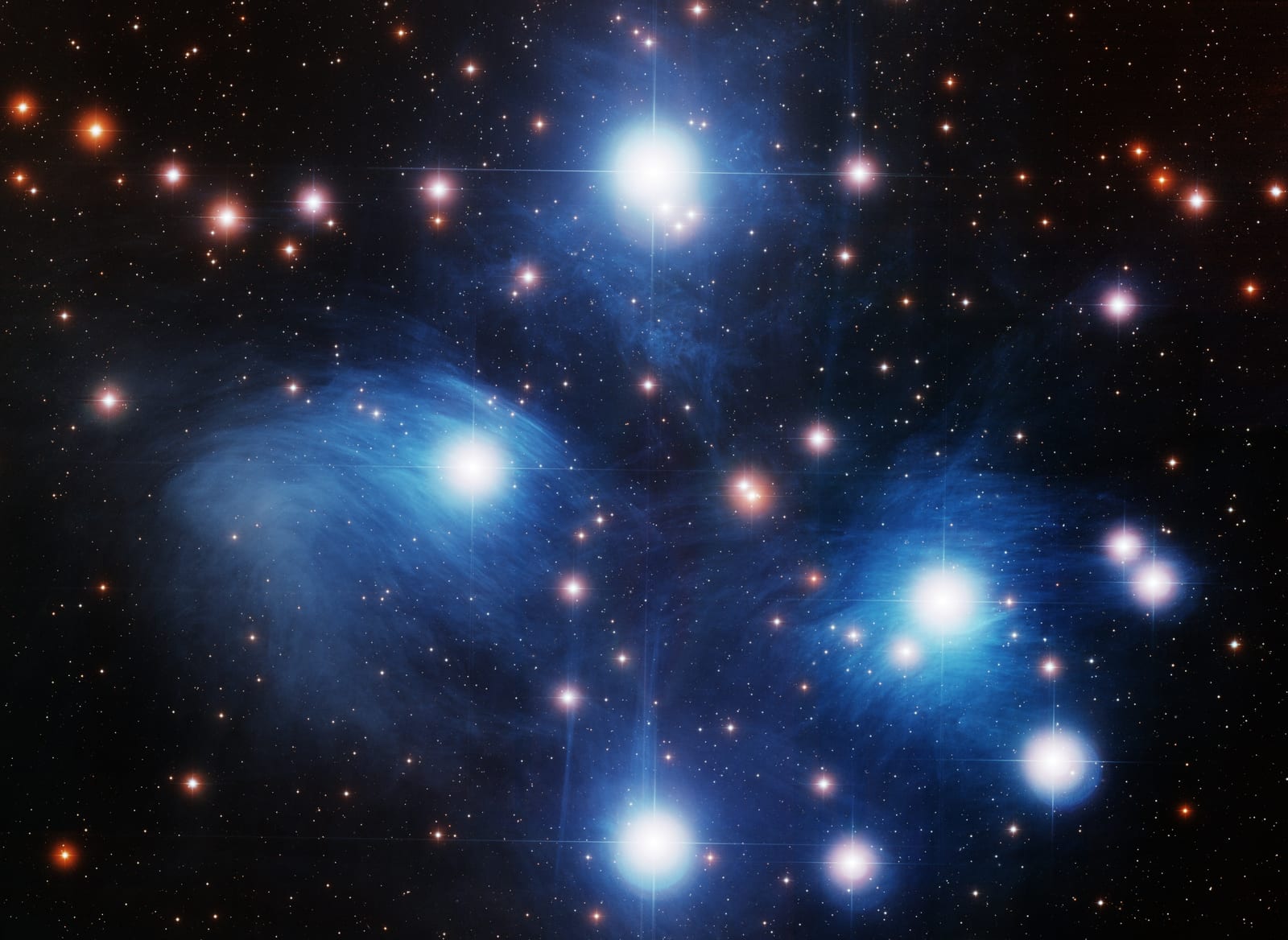
- PleiadesOpen star cluster, M45 · 444 light-years3D
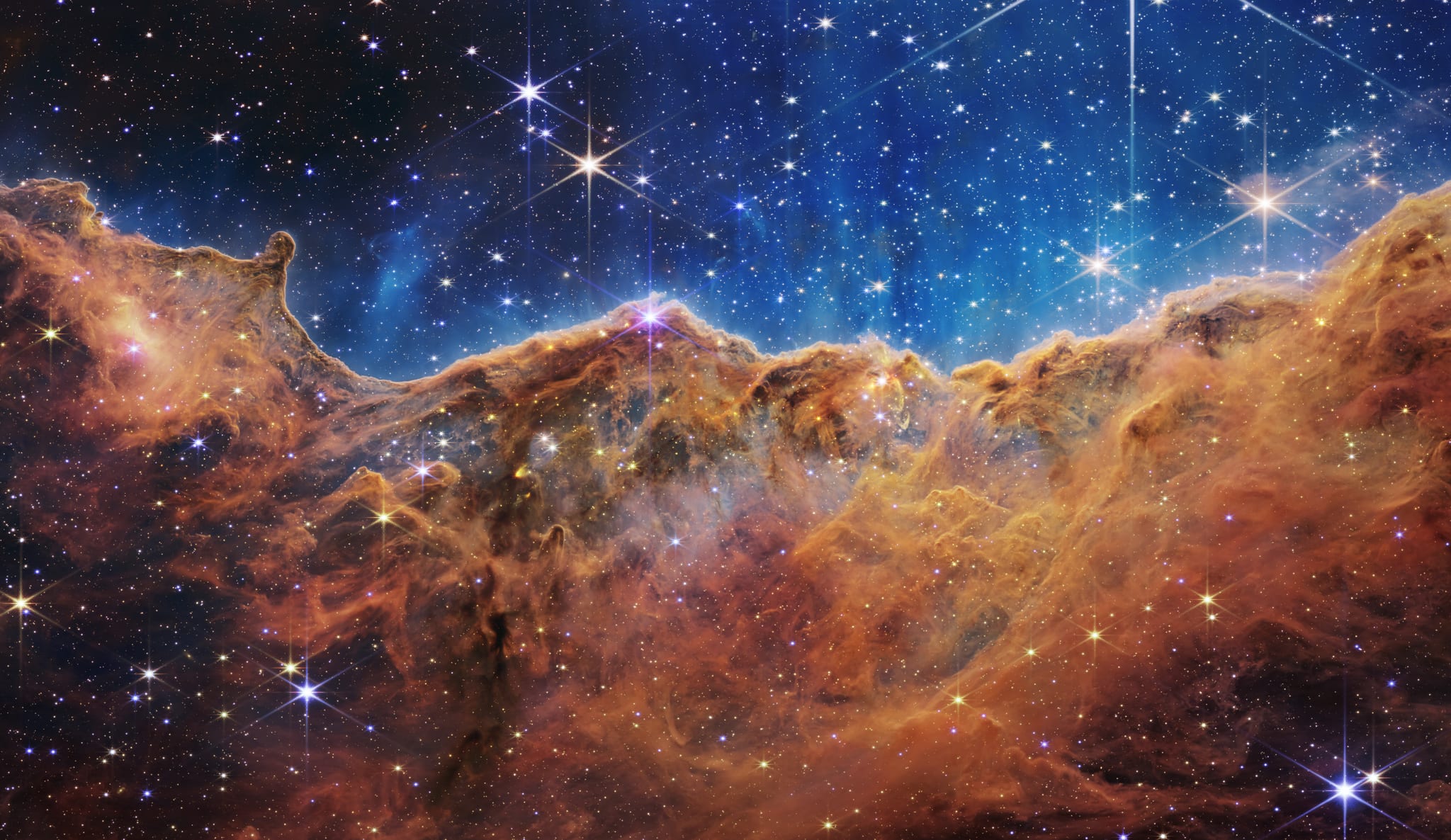
- Cosmic CliffsEdge of NGC 3324 in Carina · 7,600 light-years3D
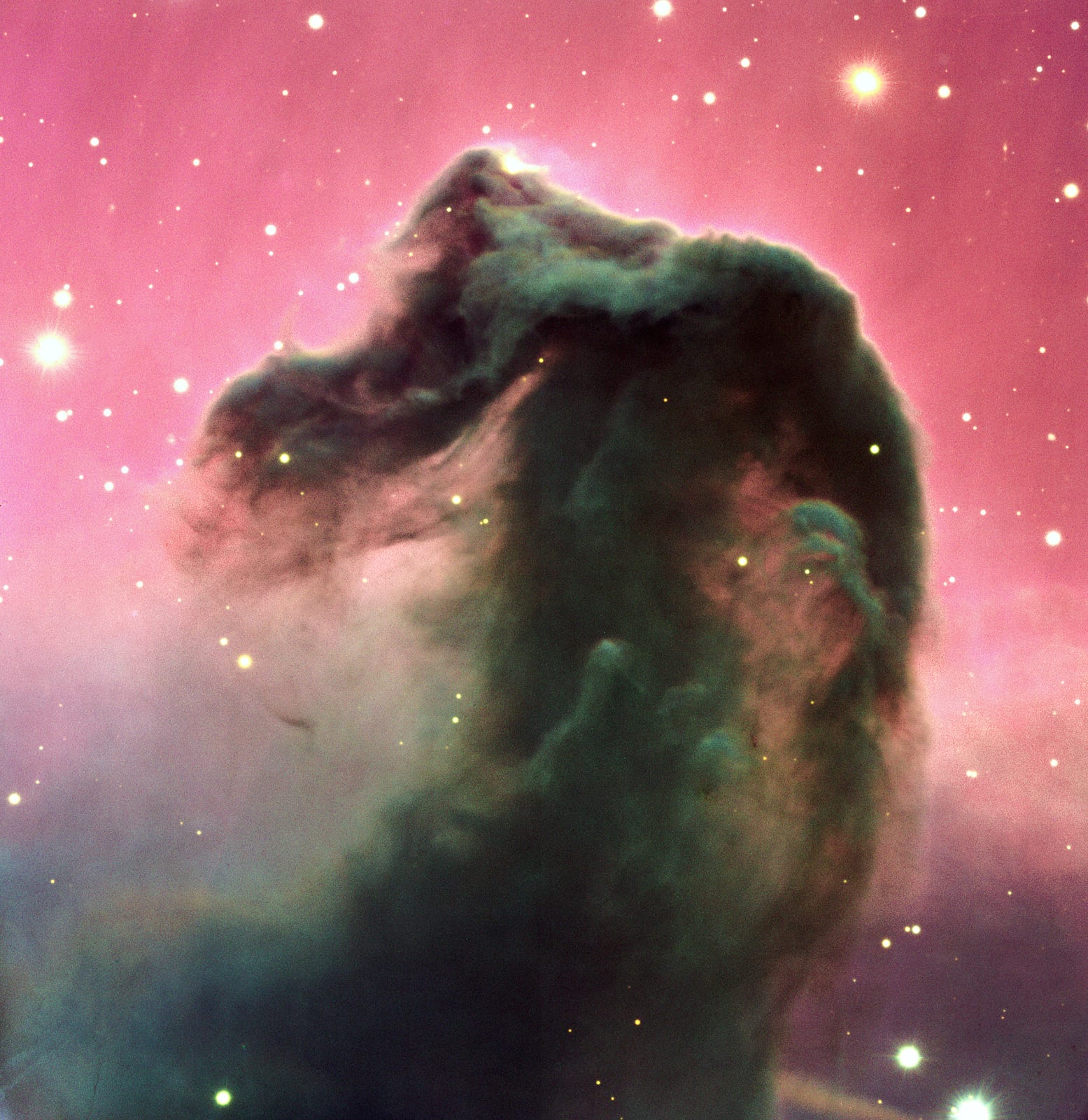
- Horsehead NebulaDark nebula, Barnard 33 · 1,375 light-years3D
- Carina NebulaStar-forming region, NGC 3372 · 7,500 light-years3D
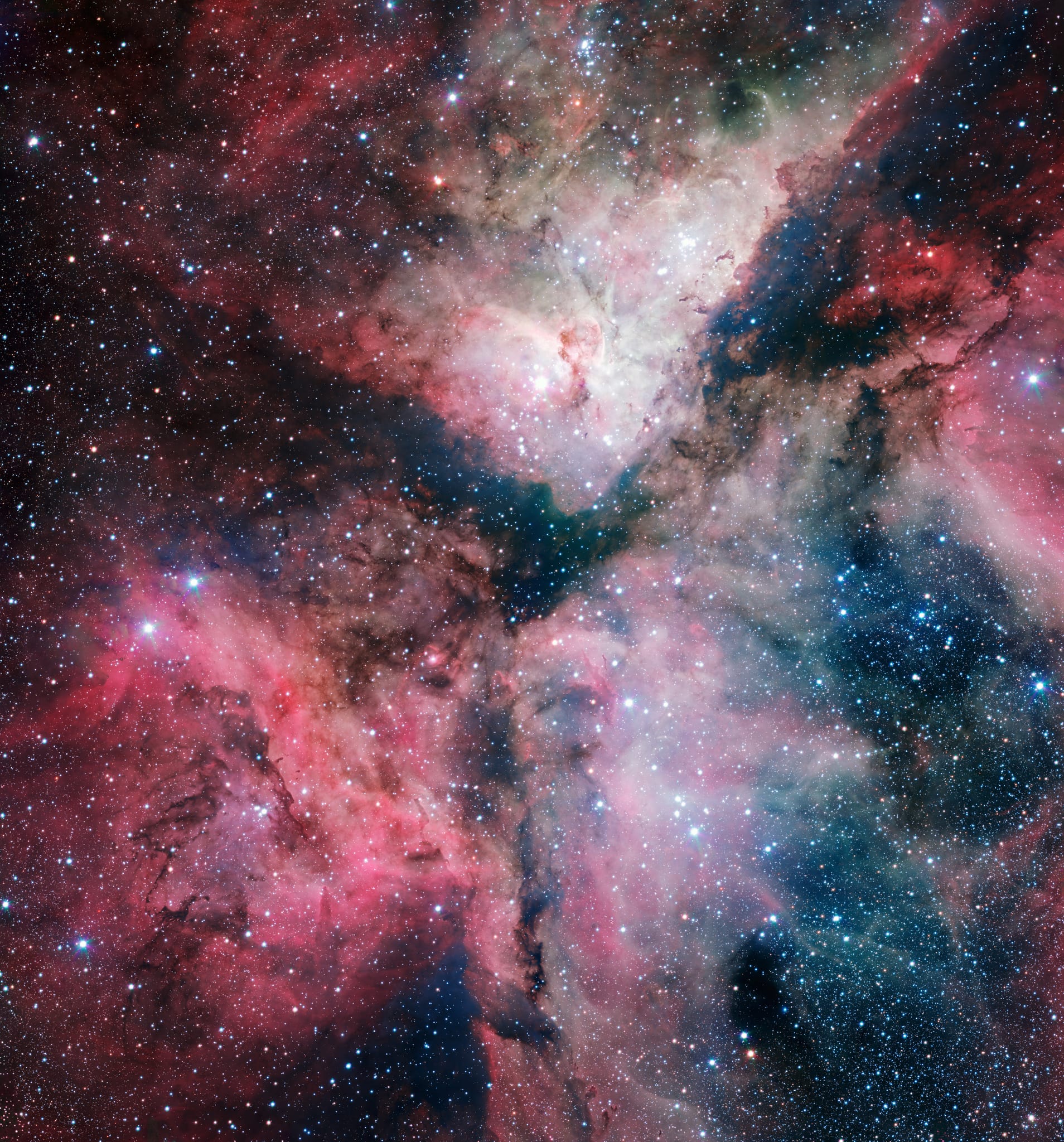
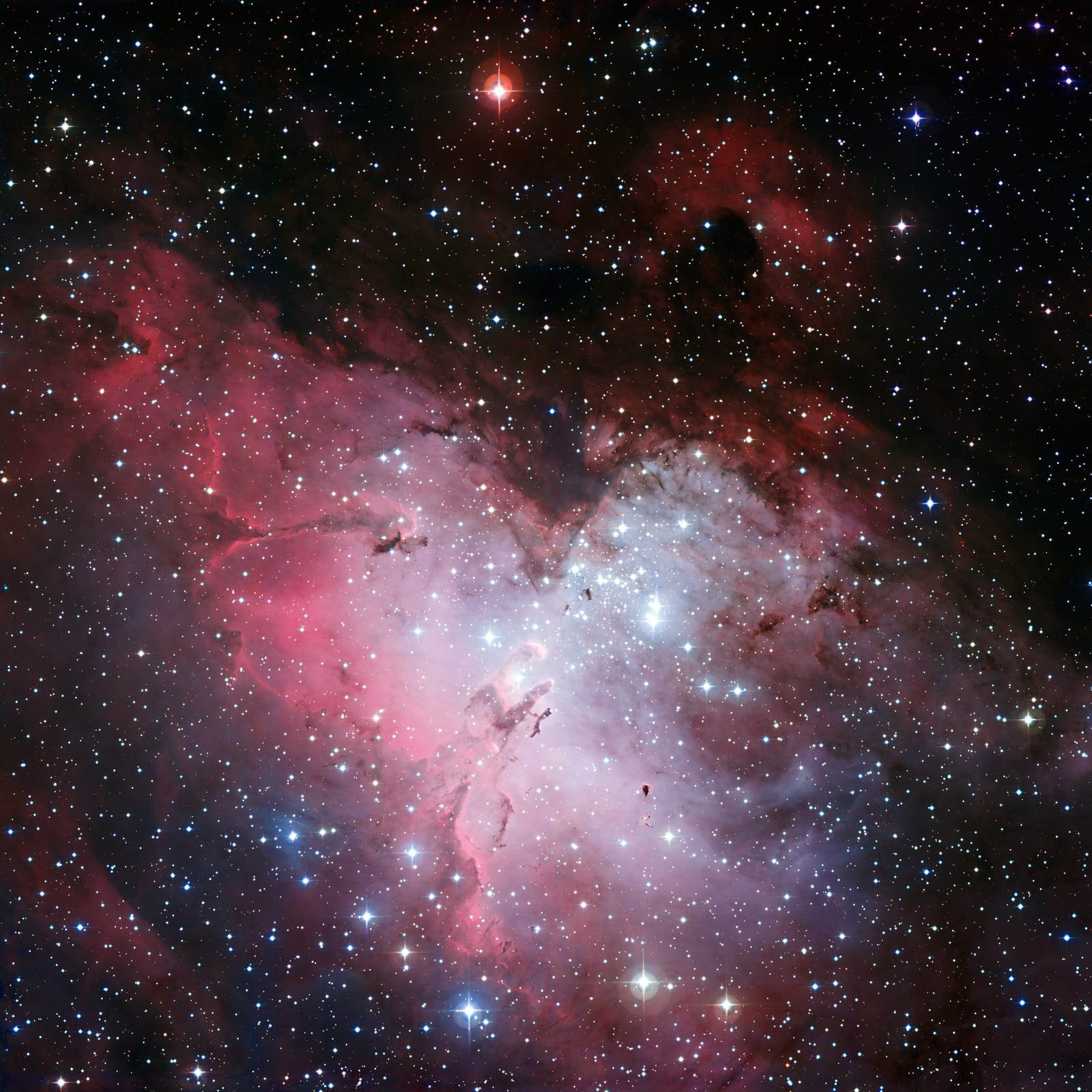
Picture: ESO. Acknowledgement: VPHAS+ Consortium/Cambridge Astronomical Survey Unit
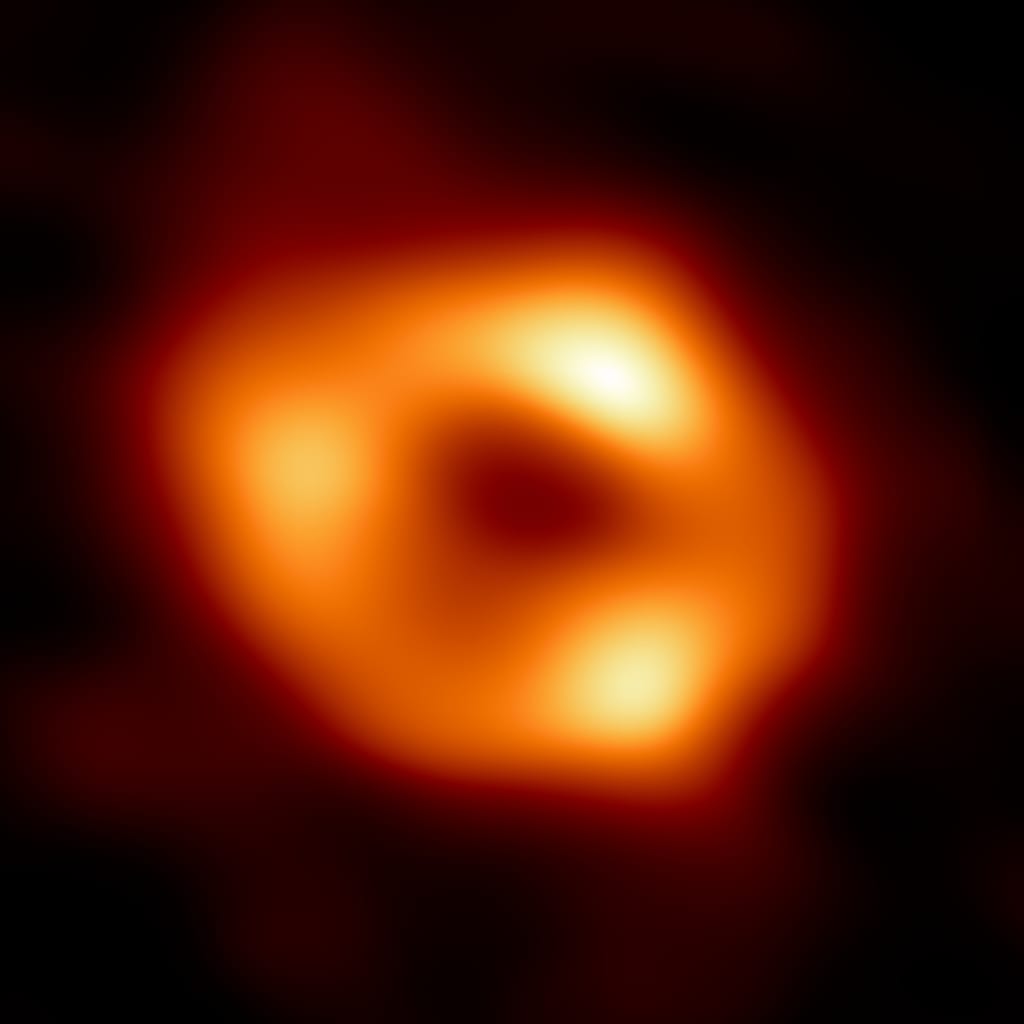
- Sagittarius A*, imagedEvent Horizon Telescope, 2022 · 26,670 light-years3D
- Eagle NebulaStar cluster and nebula, M16 · 5,700 light-years3D