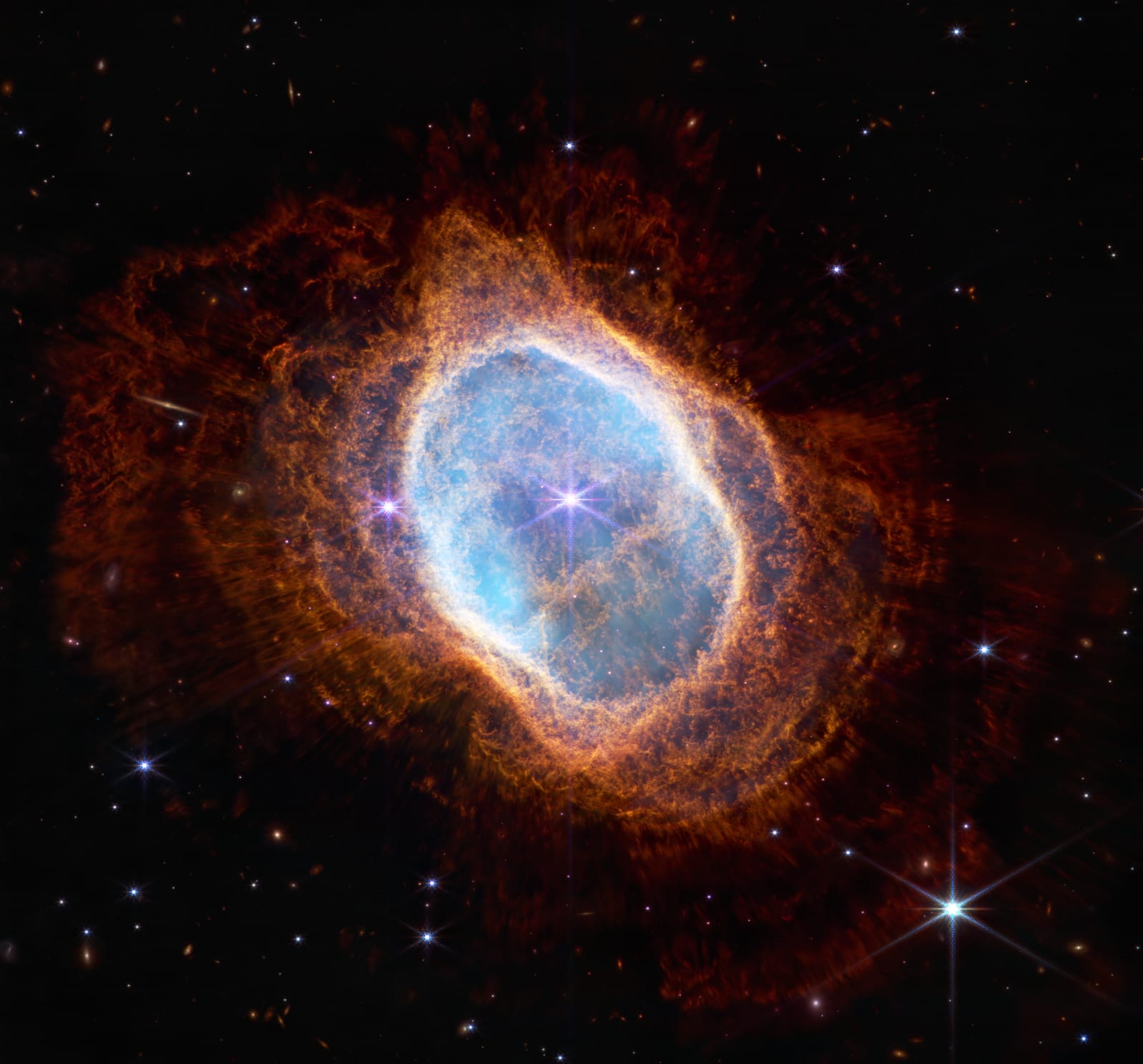
Southern Ring Nebula
Planetary nebula, NGC 3132
From the Sun
2,500 light-years
 Open in 3D
What it is
Shells of gas thrown off by a dying star; Webb found the faint star at its centre wrapped in dust. One of Webb’s first images.
The picture hangs at that distance facing Earth, as large as it is on the sky; how deep the object is cannot be seen, so it is flat.
The picture
- Taken by
- James Webb Space Telescope
- Picture spans
- about 1.8 ly
- From the Sun
- 2,500 light-years
- RA / Dec
- 151.76° / -40.44°
NGC 3132
NGC 3132 is a bright and extensively studied planetary nebula in the constellation Vela. Alternatively, it is known as the Eight-Burst Nebula, the Southern Ring Nebula, or Caldwell 74. Its distance from Earth is estimated at 613 pc or 2,000 light-years. From Earth, it appears to have a strongly elliptical shape.
From Wikipedia, CC BY-SA · Read the article
In the Milky Way
- Pillars of CreationStar-forming columns in the Eagle Nebula · 5,700 light-years3D
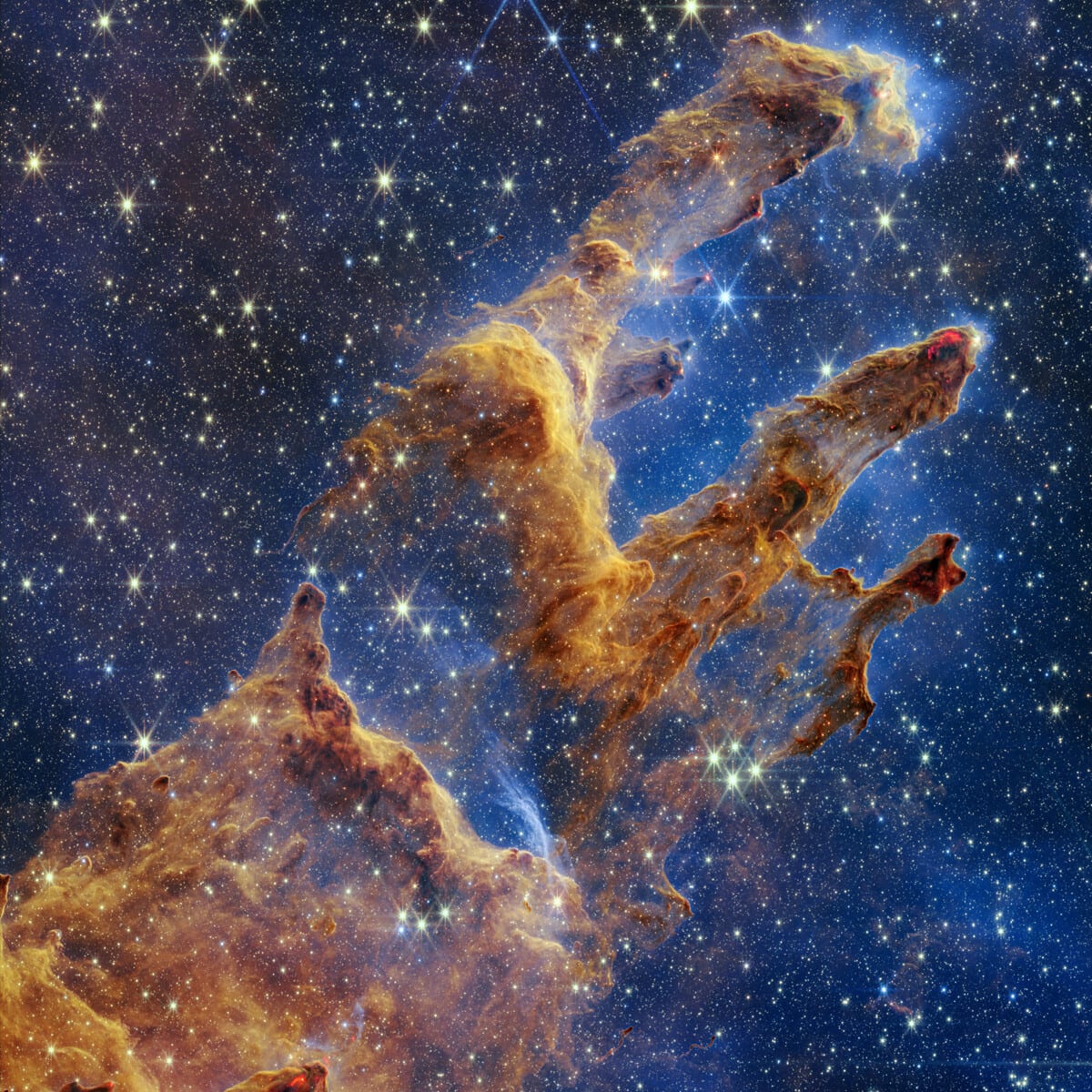
Picture: NASA, ESA, CSA, STScI; J. DePasquale, A. Koekemoer, A. Pagan (STScI).
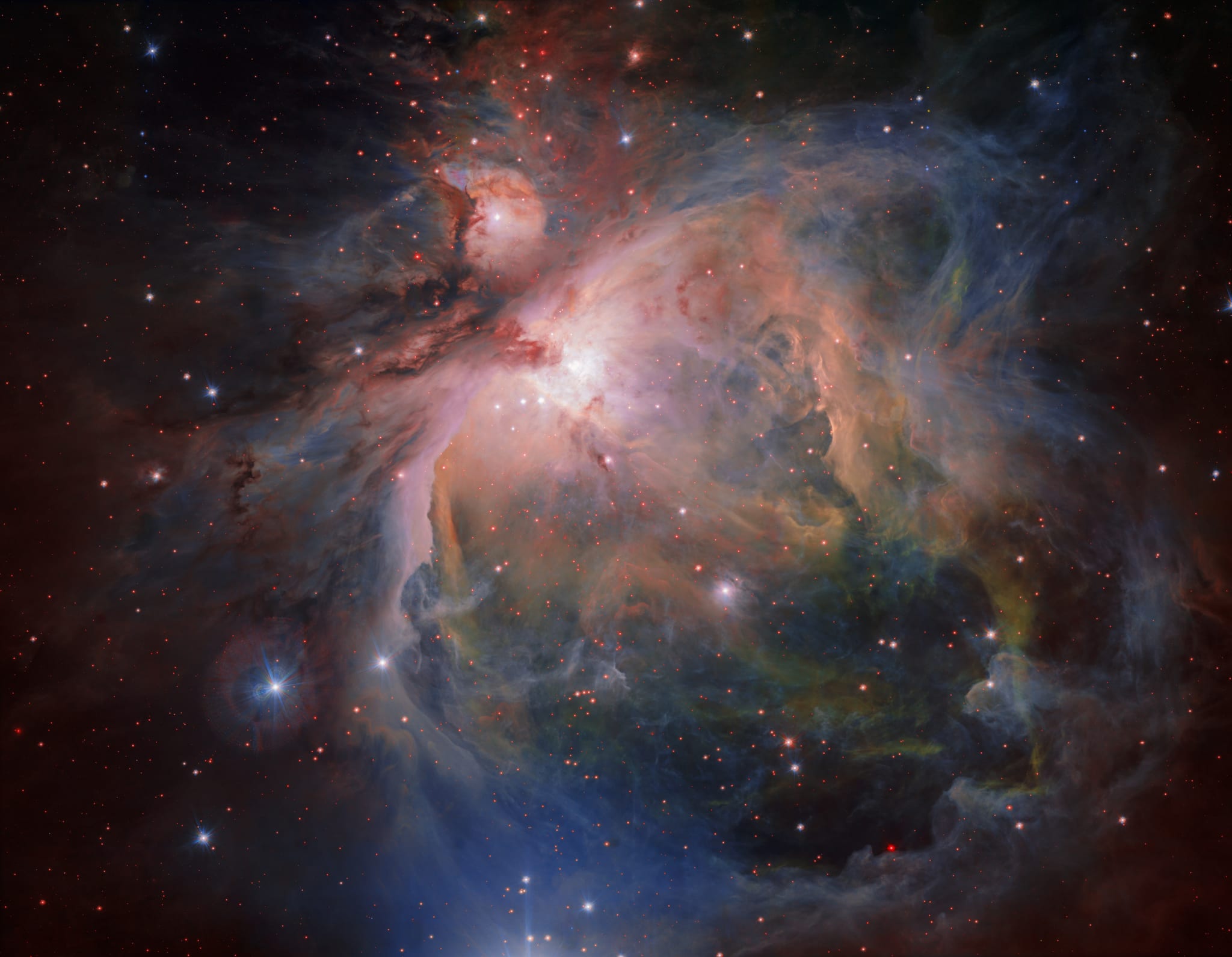
- Orion NebulaNearest large star-forming region, M42 · 1,344 light-years3D
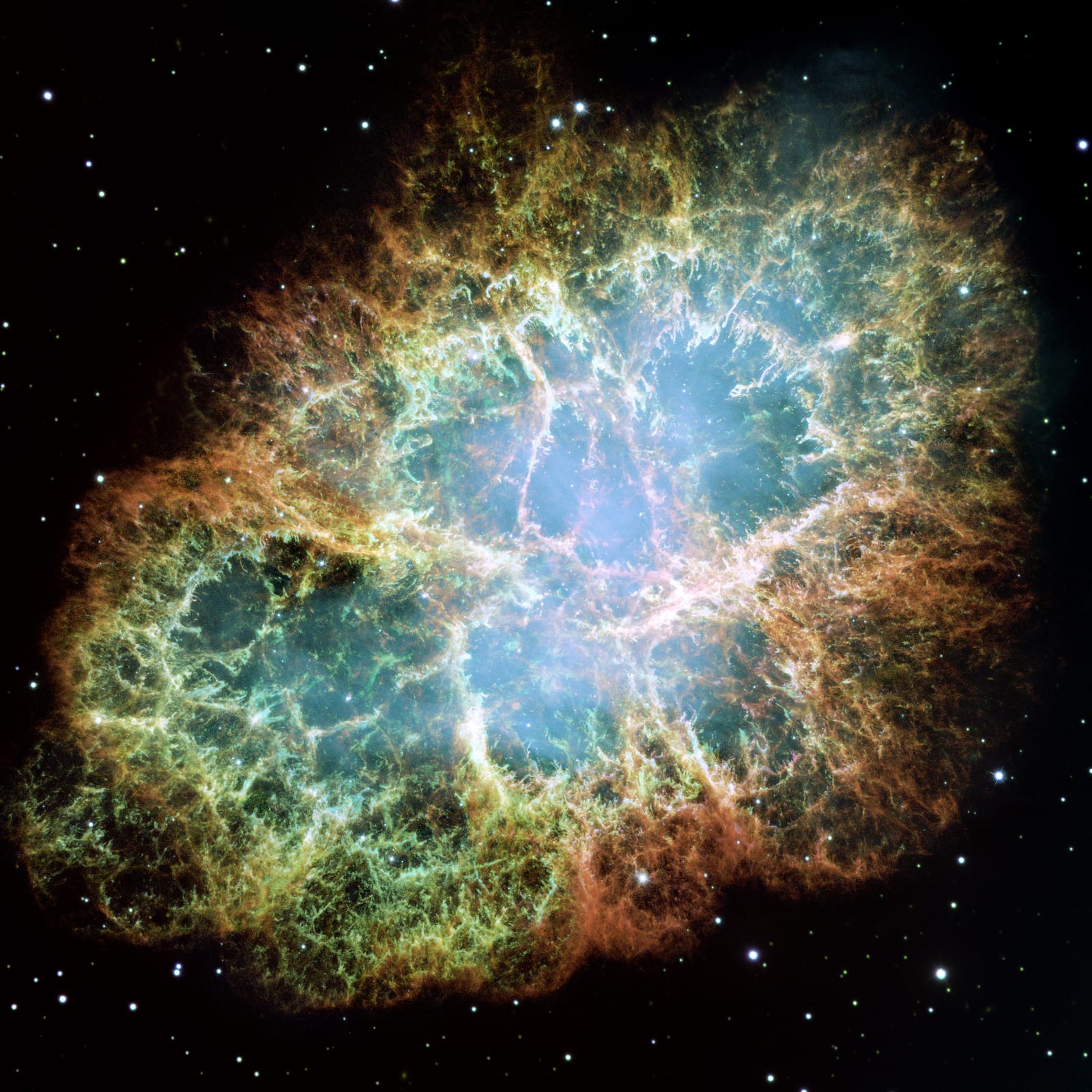
- Crab NebulaSupernova remnant, M1 · 6,500 light-years3D
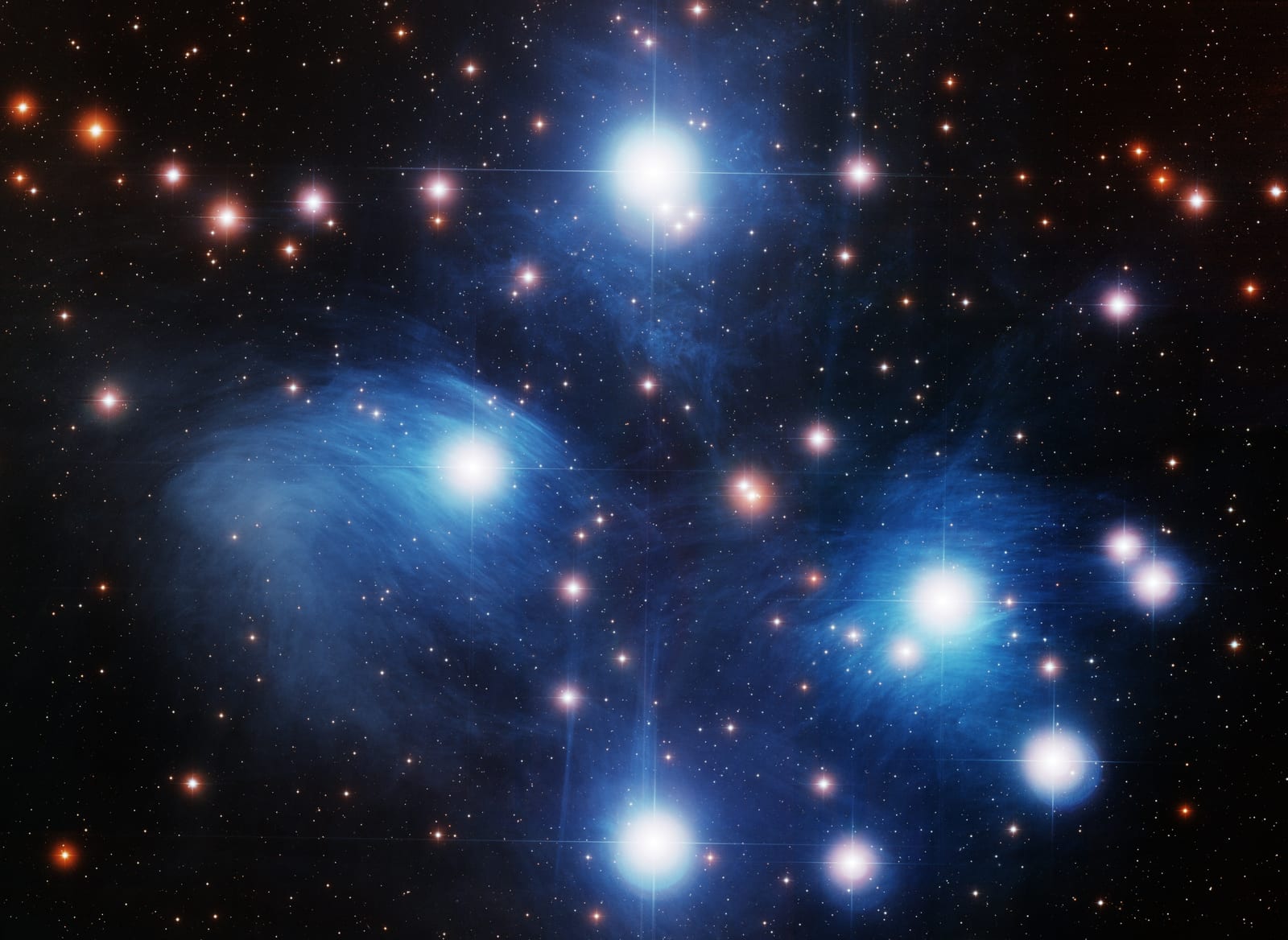
- PleiadesOpen star cluster, M45 · 444 light-years3D
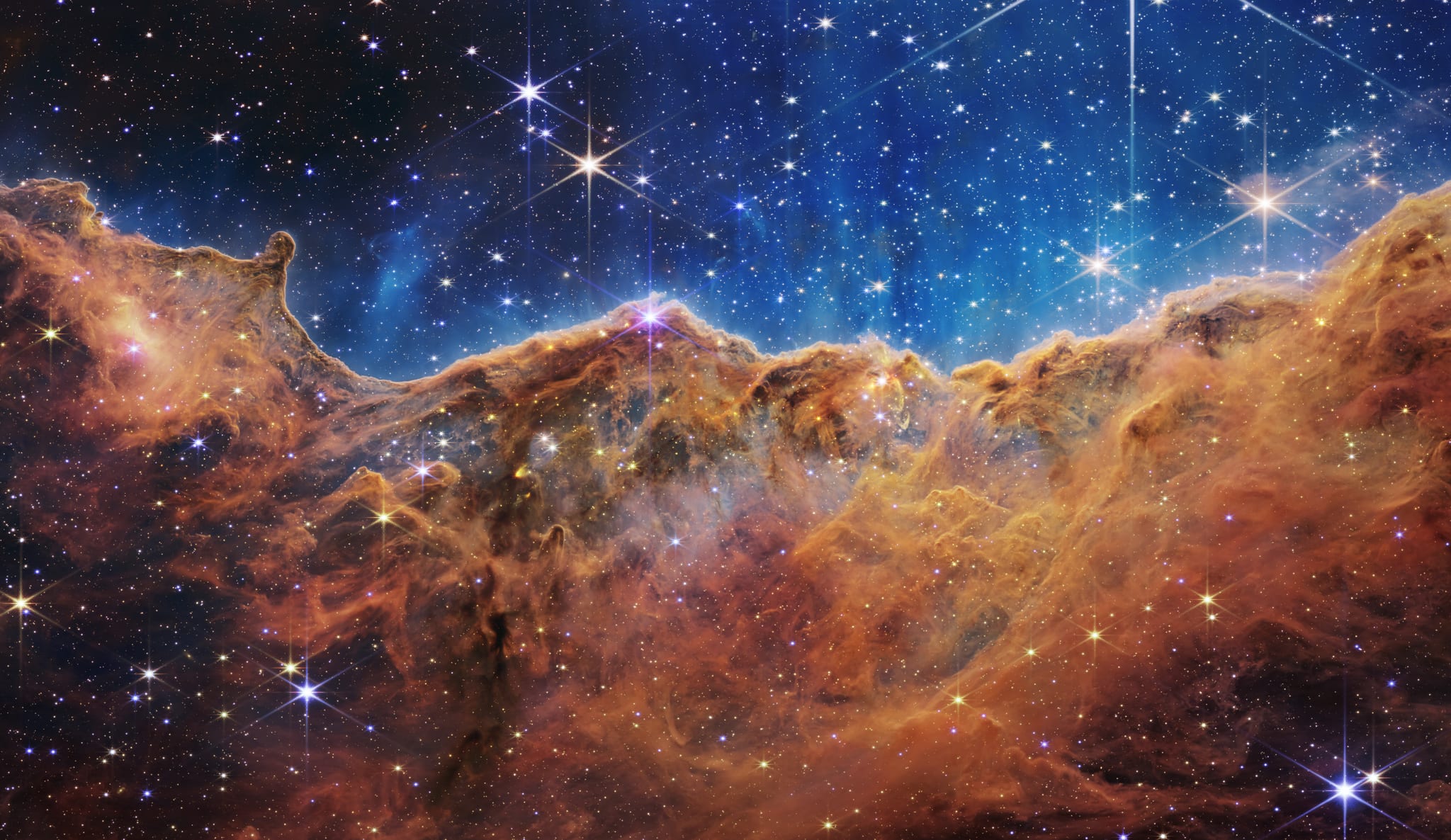
- Cosmic CliffsEdge of NGC 3324 in Carina · 7,600 light-years3D
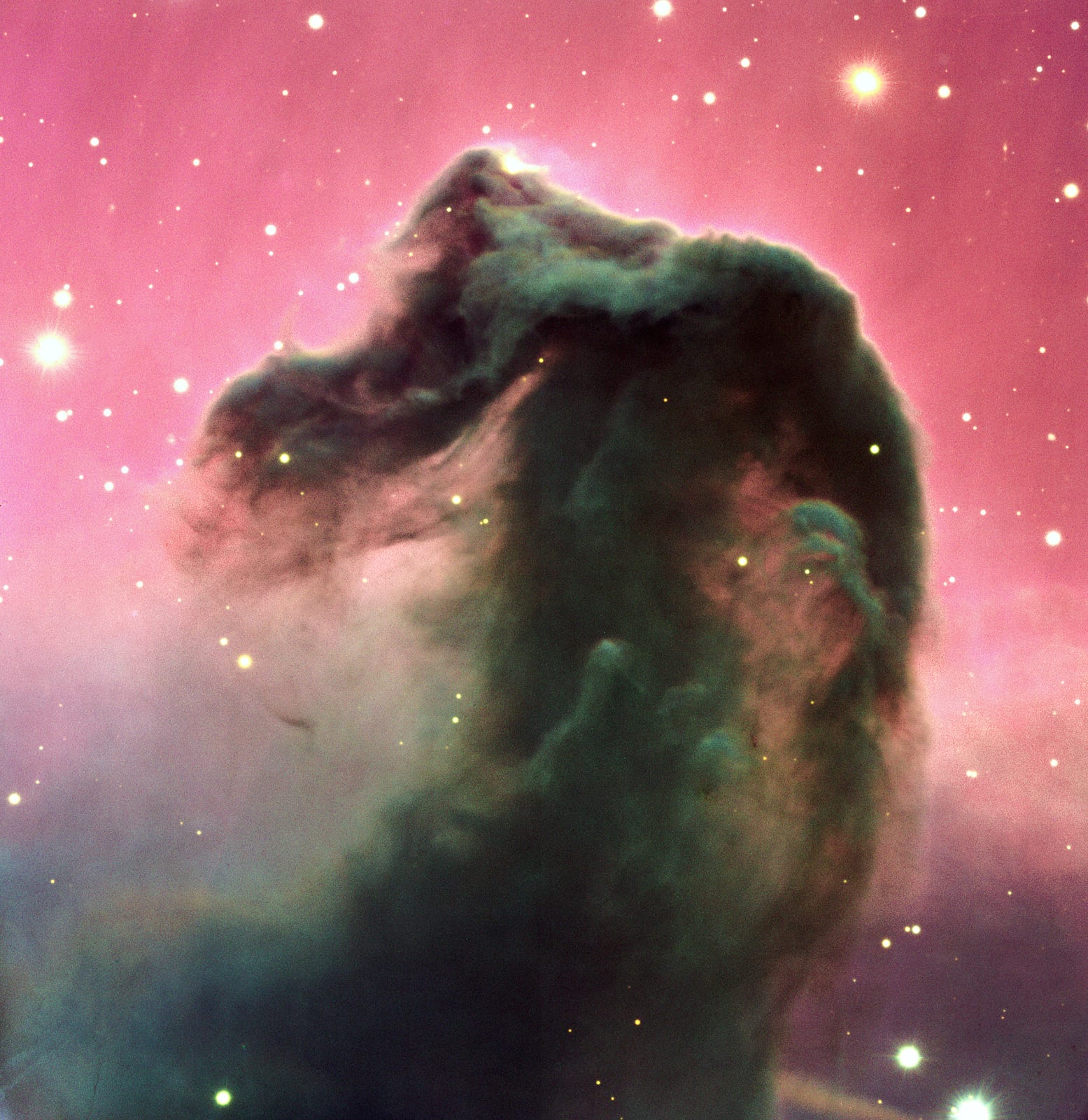
- Horsehead NebulaDark nebula, Barnard 33 · 1,375 light-years3D
- Carina NebulaStar-forming region, NGC 3372 · 7,500 light-years3D
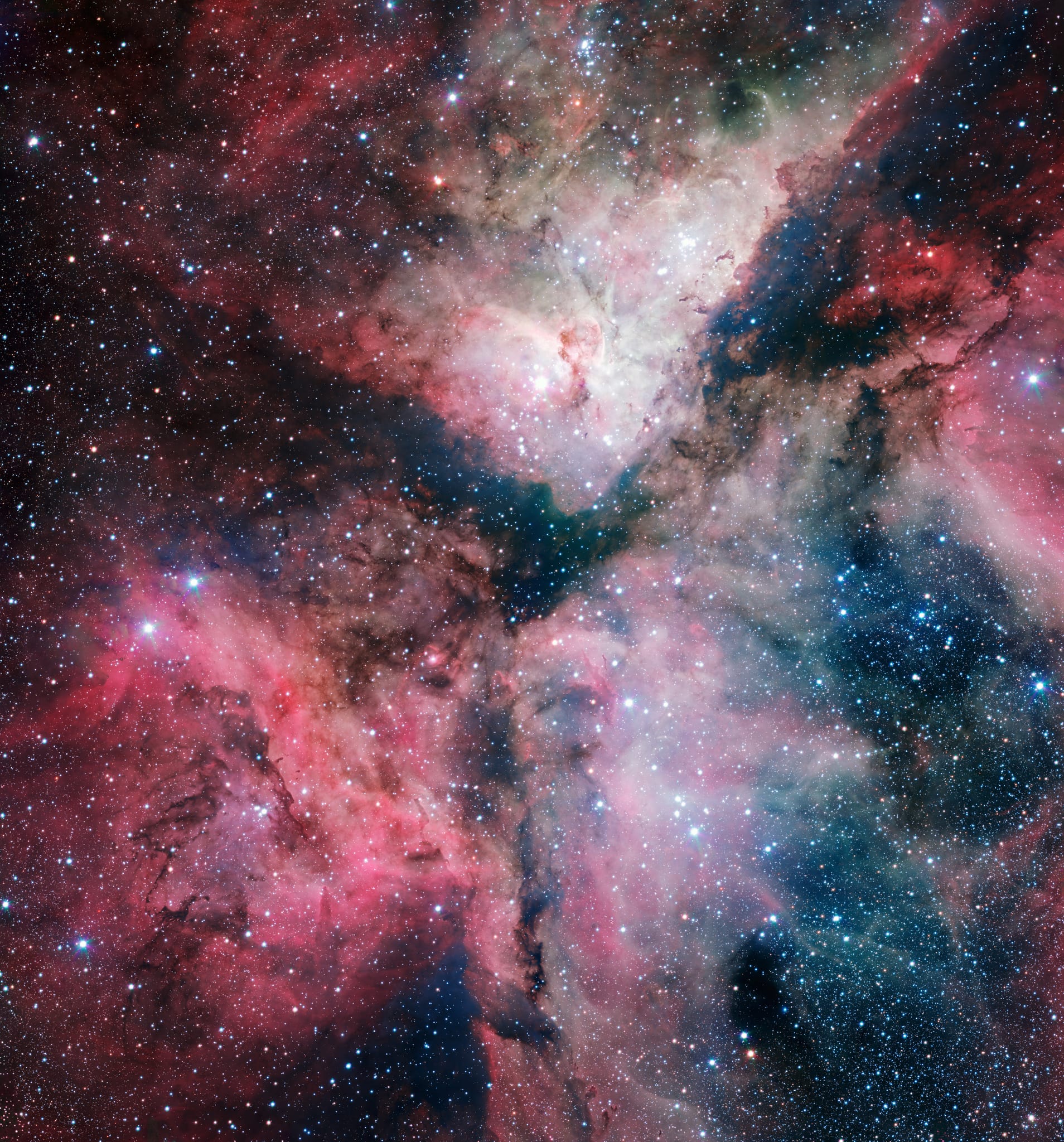
Picture: ESO. Acknowledgement: VPHAS+ Consortium/Cambridge Astronomical Survey Unit
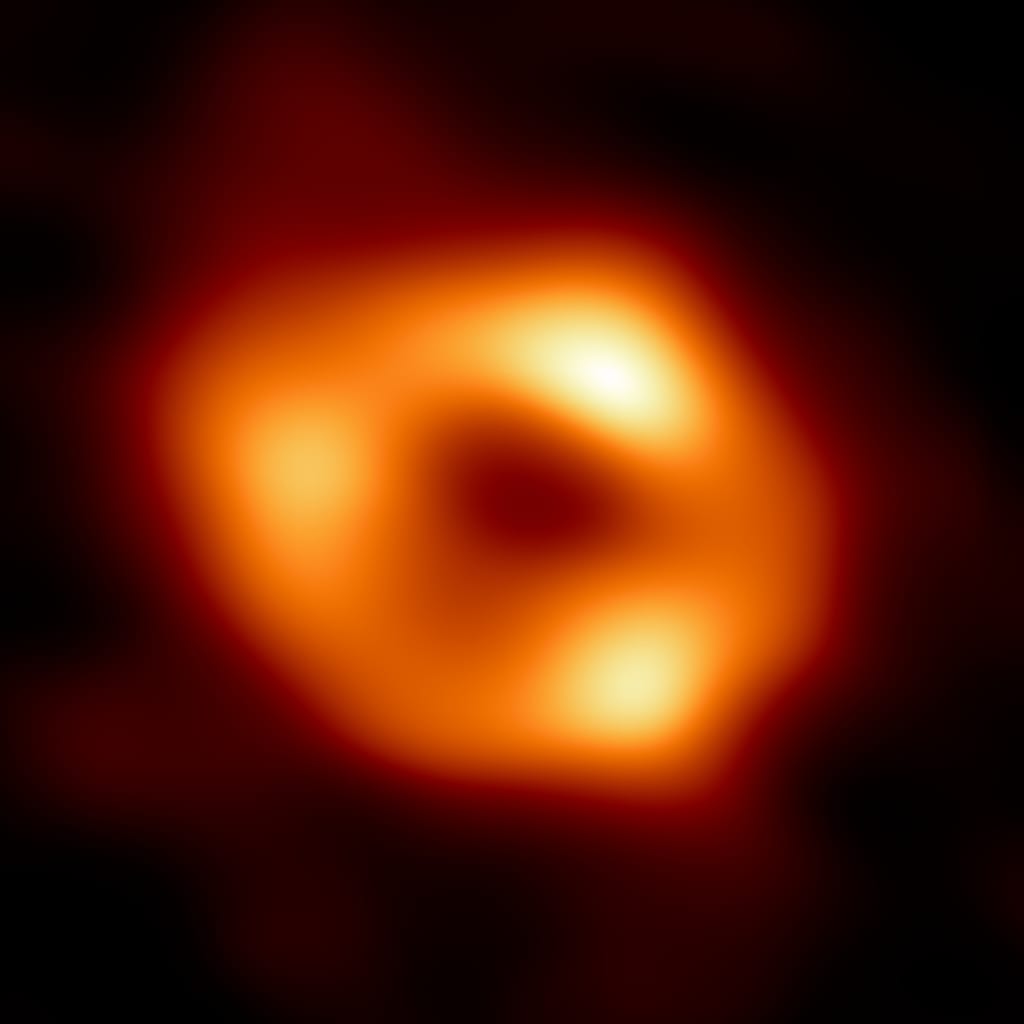
- Sagittarius A*, imagedEvent Horizon Telescope, 2022 · 26,670 light-years3D